The Medici Family: The Dynasty That Shaped Florence
Few families have influenced the history of a city as profoundly as the Medici family shaped Florence. Rising from successful bankers to rulers of one of Europe’s most powerful city-states, the House of Medici transformed Florence into the cradle of the Renaissance. Their patronage of artists, architects and scholars changed the course of Western art and culture, leaving a legacy that continues to define Florence today.
From Brunelleschi’s revolutionary dome and Botticelli’s masterpieces to Michelangelo’s early career and the creation of the Uffizi Galleries, the Medici family stood behind many of Florence’s greatest achievements. Exploring their story is one of the best ways to understand why Florence became one of the world’s most extraordinary cultural capitals.
Who Were the Medici?
The Medici were originally a wealthy Florentine family whose fortune was built through banking. During the fourteenth and fifteenth centuries, the Medici Bank became one of the most successful financial institutions in Europe, with branches in Rome, Venice, London, Bruges and other major commercial centres.
Their growing wealth soon translated into political influence. Although Florence officially remained a republic, the Medici gradually became its most powerful family, governing largely through diplomacy, alliances and public support rather than hereditary royal titles.
Unlike many European dynasties, the Medici understood that influence could be strengthened not only through politics but also through culture. They invested heavily in churches, libraries, architecture and public works while supporting some of history’s greatest artists.
Cosimo de’ Medici: The Founder of Medici Power
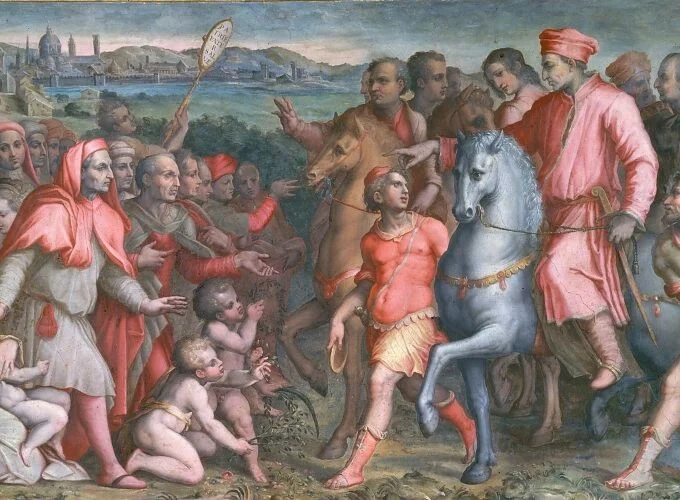
The family’s political rise began with Cosimo de’ Medici (1389–1464), often known as Cosimo the Elder. A brilliant banker and skilled statesman, he transformed the Medici Bank into an international financial empire while carefully expanding his influence within Florentine politics.
Rather than ruling openly as a prince, Cosimo preferred to work behind the scenes. His generosity towards public institutions, charitable foundations and religious communities earned him enormous respect among the citizens of Florence.
Cosimo also recognised the importance of education and scholarship. He founded libraries, collected classical manuscripts and encouraged the study of ancient Greek and Roman philosophy, helping to lay the intellectual foundations of the Renaissance.
Lorenzo the Magnificent
No member of the dynasty is more closely associated with Florence than Lorenzo de’ Medici (1449–1492), remembered as Lorenzo il Magnifico or Lorenzo the Magnificent.
During his rule, Florence experienced an extraordinary flourishing of art, literature and humanist learning. Lorenzo surrounded himself with poets, philosophers, architects and artists, creating an environment in which creativity could thrive.
His court welcomed many of the leading figures of the Renaissance, while young talents received opportunities that would shape European art for centuries. Lorenzo’s diplomatic skill also helped preserve peace among the major Italian states during much of his lifetime.
The Medici and the Renaissance
The Renaissance was far more than an artistic movement. It represented a renewed interest in classical learning, scientific observation and human potential. The Medici family became its most influential patrons by providing artists and scholars with financial security, prestigious commissions and intellectual freedom.
Their support enabled Florence to attract remarkable talent from across Italy. Churches, palaces and public spaces were transformed into masterpieces of architecture and sculpture, while painters developed new techniques of perspective, realism and composition.
Without the Medici, the Renaissance would almost certainly have developed very differently. Their investment in culture helped establish Florence as Europe’s leading centre of artistic innovation during the fifteenth century.
Artists Supported by the Medici
The Medici family sponsored an extraordinary number of artists whose works continue to define the Renaissance. Their patronage extended beyond financial support, often creating long-lasting personal relationships with painters, sculptors and architects.
- Filippo Brunelleschi – Designer of the revolutionary dome of Florence Cathedral.
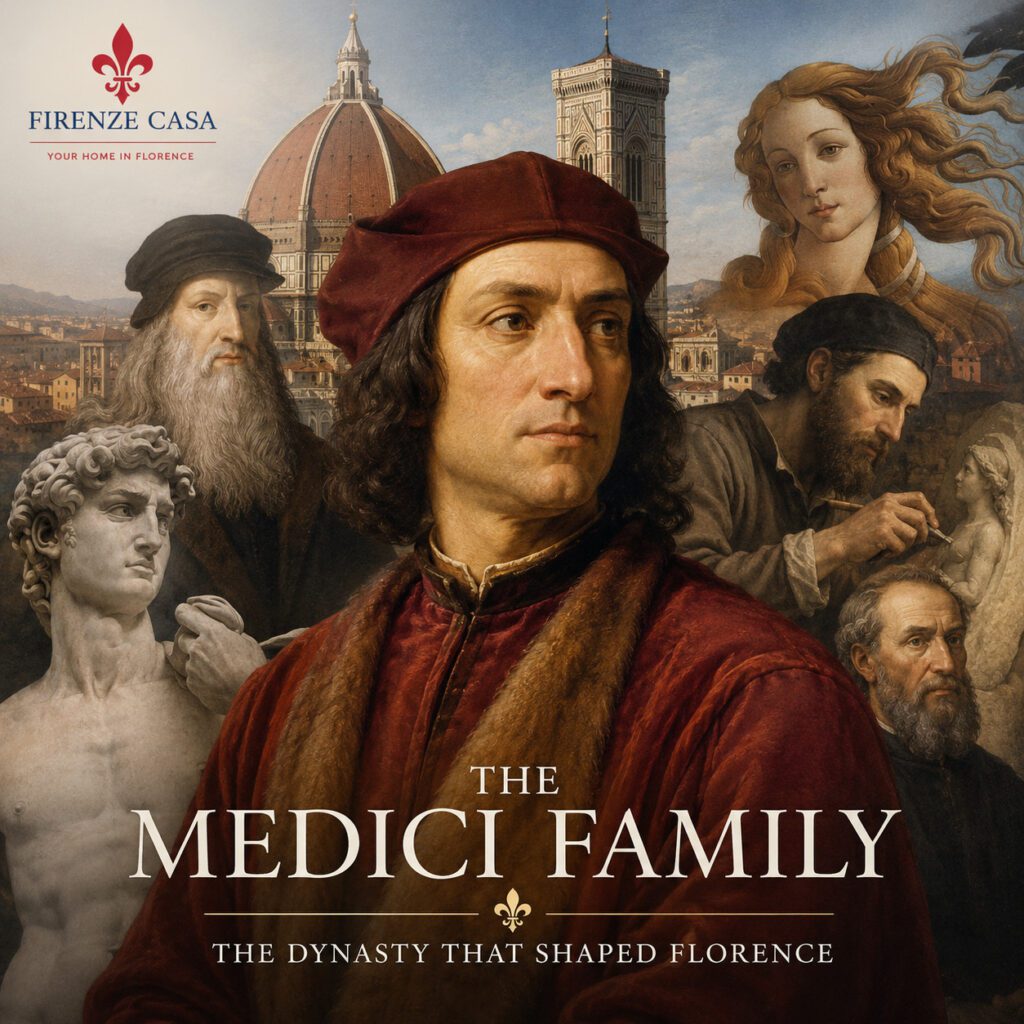
- Sandro Botticelli – Painter of The Birth of Venus and Primavera, both closely associated with the Medici court.
- Michelangelo Buonarroti – Supported by Lorenzo the Magnificent as a gifted young sculptor and educated within the Medici household.
- Donatello – Creator of innovative Renaissance sculptures commissioned by Medici patrons.
- Leonardo da Vinci – Worked in Florence during the height of Medici cultural influence, benefiting from the artistic environment they helped create.
The extraordinary concentration of artistic talent in Florence during the fifteenth century was no coincidence. It reflected decades of sustained patronage that encouraged innovation while preserving the city’s reputation as Europe’s cultural capital.
The Medici Popes and Queens
The influence of the Medici family eventually extended far beyond Florence. During the sixteenth century, four members of the dynasty became popes, including Leo X and Clement VII, while two Medici women became Queens of France. Catherine de’ Medici married King Henry II of France and played a major political role during one of the country’s most turbulent periods. Her relative Marie de’ Medici later became Queen of France and served as regent for her son, Louis XIII.
These royal and papal connections transformed the Medici from a powerful Florentine banking family into one of Europe’s most influential dynasties, extending their cultural and political influence well beyond Tuscany.
The Decline of the Medici Dynasty
Like many great ruling families, the Medici eventually declined. Financial difficulties, political instability and changing European power structures gradually weakened their position. The last Medici ruler, Gian Gastone de’ Medici, died in 1737 without leaving an heir, bringing nearly three centuries of Medici rule to an end.
One final act secured the family’s lasting legacy. Gian Gastone’s sister, Anna Maria Luisa de’ Medici, signed the famous Family Pact, ensuring that the Medici art collections would remain in Florence forever. Thanks to this remarkable agreement, masterpieces collected by the family can still be admired in the city’s museums today.
The Medici Legacy in Florence Today
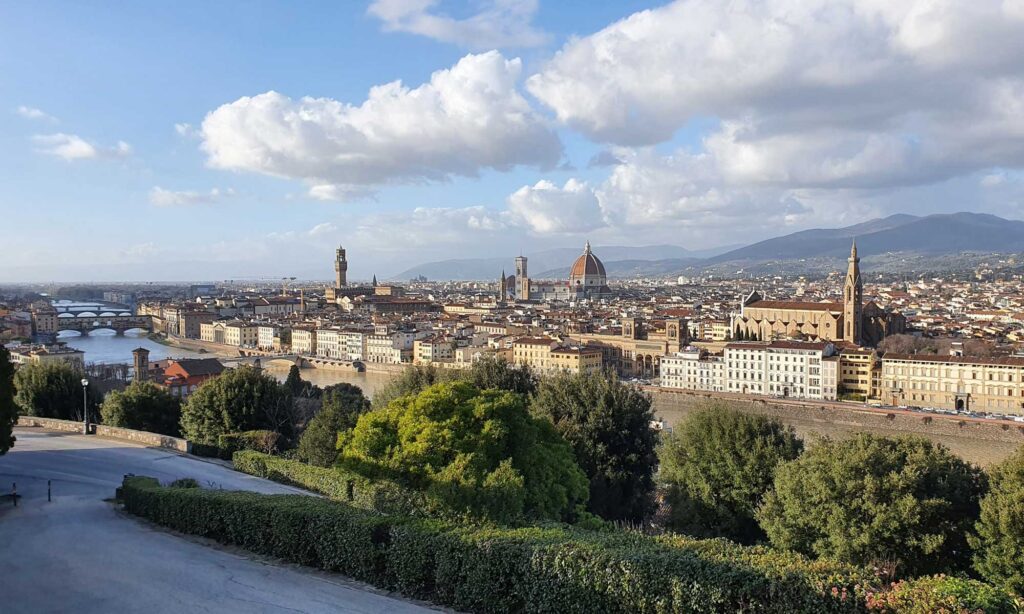
More than three centuries after the dynasty ended, the Medici remain visible throughout Florence. Their patronage shaped the city’s architecture, museums, churches, libraries and public squares, creating many of the landmarks visitors admire today.
Walking through Florence means following in the footsteps of the Medici. Their influence can be discovered in Brunelleschi’s Dome, Palazzo Vecchio, the Uffizi Galleries, Palazzo Pitti, the Boboli Gardens, the Basilica of San Lorenzo and countless other monuments that continue to define the city’s unique identity.
Places Connected to the Medici Family
| Place | Connection to the Medici |
|---|---|
| Palazzo Medici Riccardi | The family’s first great Renaissance residence. |
| Palazzo Vecchio | Seat of Florentine government and later closely associated with Medici rule. |
| Uffizi Galleries | Originally administrative offices commissioned by Cosimo I; today one of the world’s greatest art museums. |
| Ponte Vecchio | Home of the Vasari Corridor, built for the Medici in 1565. |
| Palazzo Pitti | The principal residence of the Medici Grand Dukes. |
| Boboli Gardens | The magnificent Renaissance gardens created for the Medici court. |
| Basilica of San Lorenzo | The Medici parish church and home of the famous Medici Chapels. |
| Florence Cathedral | Supported through Medici patronage and linked to many artists they commissioned. |
Frequently Asked Questions
Who were the Medici family?
The Medici were a powerful banking dynasty that ruled Florence for much of the Renaissance and became some of Europe’s greatest patrons of art, architecture and learning.
Why were the Medici so important?
The family financed artists, architects and scholars whose work transformed Florence into the cultural centre of the Renaissance.
Which famous artists worked for the Medici?
Among the artists closely associated with the Medici are Brunelleschi, Botticelli, Michelangelo, Donatello and many other leading figures of the Italian Renaissance.
Can visitors still see Medici landmarks in Florence?
Yes. Palazzo Pitti, the Uffizi Galleries, Palazzo Vecchio, the Medici Chapels, the Boboli Gardens, the Vasari Corridor and many other landmarks reflect the family’s remarkable legacy.
What happened to the Medici family?
The ruling dynasty ended in 1737 with the death of Gian Gastone de’ Medici. However, their artistic and architectural legacy continues to shape Florence today.
Further Reading from Firenze Casa
- Florence Cathedral: History and Highlights
- Palazzo Vecchio: History and Highlights
- The History of Ponte Vecchio: Florence’s Most Famous Bridge
- The Uffizi Gallery: A Visitor’s Guide
- The Vasari Corridor: The Secret Passage of the Medici
- Palazzo Pitti: From Renaissance Palace to Grand Ducal Residence
- Boboli Gardens: Florence’s Open-Air Museum
Selected Literature
- Hibbert, Christopher. The House of Medici: Its Rise and Fall. Penguin Books.
- Strathern, Paul. The Medici: Power, Money, and Ambition in the Italian Renaissance. Pegasus Books.
- Kent, Dale. The Rise of the Medici. Oxford University Press.
- Najemy, John M. A History of Florence 1200–1575. Blackwell Publishing.
- Parks, Tim. Medici Money: Banking, Metaphysics and Art in Fifteenth-Century Florence. W. W. Norton & Company.