
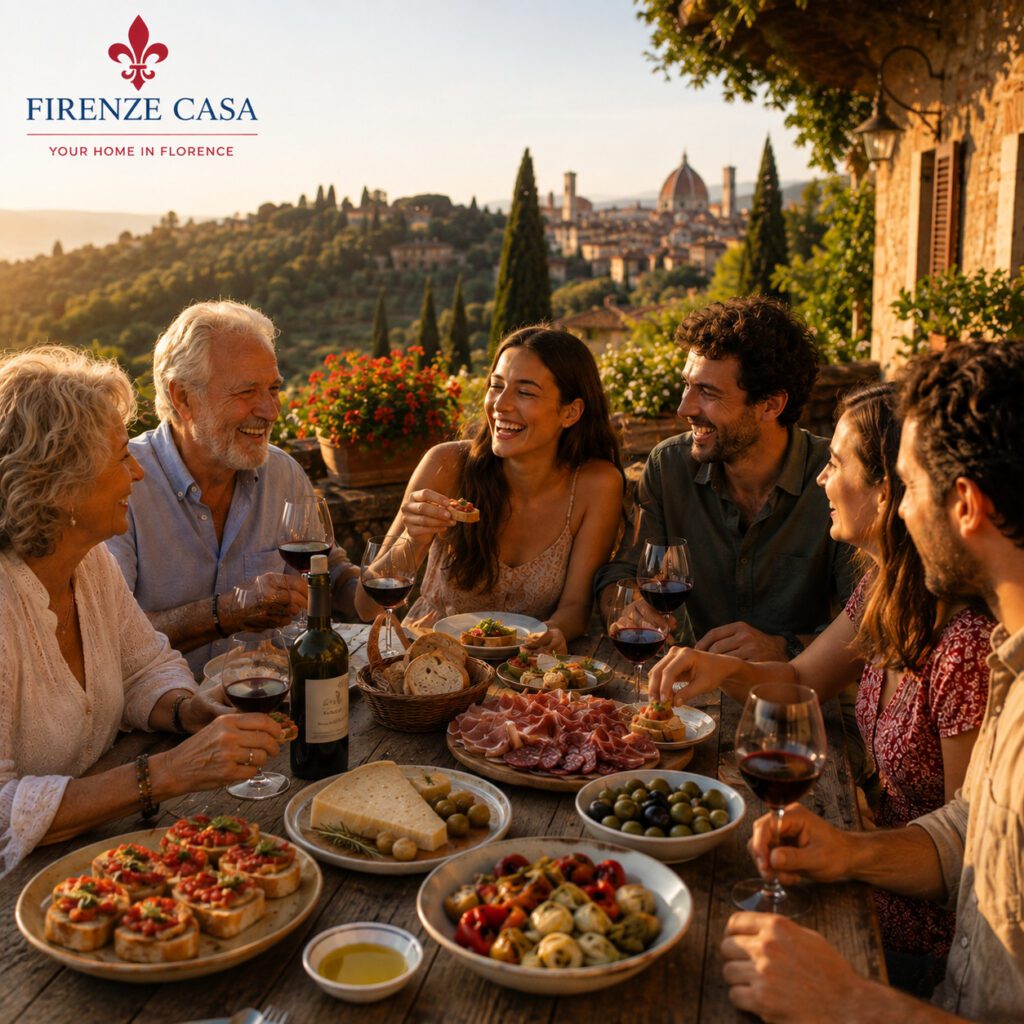
Tuscan antipasti introduce many of the ingredients that define the region’s cuisine. Crostini, Pecorino Toscano, cured meats, vegetables, olives and good bread can create a varied opening to a meal without requiring elaborate preparation.
There is no single fixed Tuscan antipasto. The selection changes according to season, place and occasion, ranging from a few slices of salumi and cheese to a more generous mixed platter. For the wider culinary context, see our Florentine and Tuscan Food – Complete Guide.
Classic crostini: Chicken-liver crostini
Typical cheese: Pecorino Toscano
Popular salumi: Finocchiona and Prosciutto Toscano
Essential bread: Unsalted Tuscan bread
Seasonal additions: Vegetables, mushrooms and olives
Traditional place in the meal: Before the primo or secondo
What Are Tuscan Antipasti?
The Italian word antipasto literally means “before the meal”, while antipasti is the plural. The term covers a broad range of small dishes served before the first substantial course.
In Tuscany, antipasti frequently showcase products that need relatively little preparation. Well-made cheese, cured meat, bread, vegetables and olive oil already have enough character to stand on their own.
However, antipasti are not compulsory. A diner might order one before a longer meal, share several dishes with the table or skip them entirely. Our guide to the Traditional Italian Meal explains how antipasto fits into the wider sequence of Italian dining.
Antipasto describes a place within the meal rather than one particular recipe. What appears on the plate depends on region, season and the kitchen serving it.
The Most Traditional Tuscan Antipasti
Crostini di Fegatini
Crostini di fegatini are among the most characteristic Florentine and Tuscan starters. Toasted bread carries a savoury chicken-liver preparation whose recipes may include capers, anchovies, onion and other aromatics.
Some versions are smooth, while others retain a more rustic texture. The preparation varies between families and restaurants, so there is no single definitive recipe.
The dish also illustrates an important aspect of traditional Tuscan cooking: ingredients with modest origins can become highly distinctive through careful preparation. This connects naturally with the resourceful traditions explored in Cucina Povera in Tuscany.
Fettunta and Bruschetta
In Tuscany, one of the simplest bread-based starters is fettunta: toasted bread rubbed with garlic and dressed generously with extra virgin olive oil.
Tomato-topped bruschetta is also common, particularly in summer, although the word bruschetta refers more broadly to grilled or toasted bread rather than specifically to a tomato topping.
The character of these dishes depends heavily on the bread and oil. Our guides to Tuscan Bread and Tuscan Extra Virgin Olive Oil explain why both ingredients play such an important role in regional cooking.
Pecorino Toscano
Pecorino Toscano is one of the region’s defining cheeses and frequently appears as part of an antipasto. Younger versions remain relatively soft and delicate, while ageing produces a firmer texture and more concentrated flavour.
Depending on the cheese, accompaniments may include pears, figs, honey or preserves. However, a good pecorino needs very little decoration.
Our dedicated Tuscan Cheese guide explains Pecorino Toscano DOP and other regional cheeses in greater detail.
Tuscan Salumi
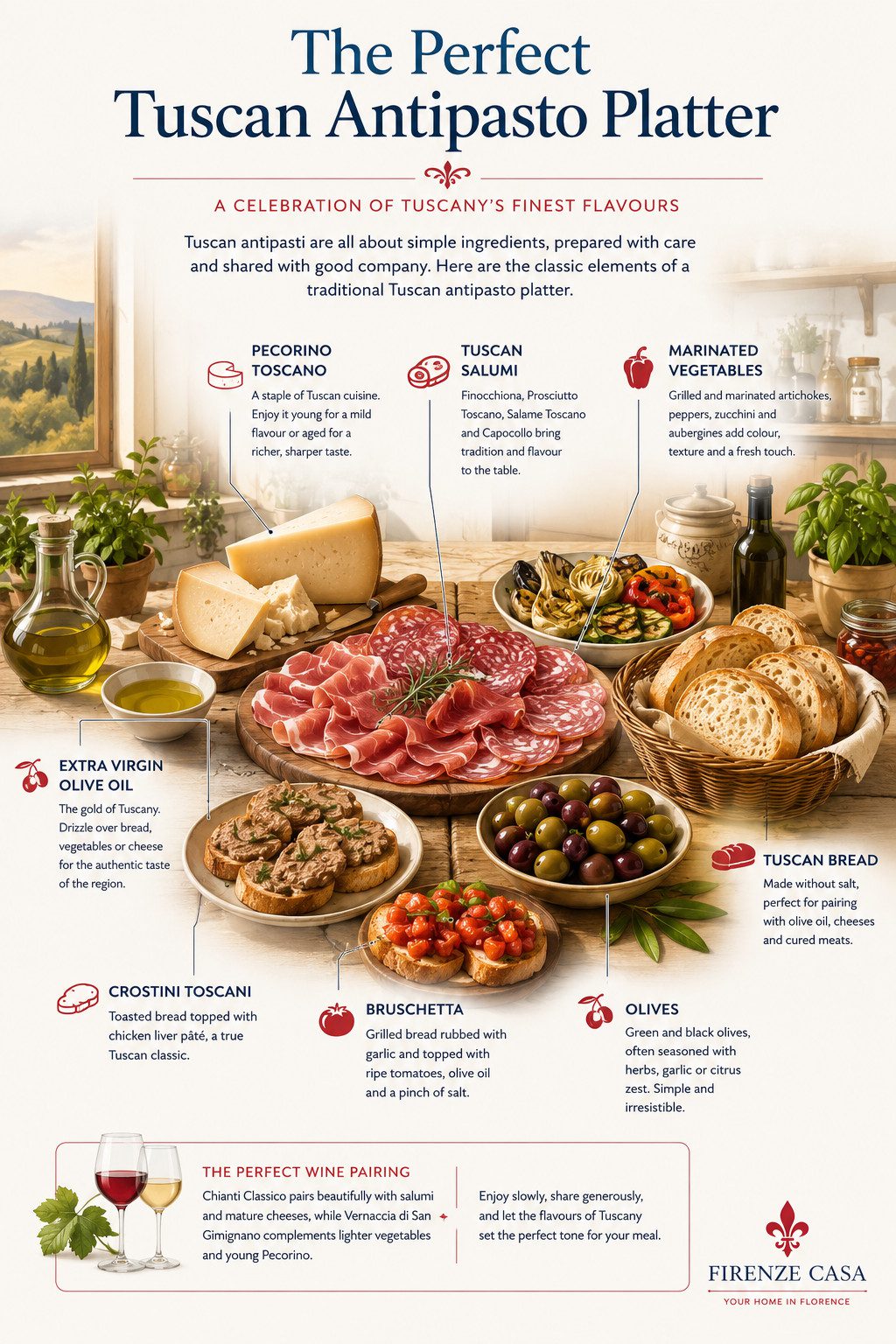
Cured meats form another important part of the Tuscan antipasto table. Prosciutto Toscano DOP, Finocchiona IGP, Salame Toscano and capocollo may all appear in different combinations.
Their flavours differ considerably. Finocchiona brings the aroma of fennel, while Prosciutto Toscano has a characteristically savoury profile. For this reason, tasting several varieties side by side can be more interesting than ordering a large quantity of one product.
Our Tuscan Salumi guide explores these products and their protected designations in more detail.
Vegetable Antipasti
Antipasti do not have to revolve around meat and cheese. Artichokes, peppers, aubergines, zucchini, mushrooms and beans can all appear according to season and preparation.
Vegetables may be grilled, roasted, marinated or preserved in oil or vinegar. Their acidity and freshness provide useful contrast when the same table also includes richer salumi and cheese.
Olives
Olives provide another simple addition. They may arrive plain, seasoned with herbs or included as one component of a larger mixed antipasto.
They should not, however, be treated as obligatory on every traditional Tuscan platter. As elsewhere in the meal, the exact selection varies according to the establishment and season.
The Role of Tuscan Bread
Bread connects many apparently different antipasti. Crostini require it, fettunta places it at the centre of the dish, and unsalted bread provides a natural accompaniment to salty cured meats and mature cheese.
Traditional Tuscan bread therefore performs more than one function. It can provide texture, carry toppings or simply balance stronger flavours.
Our article The Role of Bread in Tuscan Cuisine explores this relationship more broadly.
Extra Virgin Olive Oil on the Antipasto Table
Extra virgin olive oil appears in numerous forms: over toasted bread, on grilled vegetables, in marinades or as a finishing ingredient.
Fresh autumn oil can be particularly expressive, with bitterness and a peppery sensation that become part of the flavour rather than something to disguise.
However, serving bowls of oil specifically for dipping bread is not a universal Italian restaurant custom. In Tuscany, oil more naturally appears as part of preparations such as fettunta or as a seasoning for food.
During the autumn olive harvest, look for fettunta made with freshly pressed olio nuovo. A piece of toasted bread is often the best way to taste the new oil.
Seasonality and Tuscan Antipasti
The antipasto table changes naturally with the seasons. Spring and summer favour fresh vegetables, tomatoes and younger cheeses, while autumn brings mushrooms, new olive oil and other seasonal ingredients.
Winter selections may rely more heavily on cured meats, preserved vegetables and mature cheeses. Nevertheless, modern restaurants naturally have access to many ingredients throughout the year.
Seasonality is therefore a useful principle rather than a rigid calendar. A shorter antipasto menu that changes periodically can be more interesting than a huge selection that remains identical throughout the year.
How Tuscan Antipasti Are Served
Restaurants may serve antipasti individually or present a mixed selection for sharing. A typical antipasto toscano often combines several salumi with cheese and crostini, although the exact composition differs from one establishment to another.
Sharing a platter can be especially useful for visitors because it allows several regional products to be tasted without ordering full portions of each.
At the same time, an antipasto should not become so large that there is no appetite left for the rest of the meal. If Bistecca alla Fiorentina or another substantial secondo will follow, a smaller opening course is often enough.
Wine with Tuscan Antipasti
Wine pairing depends on what appears on the plate. A mixed platter dominated by salumi and mature pecorino can work well with a Tuscan red, while lighter vegetables and young cheese allow greater flexibility.
Chianti and Chianti Classico are obvious regional companions for many savoury antipasti. However, Vernaccia di San Gimignano and other Tuscan whites can also work well with lighter selections.
There is therefore no single correct “antipasto wine”. Our Wines of Tuscany – The Complete Guide provides a broader introduction to the region’s principal styles.
Antipasto and Aperitivo Are Not the Same Thing
Visitors sometimes confuse antipasto with aperitivo, but they refer to different traditions.
Antipasto is a course at the beginning of a meal. Aperitivo, by contrast, is the social ritual of having a drink before dinner, often accompanied by small snacks.
The two can overlap in ingredients, but they do not mean the same thing. Our guide to The Art of the Italian Aperitivo explains the distinction and the wider culture surrounding the pre-dinner drink.
Where to Explore Tuscan Antipasti in Florence
Traditional trattorias, wine bars, food shops and markets all provide opportunities to encounter the ingredients that make up a Tuscan antipasto.
Mercato Centrale offers a convenient introduction to regional cheese, salumi, bread and other products in the historic centre.
Meanwhile, Mercato di Sant’Ambrogio provides a more neighbourhood-oriented market experience and remains closely connected with everyday Florentine food shopping.
For the broader story of these places, see our Historic Food Markets of Florence – Complete Guide.
Building a Simple Tuscan Antipasto
You do not need a huge platter to create a convincing Tuscan antipasto. Three or four well-chosen elements are often enough.
| Element | Example |
|---|---|
| Bread | Crostini or Tuscan bread |
| Salume | Finocchiona or Prosciutto Toscano |
| Cheese | Young or mature Pecorino Toscano |
| Vegetable | Artichokes, peppers or seasonal vegetables |
| Optional addition | Olives, fruit, honey or preserves |
The goal is contrast rather than quantity. A soft cheese beside firmer salumi, mild bread beside savoury meat and a vegetable element for freshness already create a balanced selection.
Frequently Asked Questions
What are Tuscan antipasti?
Tuscan antipasti are small dishes served before the first substantial course. They may include crostini, salumi, pecorino, vegetables, bread and other regional products.
What is the most typical Florentine antipasto?
Crostini di fegatini are among the most characteristic choices. They combine toasted bread with a savoury chicken-liver preparation.
Do Tuscan antipasti always contain meat?
No. Vegetable antipasti, cheese, bruschetta and other meat-free options are common, and the selection varies according to season and restaurant.
What is an antipasto toscano?
It usually describes a mixed Tuscan starter containing items such as salumi, cheese and crostini. There is no single mandatory composition.
Is antipasto the same as aperitivo?
No. Antipasto is part of the meal, while aperitivo is a pre-dinner social drink that may come with small snacks.
Which wine works with Tuscan antipasti?
Chianti or Chianti Classico works well with many salumi and cheeses, while lighter antipasti can also pair with Tuscan white wines.
Can antipasti be a complete meal?
A generous shared selection can certainly serve as a light lunch or informal evening meal. Traditionally, however, antipasto describes the course before the rest of a meal.
Why Tuscan Antipasti Are Worth Discovering
Tuscan antipasti provide an unusually easy way to compare the region’s ingredients. One table can bring together fennel-scented Finocchiona, savoury Prosciutto Toscano, sheep’s-milk pecorino, unsalted bread and seasonal vegetables.
The interest lies in the contrasts between them rather than in elaborate preparation. Bread moderates the saltiness of salumi, vegetables provide freshness and olive oil ties several elements together.
For visitors, sharing an antipasto can therefore become a small introduction to Tuscany’s wider food culture before the first substantial course even reaches the table.
Further Reading on Firenze Casa
- Florentine and Tuscan Food – Complete Guide
- Tuscan Salumi: Traditional Cured Meats of Tuscany
- Tuscan Cheese: A Guide to Traditional Cheeses of Tuscany
- Tuscan Bread – Why Tuscany’s Bread Has No Salt
- Tuscan Extra Virgin Olive Oil: Tuscany’s Liquid Gold
- Understanding the Traditional Italian Meal
- The Art of the Italian Aperitivo
- The Historic Food Markets of Florence – Complete Guide
References
- Accademia Italiana della Cucina.
- Regione Toscana – Traditional Agri-food Products.
- Consorzio di Tutela della Finocchiona IGP.
- Consorzio del Prosciutto Toscano DOP.
- Consorzio di Tutela del Pecorino Toscano DOP.
- Consorzio per la Tutela dell’Olio Toscano IGP.

