
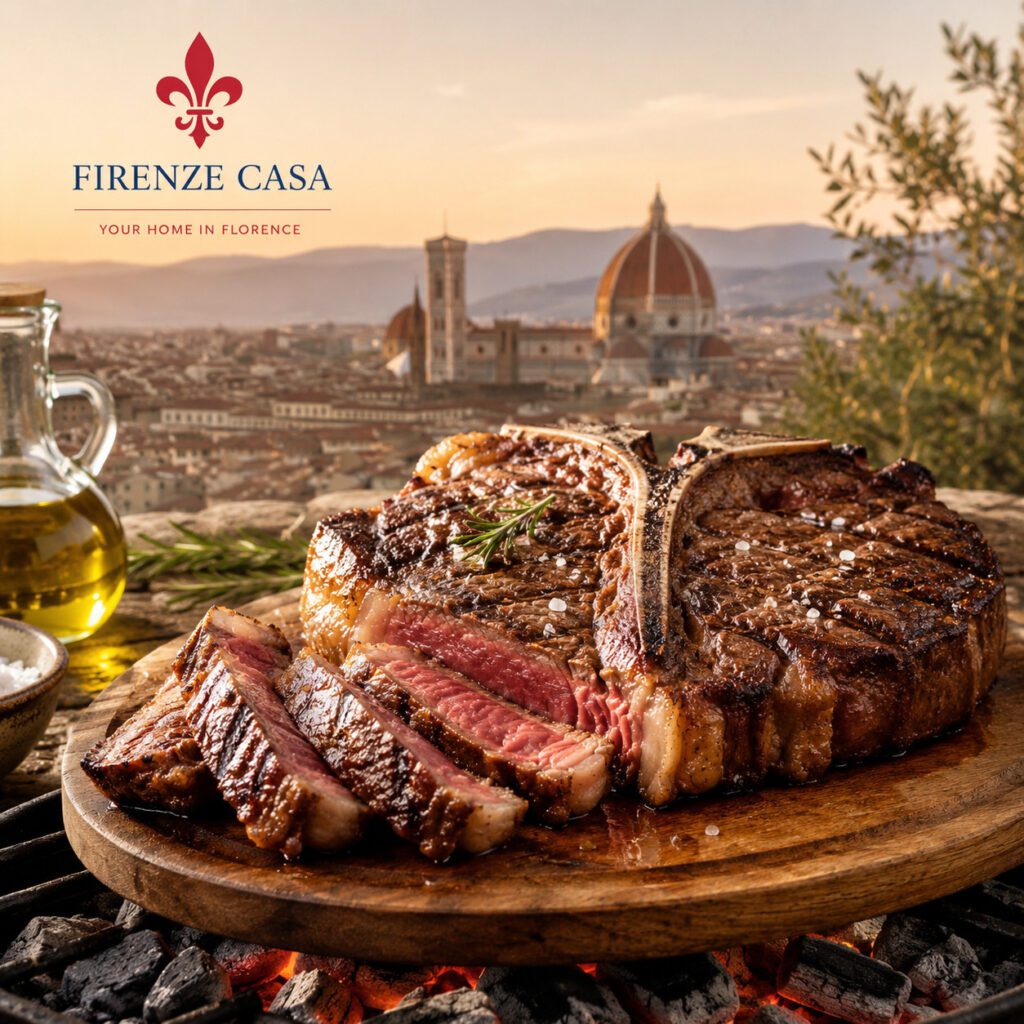
Bistecca alla Fiorentina is one of Florence’s most famous culinary traditions. This exceptionally thick T-bone steak is grilled over intense heat and traditionally served very rare, allowing the quality and character of the beef to remain at the centre of the dish.
Ordering Bistecca in Florence is also a different experience from ordering an individual steak elsewhere. It is usually priced by weight, intended for sharing and prepared according to traditions that leave relatively little room for sauces or elaborate seasoning. For the wider culinary context, see our Florentine and Tuscan Food – Complete Guide.
Cut: Very thick T-bone with strip loin and tenderloin
Typical weight: Around 1–1.5 kg or more
Cooking: Traditionally grilled over intense heat and served al sangue
Seasoning: Minimal, usually salt and sometimes extra virgin olive oil
Serving: Normally shared between two or more diners
Pricing: Usually quoted per kilogram
What Is Bistecca alla Fiorentina?
Bistecca alla Fiorentina is a thick steak cut from the loin, with the characteristic T-shaped bone separating the strip loin and tenderloin. Chianina is the breed most famously associated with the dish, although restaurants may use other carefully selected cattle.
The steak is substantially thicker than an ordinary T-bone. Cuts of around 4–6 centimetres are common, and a Bistecca can easily weigh 1–1.5 kilograms or more. It is therefore normally ordered for the table rather than as an individual portion.
Traditional preparation is deliberately restrained. The steak is exposed to intense heat so that the exterior develops a grilled crust while the interior remains distinctly rare.
Bistecca alla Fiorentina is traditionally served al sangue. If you strongly prefer well-done beef, another Tuscan meat dish may provide a better experience.
The History of Bistecca alla Fiorentina
The precise origins of Florentine steak are difficult to establish, although large cuts of grilled beef have a long history in Tuscany.
The most famous origin story connects the word bistecca with celebrations for the Feast of San Lorenzo in Florence. According to tradition, beef was grilled and distributed during festivities near San Lorenzo, where English-speaking visitors supposedly called for more “beef steak”. Florentines are then said to have transformed the expression into bistecca.
The story is memorable but cannot be securely documented and is better understood as part of Florence’s culinary folklore than as established etymological fact.
What is clear is that Tuscany developed important cattle-raising and butchery traditions, while Florence acquired a strong culture surrounding large grilled cuts of beef. Over time, Bistecca alla Fiorentina became one of the city’s defining dishes.
The San Lorenzo story is one of Florence’s best-known food legends. Its historical uncertainty makes it no less interesting, provided folklore and documented history are kept separate.
Chianina Cattle and the Florentine Steak
Chianina is the cattle breed most closely associated with Bistecca alla Fiorentina. It takes its name from the Val di Chiana between Tuscany and Umbria and has a history extending back into antiquity.
The striking white cattle were historically valued as powerful working animals as well as for meat. Today, Chianina has an international reputation and remains strongly connected with the image of the traditional Florentine steak.
| Characteristic | Chianina |
|---|---|
| Origin | Val di Chiana in Tuscany and Umbria |
| Appearance | Large frame and characteristic white coat |
| Historical role | Traditionally used as a working animal as well as for meat |
| Modern reputation | One of Italy’s best-known cattle breeds |
| Culinary association | Closely linked with Bistecca alla Fiorentina |
Chianina, however, should not become a simplistic authenticity test. The quality, provenance and ageing of the beef, together with correct cutting and cooking, matter enormously. A restaurant can serve an excellent Florentine steak from another suitable high-quality breed.
How Bistecca alla Fiorentina Is Traditionally Cooked
The apparent simplicity of preparing Bistecca makes the quality of both meat and technique especially important. The steak is traditionally brought towards room temperature before being exposed to very intense heat.
It is grilled briefly on both flat sides and may then be stood upright on the bone. The objective is a well-seared exterior combined with a warm but distinctly rare centre.
Seasoning remains minimal. Salt is commonly added during or after cooking depending on the cook’s preference, and good Tuscan extra virgin olive oil may be added at the table. Marinades and heavy sauces are not characteristic of the traditional preparation.
This simplicity places Bistecca at an interesting distance from the resourceful dishes associated with cucina povera. Both traditions value ingredients and restrained preparation, but Bistecca historically represents a much more valuable product.
How to Order Bistecca in Florence
The most important thing for visitors to understand is that Bistecca alla Fiorentina is generally not an individual steak. Restaurants commonly present or discuss the available cut and quote its weight before cooking.
A steak weighing around 1–1.5 kilograms will normally be shared by two people, although appetite, side dishes and the size of the cut naturally affect how many diners it serves.
After resting, the steak may be carved into slices and served on a platter for the table. This communal way of eating fits naturally into the structure of a leisurely traditional Italian meal.
What to Eat with Bistecca
Side dishes are normally simple. Roast potatoes, grilled or seasonal vegetables and cannellini beans all work well because they complement rather than compete with the beef.
A plate of Tuscan antipasti can precede the steak, but ordering too many courses beforehand is usually unnecessary given the size of the main dish.
Which Wine Goes with Bistecca alla Fiorentina?
A substantial Tuscan red is the classic companion. Chianti Classico is an obvious choice, particularly because its acidity and structure work well with grilled beef.
Brunello di Montalcino and Vino Nobile di Montepulciano provide other excellent possibilities, although an expensive bottle is certainly not required. A good local Sangiovese-based wine can be entirely appropriate.
If you want to understand the differences between Tuscany’s principal wines before choosing a bottle, our Wines of Tuscany – The Complete Guide provides the broader overview, while Chianti Wine – The Wine That Shaped Tuscany looks more closely at Florence’s most obvious regional pairing.
Do not feel obliged to choose the most expensive wine on the list. Ask for a Tuscan red that suits both the steak and your budget.
How Much Does Bistecca alla Fiorentina Cost?
Bistecca is normally priced per kilogram, not per person. This is the detail visitors should check before ordering.
Prices vary considerably according to restaurant, breed, provenance and ageing, and fixed price ranges can become outdated quickly. A better approach is to check the current price per kilogram and ask the approximate weight of the steak before it goes on the grill.
For example, if a restaurant quotes a price per kilogram and presents a steak weighing 1.3 kilograms, the final cost of the Bistecca will be calculated from that weight. Because the steak is shared, the relevant comparison is the resulting cost per diner rather than the total price of the cut.
Ask two simple questions before ordering: What is the price per kilogram? and Approximately how much does this steak weigh? You will then know the likely total before it is cooked.
How to Recognise a Good Bistecca
No single characteristic guarantees an excellent steak, but several features together provide useful guidance.
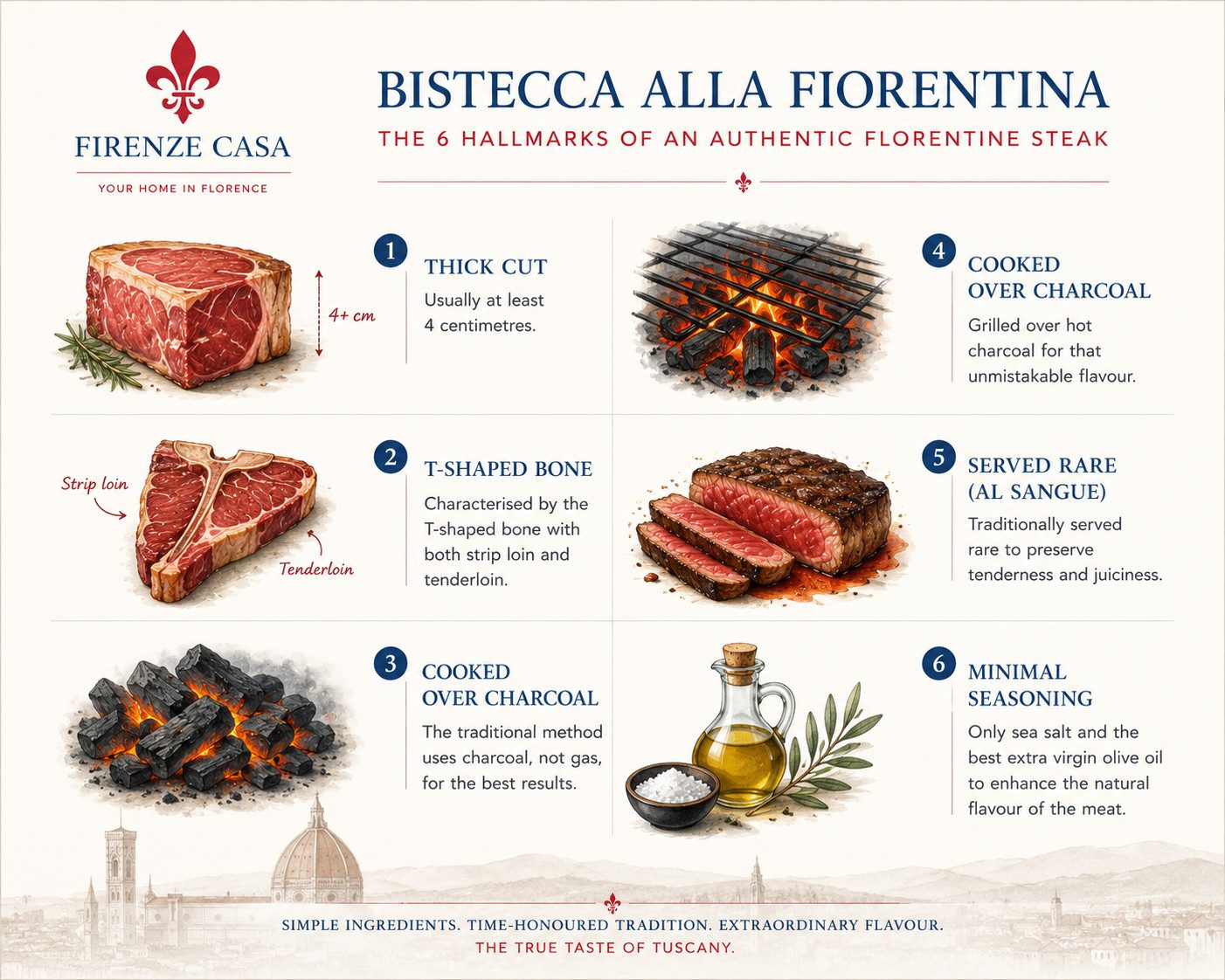
- The steak should be substantially thick rather than resembling an ordinary thin T-bone.
- The T-shaped bone separates the strip loin and tenderloin.
- The restaurant should be able to explain the origin or breed of the beef.
- The meat should be appropriately matured and handled.
- Preparation should rely on intense grilling rather than marinades or heavy sauces.
- The steak is traditionally served very rare.
- The price per kilogram and approximate weight should be clear before ordering.
These are better indicators than décor or marketing language. A restaurant does not become more authentic simply because its menu repeatedly uses words such as “traditional” or “historic”.
Choosing a Restaurant for Bistecca
Florence has many restaurants serving excellent steak, so there is little reason to search for one universally accepted “best Bistecca”. Instead, look for a restaurant that treats the meat seriously and communicates clearly about what it serves.
Useful questions include the breed and origin of the beef, how long it has been aged, the approximate weight of the available steak and the price per kilogram. Knowledgeable staff should be able to answer these questions without difficulty.
Be more cautious when a restaurant offers unusually thin steaks, cannot explain the meat’s provenance or uses aggressive street solicitation as its principal selling method. None of these signs alone proves poor quality, but several together may justify looking elsewhere.
Florence’s historic dining culture provides another useful starting point. Our Historic Restaurants of Florence – Complete Guide introduces establishments with long connections to traditional Florentine cooking.
Historic Restaurants Serving Florentine Cuisine
Several historic restaurants associated with traditional Tuscan food also serve Bistecca alla Fiorentina. Rather than presenting them as a definitive ranking, it is more useful to understand them as part of Florence’s restaurant history.
Buca Lapi, founded in the nineteenth century, is among the city’s best-known historic restaurants and remains closely associated with Tuscan cuisine.
Trattoria Mario, near Mercato Centrale, represents a very different style: informal, lively and strongly connected with Florence’s traditional market culture.
These are only two examples. Restaurant quality, menus and prices can change, so the historical reputation of an establishment should complement rather than replace your own judgement when ordering.

Firenze Casa →
Frequently Asked Questions
Is Bistecca alla Fiorentina always made from Chianina beef?
No. Chianina is the breed most famously associated with the dish, but other high-quality cattle may also be used. Provenance, ageing, cutting and preparation all matter.
Can Bistecca alla Fiorentina be ordered well done?
You can ask, but the traditional dish is served very rare. Some restaurants may discourage well-done preparation because it fundamentally changes the character of such a thick steak.
How many people does one Bistecca serve?
A typical steak often weighs around 1–1.5 kilograms and is commonly shared by two people. Larger cuts may suit three diners depending on appetite and side dishes.
Why is Bistecca priced by weight?
The steaks vary considerably in size, so restaurants normally quote a price per kilogram and calculate the final price from the actual cut selected.
What is the best wine with Bistecca alla Fiorentina?
Chianti Classico is a classic choice, while Brunello di Montalcino and Vino Nobile di Montepulciano also pair well with grilled beef.
Is Bistecca alla Fiorentina a dish for one person?
Usually not. Its thickness and weight make it naturally suited to sharing, which is an important part of the traditional experience.
Why Bistecca alla Fiorentina Is Worth Trying
Bistecca alla Fiorentina demonstrates how far Tuscan cooking can go with very little intervention. High-quality beef, intense heat and restrained seasoning are enough to create one of Florence’s defining dishes.
Its appeal also lies in the experience surrounding it: choosing the cut, understanding its weight, sharing it at the table and pairing it with simple sides and Tuscan wine.
Seen in this context, Bistecca is more than an oversized steak. It reflects Tuscany’s cattle-raising traditions and the Florentine belief that an excellent ingredient often needs very little embellishment.
Further Reading on Firenze Casa
- Florentine and Tuscan Food – Complete Guide
- The Wines of Tuscany – The Complete Guide
- Chianti Wine – The Wine That Shaped Tuscany
- Tuscan Extra Virgin Olive Oil – A Guide to Tuscany’s Liquid Gold
- Understanding the Traditional Italian Meal
- Historic Restaurants of Florence – Complete Guide
- Buca Lapi – Historic Florentine Restaurant Since 1880
- Trattoria Mario Florence – Historic Market Trattoria
References
- Accademia Italiana della Cucina – La Cucina Toscana.
- Consorzio di Tutela Vitellone Bianco dell’Appennino Centrale IGP.
- Slow Food Editore – Osterie d’Italia.
- Regione Toscana – Traditional Tuscan Gastronomy.
- Touring Club Italiano – Guida ai Ristoranti d’Italia.

