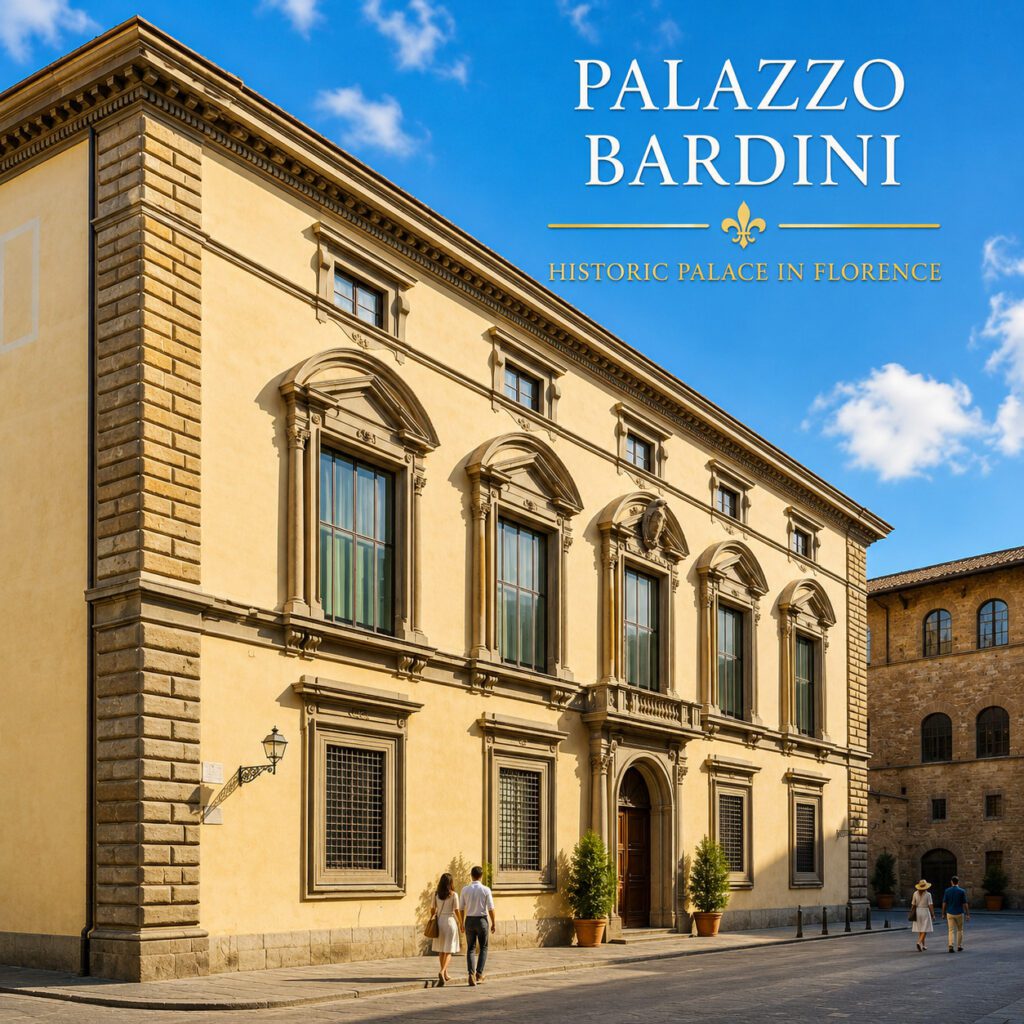
Palazzo Bardini Florence is unlike almost any other historic palace in the city. It was not created for a Renaissance banking dynasty, a Medici courtier or an ancient noble family. Instead, the remarkable building near the Arno was shaped by Stefano Bardini, the celebrated art dealer and antiquarian who became one of the most influential figures in the international market for Italian art around 1900.
Today the building is best known as the Museo Stefano Bardini, but understanding it simply as a museum misses much of its original character. Bardini conceived the palace as a carefully orchestrated environment in which architecture, historic fragments, works of art and interior design worked together. It was simultaneously a collection, a place of business and an extraordinary expression of the personality of the man who created it.
Name: Palazzo Bardini
Location: Via dei Renai, Florence
Area: Oltrarno, near Ponte alle Grazie
Associated with: Stefano Bardini (1836–1922)
Original modern function: Gallery, collection, workshops and international art business
Today: Museo Stefano Bardini
Why it is unusual: The palace was deliberately created as an architectural setting for historic art and antiquities
A Different Kind of Florentine Palace
Most buildings in our Historic Palaces of Florence – Complete Guide tell stories of families, politics and inherited wealth. Palazzo Bardini tells a very different story.
Its protagonist was Stefano Bardini, born in 1836, who developed from painter and restorer into one of the most successful dealers in Italian art of his generation. His clients included wealthy European and American collectors at a time when Renaissance sculpture, furniture, architectural fragments and decorative arts were increasingly sought after on the international market.
Bardini needed more than an ordinary residence or shop. He required a building capable of presenting works of art in surroundings that would increase their visual and historical impact.
Palazzo Bardini became his answer.
Palazzo Bardini should not be confused with Villa Bardini. The Palazzo stands near the Arno and today houses the Museo Stefano Bardini. Villa Bardini occupies the hillside above the city and forms part of the complex associated with the Giardino Bardini.
Stefano Bardini – The Prince of Antiquarians
Stefano Bardini belonged to a remarkable generation of dealers who helped shape international taste for Italian Renaissance art during the late nineteenth and early twentieth centuries.
Florence was ideally positioned for this trade. The city possessed an enormous concentration of historic objects, churches, palaces and private collections, while wealthy travellers and collectors from Britain, continental Europe and particularly the United States increasingly regarded Italian Renaissance art as an essential component of sophisticated collecting.
Bardini developed an exceptional ability to recognise what these clients wanted. Sculpture, paintings, furniture, tapestries, ceramics, frames, architectural elements and complete historic interiors all passed through his hands.
His importance therefore extended far beyond Florence. Works handled by Bardini eventually entered some of the great collections and museums of Europe and America.
Stefano Bardini was not simply a collector who happened to sell art. He was an expert in presentation, restoration and the international art market, helping shape how generations of collectors imagined the Italian Renaissance.
Creating Palazzo Bardini
At the end of the nineteenth century, Bardini transformed existing buildings near Piazza de’ Mozzi and Via dei Renai into the complex now associated with his name.
Rather than constructing a conventional modern gallery, he incorporated architectural elements and decorative fragments originating from older buildings. Doors, columns, cornices, stonework and other historic pieces became part of a deliberately composed architectural environment.
The result was neither a Renaissance palace preserved unchanged nor a neutral nineteenth-century exhibition building. Palazzo Bardini was essentially a new creation assembled through the vocabulary of the past.
This makes the palace particularly fascinating today. It reveals not only historical architecture but also how the Renaissance was interpreted and presented around 1900.
Architecture as a Setting for Art
Bardini understood something that modern museums also recognise: the environment surrounding an artwork changes the way we perceive it.
Instead of placing sculptures, paintings and furniture against anonymous walls, he created architectural settings that encouraged visitors and potential buyers to imagine objects within historic interiors.
A medieval sculpture might appear beside an ancient doorway. Renaissance furniture could be positioned beneath historic ceilings. Architectural fragments became part of the rooms rather than merely objects displayed within them.
The palace itself therefore functioned almost like an enormous three-dimensional catalogue.
When visiting Palazzo Bardini, do not look only at individual artworks. Look at doors, ceilings, columns, windows and the relationship between objects and architecture. Bardini designed the setting as carefully as he assembled the collection.
The Famous Bardini Blue
One of the most recognisable characteristics of the interiors is the intense blue used on many walls. Today it has become so closely associated with the collector that it is commonly known as Bardini blue.
The colour was not a casual decorative choice. Against deep blue backgrounds, pale marble sculpture, gilded frames, terracotta and carved wood acquire exceptional visual clarity.
Bardini’s approach to colour influenced the presentation of historic art well beyond his own building. His galleries demonstrate that display itself can shape how an artwork is understood and valued.
The blue interiors are therefore not simply one of the most photogenic features of today’s museum. They are part of Bardini’s philosophy of presentation.
Notice how differently materials react against the blue walls. White marble becomes brighter, gilded surfaces warmer and dark wood more sculptural. Bardini used colour as part of the visual staging of his collection.
A Palace, Gallery and Place of Business
Palazzo Bardini was never simply a private home filled with beautiful possessions. It formed part of a sophisticated commercial enterprise.
Collectors could encounter works in carefully arranged interiors rather than in the atmosphere of an ordinary shop. Bardini understood that provenance, architecture, lighting and presentation contributed to the appeal of an object.
The building consequently occupied an unusual position between palace, gallery, showroom and collection.
This commercial dimension distinguishes Palazzo Bardini from historic family residences such as Palazzo Strozzi or Palazzo Rucellai. Those buildings expressed the status of Renaissance families. Bardini’s palace expressed the expertise and ambitions of a modern international art dealer.
Restoration and the Bardini Workshops
The international trade in historic art depended on much more than discovering objects. Works often required cleaning, repair, reconstruction or adaptation before they could be presented to collectors.
Bardini therefore worked within a network of highly skilled craftsmen and restorers. Florence possessed a long tradition of stone carving, woodworking, metalwork, gilding and other specialist crafts, making the city particularly suited to this activity.
The world surrounding Palazzo Bardini consequently connected the nineteenth-century art market with Florence’s much older traditions of craftsmanship.
This relationship between art, restoration and commerce also raises questions that are important to modern art history: where does conservation end and reconstruction begin, and how did the tastes of collectors influence the appearance of objects they purchased?
Standards of restoration around 1900 differed considerably from those of modern conservation. Dealers and collectors often valued visually complete historic settings, and missing elements could be restored or reconstructed more freely than would normally be accepted today.
Palazzo Bardini and the International Art Market
During Bardini’s career, Florence occupied an important position within a rapidly expanding international market for Renaissance art.
Wealthy foreign collectors arrived searching for objects capable of bringing the atmosphere of historic Italy into their residences. Entire rooms could be assembled using antique furniture, sculpture, tapestries, fireplaces, ceilings and architectural fragments.
Bardini became one of the figures connecting this demand with the extraordinary artistic heritage available on the Italian market.
The palace therefore tells a story that extends far beyond Florence. It belongs to the history of how Italian art entered collections throughout Europe and the United States and how the international image of the Renaissance was constructed.
Foreign Collectors and Florence
Florence around 1900 contained a remarkable international community of collectors, scholars, artists and wealthy residents. British and American visitors in particular played an important role in the market for Italian art.
The story of Palazzo Bardini therefore intersects naturally with the history of the British in Florence and the wider world of foreign collectors who made the city an important centre of international cultural exchange.
Some came to study the Renaissance, others to establish homes in historic villas and palaces, and many assembled significant collections. Dealers such as Bardini operated at the centre of this network.
Florence was no longer simply the place where Renaissance art had been created. It had also become one of the places where the Renaissance was being rediscovered, interpreted, bought and exported.
From Palazzo Bardini to Museo Stefano Bardini
Stefano Bardini died in 1922. His extraordinary relationship with Florence did not end with his death.
The building and an important part of his collection eventually passed to the city, allowing the environment he had created to survive as a public museum.
Today the Museo Stefano Bardini contains sculpture, paintings, furniture, ceramics, tapestries, armour, architectural fragments and decorative arts assembled through Bardini’s distinctive eye.
The museum deserves its own story, which we explore separately. For the history of Palazzo Bardini, the important point is that the museum preserves something much rarer than a collection alone: it allows visitors to experience the architectural world created by the collector himself.
Today it is both. The Museo Stefano Bardini explains the collection, while Palazzo Bardini tells the story of the extraordinary architectural setting Bardini created to display, restore and market historic art.
The Porcellino and the Bardini Collection
Among the best-known objects associated with the museum is Pietro Tacca’s original bronze Porcellino. The famous fountain seen at the Mercato Nuovo is one of Florence’s most familiar popular monuments, but the original bronze is preserved in the Bardini collection.
This creates another characteristic Firenze Casa connection between a familiar sight in the streets and the less obvious history behind it. Our article about the Porcellino of Florence explores the sculpture, its tradition and the story behind the lucky boar.
At Palazzo Bardini, the original becomes part of a much larger story about collecting and the movement of artworks between public spaces, private ownership and museums.
Palazzo Bardini and Villa Bardini Are Not the Same Building
The Bardini name can easily cause confusion because several nearby places are associated with Stefano Bardini.
Palazzo Bardini is the building near the Arno that today houses the Museo Stefano Bardini. Villa Bardini, by contrast, stands much higher on the hillside overlooking Florence.
The villa has a much older history. Originally known as Villa Manadora, it was built in the seventeenth century and was only acquired by Stefano Bardini in the early twentieth century. It crowns the landscape now known as the Giardino Bardini.
The distinction is useful because the two buildings reveal different aspects of Bardini’s world. Palazzo Bardini was intimately connected with his collection and art business; Villa Bardini and its surrounding landscape reveal his interest in property, gardens, historic settings and panoramic Florence.
Palazzo Bardini: the palace and former art-dealing complex near the Arno.
Museo Stefano Bardini: the museum housed inside Palazzo Bardini.
Villa and Giardino Bardini: the villa and historic hillside garden rising above the Oltrarno.
The Connection with Giardino Bardini
The nearby hillside provides another chapter in the Bardini story. The Bardini Garden combines a monumental Baroque staircase, terraces, woodland, agricultural landscape and one of the most celebrated panoramic views of Florence.
Its famous wisteria pergola has made the garden especially popular in spring, but its historical importance extends beyond seasonal flowers. The property developed over centuries before Bardini brought different elements together and enriched the landscape according to his own taste.
Walking from Palazzo Bardini towards the garden therefore creates an unusually complete introduction to the collector’s world: art and architecture below, landscape and Villa Bardini above.
Palazzo Bardini, the Museo Stefano Bardini and Giardino Bardini make an excellent combined itinerary. Together they reveal far more about Stefano Bardini than any one of the three sites can explain alone.
Palazzo Bardini and the Oltrarno
The location of Palazzo Bardini is also significant. It stands in the eastern Oltrarno, close to Ponte alle Grazie and below the hillside leading towards San Niccolò.
This part of Florence feels different from the monumental axis around the Duomo and Piazza della Signoria. Historic streets climb towards gardens, villas and old city walls, while the Arno remains close below.
From here it is easy to combine the Bardini sites with a walk through San Niccolò or continue towards the great landscapes of the Oltrarno.
The setting reinforces the unusual character of the palace. Palazzo Bardini belongs to central Florence, yet it stands at the point where the dense historic city begins to meet the greener hillsides south of the river.
How Palazzo Bardini Differs from Florence’s Renaissance Palaces
Comparing Palazzo Bardini with Florence’s great Renaissance palaces helps explain why it deserves a place in their company despite its very different origins.
Palazzo Medici Riccardi, Palazzo Rucellai and Palazzo Strozzi were created to communicate dynastic wealth, social position and political influence. Their architecture reflects the ambitions of the families that commissioned them.
Palazzo Bardini also communicates identity, but that identity belongs to an individual connoisseur and entrepreneur. Its historic fragments, interiors and displays tell visitors what Bardini knew, what he valued and how he wanted works of art to be seen.
In that sense, the building is almost a self-portrait in architecture.
Florence’s Renaissance palaces expressed family identity. Palazzo Bardini expresses the identity of a collector. That difference makes it one of the most unusual historic palaces in the city.
Why Palazzo Bardini Is Worth Discovering
Palazzo Bardini Florence adds an important later chapter to the history of the city’s palaces. It demonstrates how Renaissance Florence continued to influence architecture, collecting and taste centuries after the Renaissance itself had ended.
The building is also inseparable from Stefano Bardini. His activities as dealer, collector and restorer connected Florence with an international network of museums and private collectors while helping shape the modern appreciation of Italian decorative arts.
Most importantly, Palazzo Bardini allows us to see that collecting is itself a historical phenomenon. The way objects are selected, restored, arranged and displayed can tell us almost as much about one period as the objects tell us about another.
For visitors, that makes the palace more than the container of the Museo Bardini. It is one of the museum’s most fascinating exhibits in its own right.
Further Reading on Firenze Casa
Continue exploring Stefano Bardini, Florence’s historic palaces and the cultural landscape of the Oltrarno:
- Historic Palaces of Florence – Complete Guide
- Museo Bardini Florence – Art and Antiquities
- Bardini Garden Florence – Wisteria & Panoramic Views
- Porcellino of Florence – The Story Behind the Lucky Boar
- Palazzo Pitti – History, Architecture & Museums
- British in Florence – Writers, Artists and Collectors
References
- Comune di Firenze – Museo Stefano Bardini.
- Musei Civici Fiorentini – Museo Stefano Bardini.
- Comune di Firenze / FeelFlorence – Museo Stefano Bardini, Villa and Giardino Bardini.
- Fondazione Parchi Monumentali Bardini e Peyron – Villa and Giardino Bardini.
- Historical studies on Stefano Bardini and the international antiquities market.
- Studies on nineteenth-century collecting, restoration and the reception of Renaissance art in Florence.