The Mystery of the Porcellino: Florence’s Famous Lucky Boar
Emotional Introduction
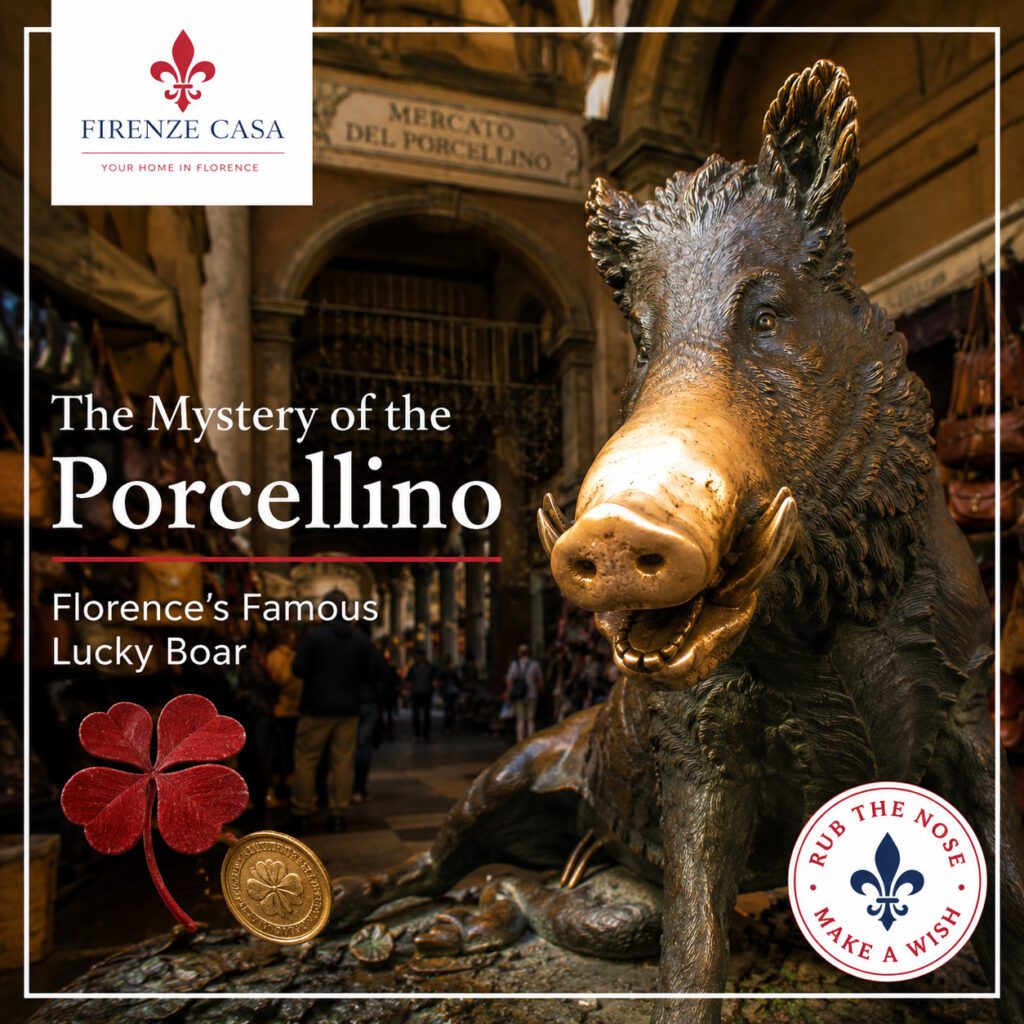
Imagine strolling through the narrow streets of Florence on a warm afternoon. The crowds slowly move between Piazza della Signoria and the Arno River, while the scent of fresh leather drifts through the historic market streets. Then you notice a small gathering of smiling visitors. One after another, they gently rub the shiny nose of a bronze wild boar before dropping a coin into the fountain beneath it.
Some laugh when the coin slips through the iron grate. Others close their eyes for a brief moment, silently making a wish. Cameras click, children reach for the animal’s nose, and locals walk past with an amused smile—as if this centuries-old ritual were simply another ordinary day in Florence.
But why has this bronze boar become one of the city’s most beloved symbols? Why do millions of people believe it brings good luck? And what is the real story behind the famous Porcellino, whose polished snout has been touched by countless hands over the centuries?
The answer leads us deep into Renaissance Florence, ancient Roman art, and one of the city’s most charming traditions—a tradition that continues to connect visitors from all over the world with Florence’s remarkable history.
The Story
Every city has its legends. In Florence, one of the most beloved involves a bronze wild boar that has quietly watched over generations of merchants, artists and travellers.
Locals affectionately call him Il Porcellino, meaning “the little pig.” The name is actually somewhat misleading because the sculpture represents a wild boar, not a domestic pig. Yet the nickname has become so deeply rooted in Florentine culture that hardly anyone refers to it by any other name.
According to tradition, visitors should first rub the Porcellino’s nose to receive good fortune. Afterwards, they place a coin into the animal’s mouth. If the coin falls through the metal grate below, their wish is said to come true, and one day they will return to Florence.
Whether you believe the legend or not hardly matters. Watching people patiently wait their turn, smiling as they complete the ritual, is part of the experience itself. The Porcellino has become far more than a sculpture—it is a symbol of hope, good fortune and the enduring magic of Florence.
There is something wonderfully timeless about this tradition. Visitors from every continent, speaking dozens of different languages, all perform exactly the same simple gesture. For just a moment, everyone shares the same hope: a little luck and perhaps the promise of returning to one of Italy’s most beautiful cities.
History & Facts
Not the Original
One of the greatest surprises is that Florence’s famous Porcellino is not the original sculpture.
The bronze statue standing today beside the Mercato Nuovo was created between 1638 and 1640 by the Florentine sculptor Pietro Tacca, one of the leading artists of the late Renaissance and early Baroque period.
Tacca did not invent the design himself. Instead, he produced a remarkably faithful bronze copy of an ancient marble sculpture depicting a wild boar. The Roman marble itself was inspired by an even older Greek Hellenistic original that has unfortunately been lost.
This means the Porcellino represents more than two thousand years of artistic tradition, linking classical Greece, imperial Rome and Renaissance Florence in a single work of art.
Why a Wild Boar?
In antiquity, the wild boar symbolised courage, strength and resilience. It frequently appeared in Greek mythology, Roman hunting scenes and medieval heraldry. The animal was admired for its fearlessness and its ability to defend itself against much larger opponents.
Pietro Tacca’s remarkable achievement lies in the realism of the sculpture. Every detail—from the rough texture of the fur to the alert ears and powerful tusks—creates the impression that the animal could stand up and walk away at any moment.
The Connection with Florence’s Merchants
The statue was placed beside the Mercato Nuovo, one of Florence’s most important commercial centres during the seventeenth century. Merchants, bankers and traders from across Europe passed through the market every day.
The fountain beneath the sculpture was not merely decorative. It also provided fresh drinking water for people working and shopping in the busy market.
Over time, the practical fountain gradually became associated with luck and prosperity. It was only a matter of time before visitors began to create small rituals around the famous boar.
🐗 Porcellino at a Glance
| Official Name | Fontana del Porcellino |
| Nickname | Il Porcellino (“The Little Pig”) |
| Actually Depicts | A wild boar |
| Sculptor | Pietro Tacca |
| Date | 1638–1640 |
| Location | Mercato Nuovo, Florence |
| Famous Tradition | Rub the nose and let a coin fall through the grate for good luck. |
Timeline
| Period | Event |
|---|---|
| Ancient Greece | Original Hellenistic sculpture created, now lost. |
| Roman Empire | Roman marble copy produced. |
| 1638–1640 | Pietro Tacca creates the famous bronze version for Florence. |
| 17th–19th century | The fountain becomes a popular meeting place for merchants. |
| 20th century | The luck ritual spreads among international visitors. |
| Today | The Porcellino is one of Florence’s most photographed landmarks and traditions. |
Why It Matters Today
Florence is famous for masterpieces by Michelangelo, Botticelli and Brunelleschi, but the Porcellino represents something different. It reminds us that cities are not defined solely by their great monuments. They also live through the traditions that people continue to practise every day.
Unlike many museum treasures protected behind glass, the Porcellino invites interaction. Visitors are encouraged to touch it, smile with it and become part of its story. Every polished centimetre of its nose reflects millions of encounters spanning generations.
The sculpture also illustrates how myths evolve. What began as a Renaissance fountain inspired by classical antiquity gradually transformed into one of Florence’s most cherished good-luck rituals. Today, the Porcellino is recognised worldwide—not only as a work of art but also as a symbol of hope, return journeys and unforgettable memories of Florence.
Perhaps that is the Porcellino’s greatest secret. The true magic is not whether the ritual really brings good luck, but that it creates a personal connection between every visitor and the city itself. Long after people have forgotten the names of churches or museums, many still remember the moment they rubbed the shiny bronze nose and quietly made a wish.
Firenze Casa Insider Tip
💡 A Local Secret
Most visitors stop at the Porcellino, rub its nose, take a photo and continue towards Ponte Vecchio. But if you have a little extra time, do something different.
Visit the Museo Nazionale del Bargello, where you can admire the original marble sculpture that inspired Pietro Tacca’s famous bronze masterpiece. Standing in front of the ancient sculpture, you can compare nearly two thousand years of artistic history—from classical antiquity to Renaissance Florence.
Even better, return to the Porcellino early in the morning, before the market becomes crowded. Without dozens of people waiting in line, the atmosphere feels completely different, and you’ll have the opportunity to appreciate the remarkable craftsmanship that often goes unnoticed during the busy hours of the day.
How to Perform the Lucky Ritual
| Step | What to Do |
|---|---|
| 1 | Gently rub the Porcellino’s shiny nose for good luck. |
| 2 | Place a coin on the boar’s tongue. |
| 3 | If the coin falls through the grate below, legend says your wish will come true—and you’ll return to Florence one day. |
Where to Find It
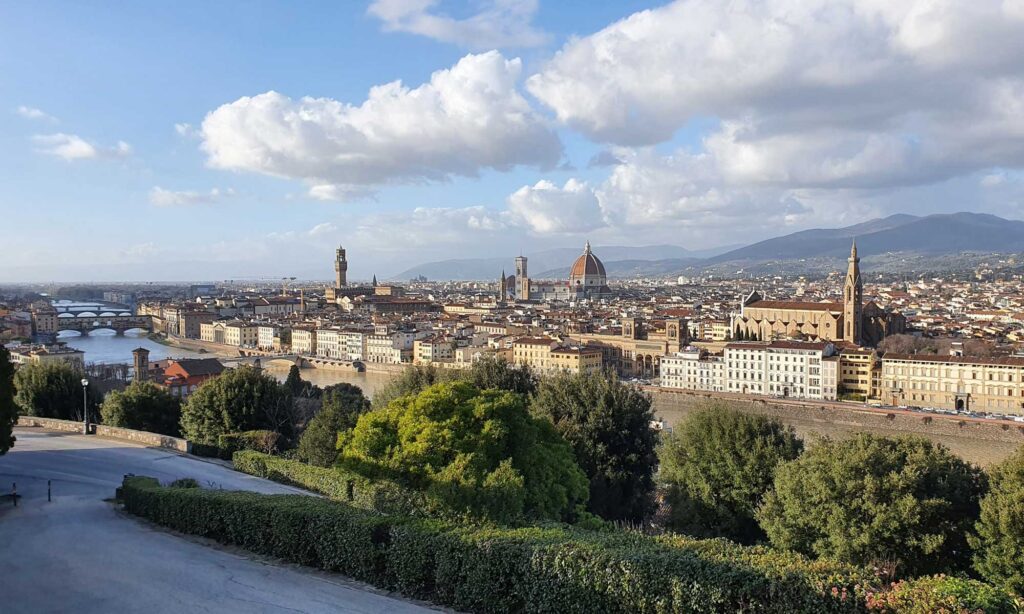
The Porcellino stands beneath the elegant loggia of the Mercato Nuovo, just a few minutes’ walk from Piazza della Signoria and Ponte Vecchio. Because of its central location, many visitors pass by without realising they are looking at one of Florence’s most beloved traditions.
The best time to visit is early in the morning, when the market is still quiet and the bronze sculpture can be admired without the usual crowds. Late in the evening also offers a special atmosphere, as the warm lights of the surrounding streets create a magical setting.
Take a few moments to explore the surrounding market as well. The Mercato Nuovo has been a place of trade for centuries and still preserves the atmosphere of historic Florence, even though today’s stalls mainly offer leather goods and souvenirs.
📍 Visitor Information
| Location | Mercato Nuovo, Florence |
| Nearest Landmark | Piazza della Signoria (2-minute walk) |
| Admission | Free |
| Best Time to Visit | Early morning or late evening |
| Time Needed | 10–15 minutes |
Frequently Asked Questions
Why is the Porcellino called a pig if it is a wild boar?
“Porcellino” means “little pig” in Italian. Although the sculpture clearly represents a wild boar, Florentines have affectionately used this nickname for centuries.
Does rubbing the Porcellino’s nose really bring good luck?
According to local tradition, rubbing the shiny nose and successfully dropping a coin through the grate brings good fortune and ensures that one day you will return to Florence.
Is the statue in Florence the original?
No. The bronze sculpture by Pietro Tacca is a seventeenth-century masterpiece inspired by an ancient Roman marble sculpture, itself based on a lost Greek original.
Where is the original sculpture today?
The ancient marble sculpture that inspired Pietro Tacca can be admired in the Museo Nazionale del Bargello in Florence.
Is visiting the Porcellino free?
Yes. The sculpture is located in a public square beneath the Mercato Nuovo and can be visited at any time without an entrance fee.
Further Reading from Firenze Casa
- Piazza della Signoria: A Complete Visitor’s Guide
- Florence’s Symbols: The Lily & the Marzocco
- Sant’Ambrogio Market: A Local’s Guide
Selected Literature
- Zöllner, Frank: Florence – Portrait of a City.
- Hibbert, Christopher: Florence: The Biography of a City.
- Brucker, Gene: Renaissance Florence.
- Museo Nazionale del Bargello – Official Collection Guide.
- Comune di Firenze – Cultural Heritage Publications.