The Buchette del Vino – Florence’s Historic Wine Windows
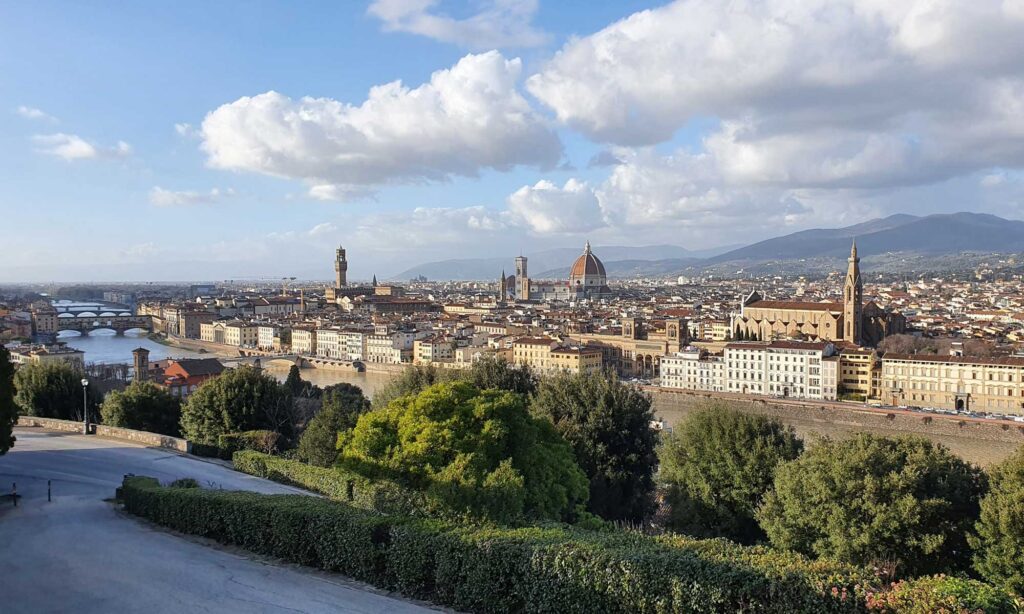
Florence is a city of grand façades, famous churches, and celebrated museums. The Uffizi Gallery and the Accademia attract much of the attention. Yet some of Florence’s most memorable details remain small, quiet, and easy to miss.
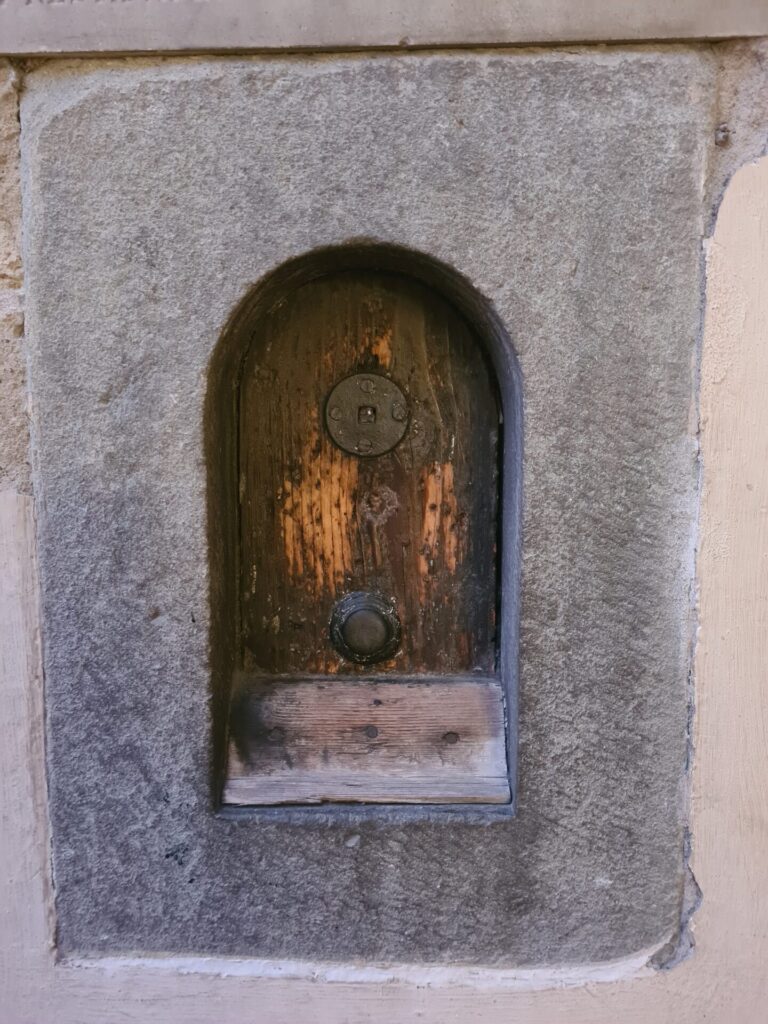
One of the most distinctive examples is the buchetta del vino — a small wine window built directly into the wall of an old palace.
At first glance, it may seem insignificant: a small arched opening in stone, usually closed with a wooden hatch. However, these modest openings belong to a surprisingly sophisticated system of urban life in early modern Florence.
A Practical System in Renaissance Florence
The buchette del vino appeared in Florence between the sixteenth and seventeenth centuries. During this period, several of the city’s most powerful families owned vineyards in the surrounding countryside while maintaining residences within the city walls.
Families such as the Antinori, Frescobaldi, and others combined agricultural production with urban presence. This allowed them to sell their own wine directly from their palaces, bypassing intermediaries such as taverns or merchants.
Although wine was widely produced throughout Tuscany, not every producer could sell it in this way. Direct sales through a private residence in the city were largely limited to wealthy families who owned both land and a palazzo in Florence.
Who Bought Wine from the Buchette?
The customers were not members of the elite, but ordinary inhabitants of Florence. Craftsmen, workers, and passersby could purchase wine directly from the household, often bringing their own containers.
At that time, wine was not considered a luxury product. It was part of daily life and often safer to drink than water. The buchette del vino therefore functioned as a practical and accessible way to supply the city with a basic necessity.
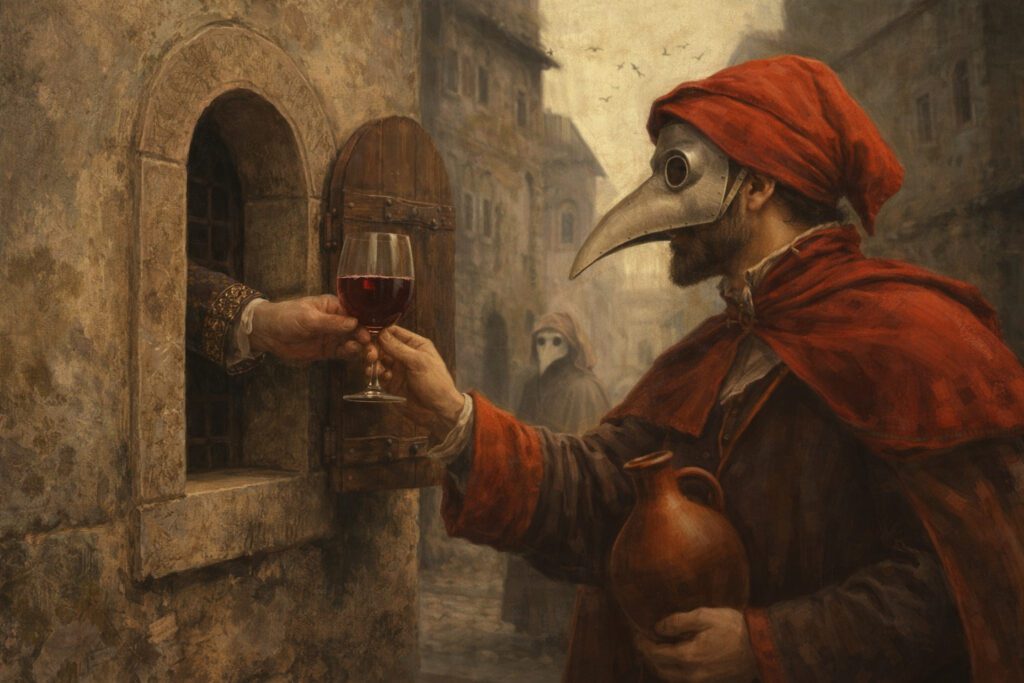
A traditional buchetta del vino in Florence, where wine was once sold directly from noble palaces to the street
You may have noticed the distinctive beaked mask worn by the buyer in historical depictions of this period. This unusual form is closely associated with plague doctors and reflects the medical understanding of the time.
The long, curved beak was designed to hold aromatic substances such as dried herbs, flowers, or cloth soaked in vinegar. Physicians believed that diseases like the plague spread through contaminated air, known as “miasma,” and that these materials could help purify the air before it was inhaled.
Although this method did not provide effective protection in modern terms, it illustrates how people attempted to reduce risk using the knowledge available to them. In this context, the buchette del vino also offered a practical advantage: they allowed transactions to take place with minimal direct contact between individuals.
At that time, wine was not considered a luxury product. It was part of daily life and often safer to drink than water. The buchette del vino therefore functioned as a practical and accessible way to supply the city with a basic necessity.
Architecture and Everyday Life
The design of the wine windows reflects a balance between openness and privacy. The transaction took place through a small opening in the wall, while the interior of the palazzo remained protected and separate.
This arrangement allowed families to participate in commerce without transforming their residence into a public shop. It also reflects the structured and regulated nature of urban life in Florence, where trade, status, and domestic space were closely intertwined.
The Role of Epidemics
The buchette del vino also proved particularly useful during periods of epidemic disease, including outbreaks of plague. By allowing transactions to take place without direct contact, they reduced physical interaction between seller and customer.
Although this was not their original purpose, the system adapted naturally to such circumstances. In this sense, the wine windows illustrate how existing urban practices could respond to changing conditions.
Where to Notice Them in Florence
Many visitors discover a buchetta del vino by accident. You can find them throughout the historic center, often embedded in the stone façades of old palazzi.
Notable examples can be seen in streets such as Via delle Belle Donne, Borgo degli Albizi, Via Santo Spirito, and areas around Santa Croce and the Oltrarno. Via della Colonna also preserves several examples that quietly reflect this tradition.
Part of their appeal lies in their subtlety. They do not stand out, and they reveal themselves only to those who take the time to look carefully.
A Slower Way of Discovering Florence
The buchette del vino invite a different way of experiencing the city. Instead of focusing only on major landmarks, they encourage visitors to notice smaller details that reveal how Florence once functioned in everyday life.
Walking through the historic center without a fixed itinerary often leads to these discoveries. A small opening in a wall can suddenly connect the present city with its past in a very immediate way.
Staying in the historic center makes this kind of exploration easier. From a quiet and carefully curated apartment like FirenzeCasa, Florence can be experienced at a slower pace, with enough time to notice details that many visitors pass by.
Further Reading
Associazione Buchette del Vino
Official tourism information – City of Florence