Palazzo Marucelli-Fenzi in Florence is one of Via San Gallo’s most important historic aristocratic residences. Created for the Marucelli family during the seventeenth century and later associated with the banking family Fenzi, the palace reveals how Florentine architecture evolved beyond the Renaissance into a richer Baroque world.
Today, the building forms part of the University of Florence and is therefore not a conventional museum with guaranteed public access. Nevertheless, its imposing façade, historic interiors and location on Via San Gallo make it worth knowing, especially for visitors interested in architecture and the less familiar palaces of Florence.
Location: Via San Gallo, Florence
Historic family: Marucelli
Later owners: Fenzi family
Architectural period: Mainly seventeenth century with later transformations
Architect associated with the palace: Gherardo Silvani
Known for: Baroque interiors and aristocratic decorative schemes
Current use: University of Florence
Public access: Limited; depends on academic use and current arrangements
Worth seeing for: Baroque architecture, family history and Via San Gallo
Palazzo Marucelli-Fenzi forms part of the wider architectural story explored in our Historic Palaces of Florence – Complete Guide.
Where Is Palazzo Marucelli-Fenzi?
Palazzo Marucelli-Fenzi stands on Via San Gallo, the historic street running north from central Florence towards the area around Piazza della Libertà.
The neighbourhood developed around religious institutions, convents, workshops and important private residences. Although Via San Gallo lies within easy walking distance of the cathedral district, many visitors use it simply as a route through the city and overlook its architecture.
Palazzo Marucelli-Fenzi rewards a slower approach. Its scale and formal street frontage immediately distinguish it from the smaller buildings surrounding it.
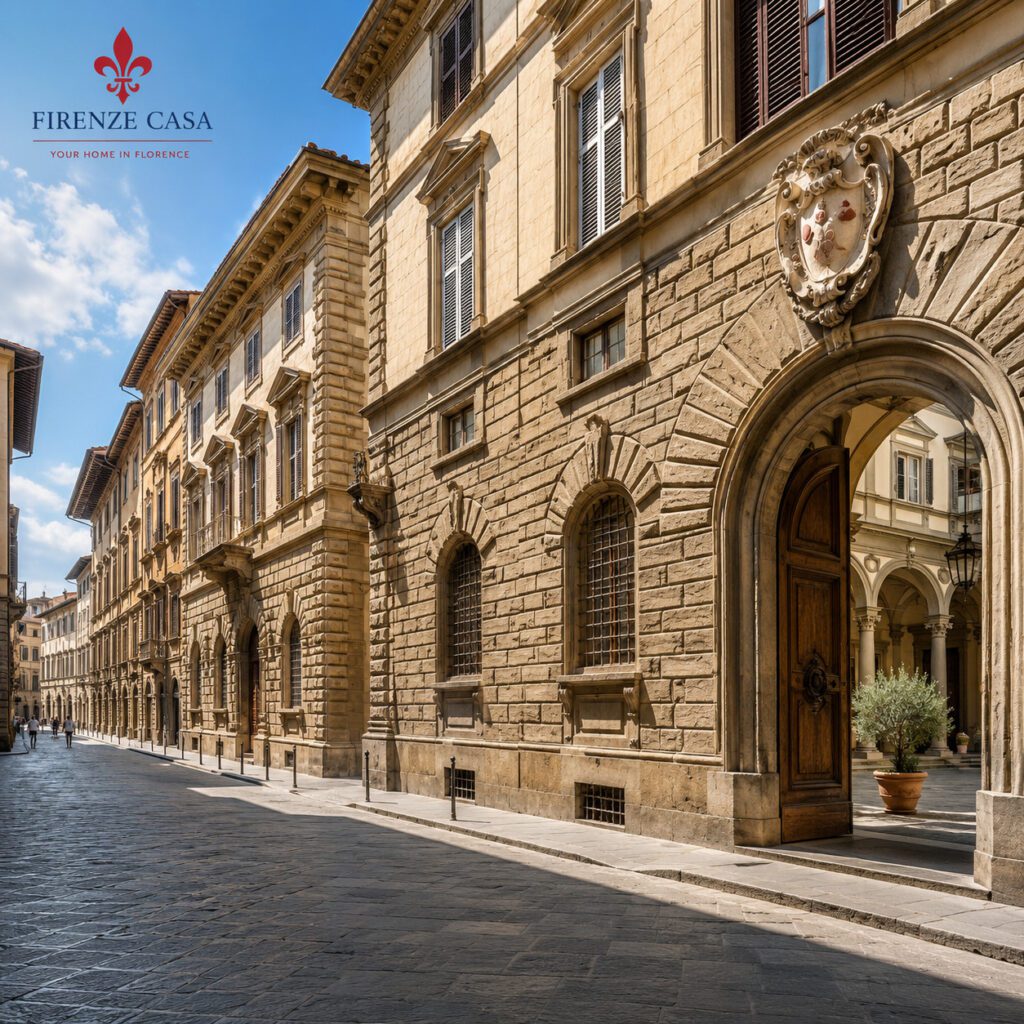
Do not rush along Via San Gallo. Look at the proportions of the façades, the entrances and the coats of arms: several centuries of Florentine social history remain visible along this street.
The Marucelli Family and the Origins of the Palace
The history of Palazzo Marucelli-Fenzi begins with the Marucelli family, an established Florentine dynasty whose wealth and social standing allowed them to commission an ambitious urban residence.
By the seventeenth century, Florence had changed considerably from the republican city of the early Renaissance. Wealthy families still used architecture to demonstrate status, but tastes had evolved towards larger ceremonial spaces, more elaborate interiors and richer decorative programmes.
The palace is associated with Gherardo Silvani, one of the important architects of seventeenth-century Florence. His work combined the solidity of Florentine architectural tradition with a more expressive approach suited to the Baroque period.
Florence is internationally associated with fifteenth-century Renaissance architecture. However, palaces such as Marucelli-Fenzi show how the city’s aristocratic culture continued to produce important architecture during the seventeenth century.
A Florentine Palace with Baroque Character
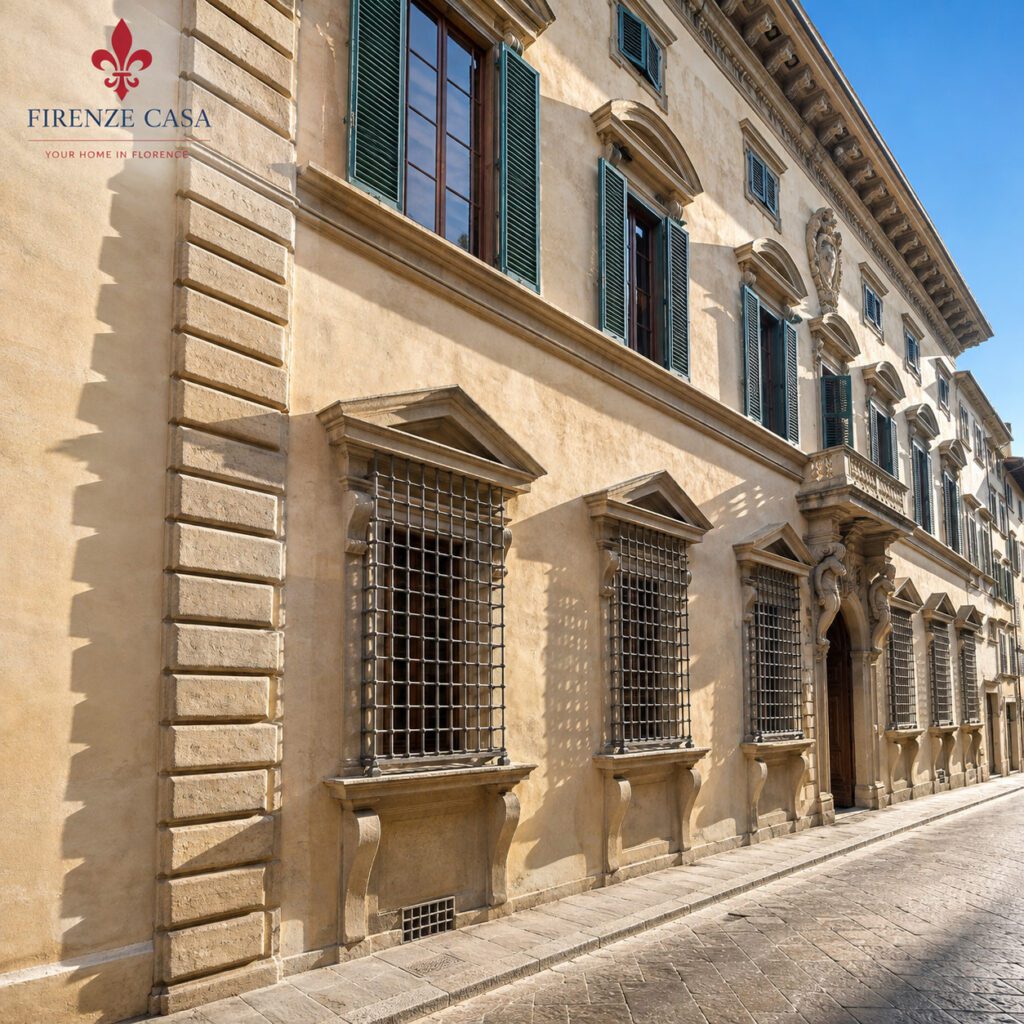
From the street, Palazzo Marucelli-Fenzi remains unmistakably Florentine. Its substantial façade, carefully organised windows and monumental entrance continue the city’s long tradition of imposing urban residences.
At the same time, the building belongs to a later architectural culture than Palazzo Medici Riccardi or Palazzo Rucellai. Seventeenth-century aristocratic architecture allowed greater decorative richness and more theatrical effects than many earlier Renaissance façades.
This makes the palace particularly useful for understanding Florence chronologically. Compare it with the fifteenth-century buildings in our Historic Palaces of Florence – Complete Guide, and the evolution of Florentine palace architecture becomes much easier to recognise.
Compare Palazzo Marucelli-Fenzi with Palazzo Medici Riccardi or Palazzo Strozzi. The later palace preserves Florentine monumentality but belongs to a more decorative architectural age.
The Interiors of Palazzo Marucelli-Fenzi
The importance of Palazzo Marucelli-Fenzi becomes even clearer inside. Florentine noble residences were designed as complete environments in which architecture, painting, sculpture and decorative arts worked together to express family status.
Reception rooms therefore mattered just as much as the exterior façade. Frescoes, ornamental ceilings and carefully organised ceremonial spaces transformed the interior into an environment designed to impress visitors.
The decorative programme includes work associated with important artists of the Florentine Baroque period, including Sebastiano Ricci. These interiors offer a striking contrast with the medieval churches and Renaissance palaces that dominate most first-time itineraries through Florence.
Historic Florentine palaces were conceived as complete architectural worlds. Courtyards, staircases, reception rooms and painted ceilings often reveal far more about aristocratic life than the comparatively restrained exterior.
From the Marucelli Family to the Fenzi Family
Like many historic residences in Florence, the palace changed owners as family fortunes and social structures evolved. Its later history became closely associated with the Fenzi family, whose name remains attached to the building today.
The Fenzis belonged to the world of banking and entrepreneurship that became increasingly important in nineteenth-century Tuscany. Their ownership connected an older aristocratic residence with a new economic elite shaped by finance, business and the modernisation of the region.
The double name Marucelli-Fenzi therefore preserves two different chapters in the palace’s history: seventeenth-century aristocratic ambition and nineteenth-century financial success.
The Fenzi Family and Nineteenth-Century Florence
The nineteenth century transformed Florence economically and politically. Banking, railways, industry and the process of Italian unification reshaped a city whose international reputation still depended largely on its medieval and Renaissance past.
The Fenzi family participated in this changing economic environment. Their association with Palazzo Marucelli-Fenzi demonstrates how prestigious historic residences could pass from older noble families to financiers and entrepreneurs.
This development was not unusual. Florence’s palaces continually changed owners, functions and meanings as the city itself evolved.
Historic palaces were not frozen monuments. New owners adapted them to changing tastes and social structures, which is one reason many Florentine residences contain architectural layers from several centuries.
Palazzo Marucelli-Fenzi and the University of Florence
Today, Palazzo Marucelli-Fenzi serves a purpose entirely different from the one imagined by its aristocratic builders. The building forms part of the University of Florence and is used for academic activities.
This continued use keeps the palace integrated into everyday city life. Students and scholars occupy spaces whose original function belonged to another social world, creating a direct connection between historic architecture and contemporary Florence.
However, the university function also affects accessibility. Palazzo Marucelli-Fenzi should not be approached like Palazzo Pitti or Palazzo Vecchio, where regular museum opening hours provide predictable visitor access.
Palazzo Marucelli-Fenzi is an active university building rather than a conventional museum. If seeing the historic interiors is important to you, check current access conditions before planning a special visit.
What to Notice from Via San Gallo
Even when the interiors are not accessible, the palace contributes strongly to the architectural character of Via San Gallo.
Begin with the overall scale of the façade. Then examine the rhythm of the windows, the framing of the openings and the monumental entrance. Together, these elements announce the importance of the residence without relying on the fortress-like rustication of some earlier Florentine palaces.
Finally, consider the building in relation to the street. Florence’s aristocratic residences rarely stood in isolation; instead, they shaped the urban fabric around them.
Palazzo Marucelli-Fenzi and Other Florentine Palaces
Palazzo Marucelli-Fenzi becomes especially interesting when compared with other residences from the same cluster.
Palazzo Rinuccini also reflects changing aristocratic tastes across several periods, while Palazzo Corsini al Parione demonstrates an even more monumental expression of Baroque Florence.
By contrast, Palazzo Gherardesca combines aristocratic architecture with an exceptional garden setting. Comparing these buildings reveals how varied elite residential architecture became after the Renaissance.
The smaller palace articles work best together. Comparing façades, ownership histories and modern uses makes it easier to see Florence as an evolving city rather than a collection of isolated masterpieces.
A Palace That Reflects a Changing Florence
The history of Palazzo Marucelli-Fenzi spans several different Florences. It begins with seventeenth-century aristocratic ambition, while the Fenzi family later connected the residence with the banking and entrepreneurial world of nineteenth-century Tuscany.
Its modern academic role adds another chapter. Students and scholars now use rooms created for a society that disappeared centuries ago.
This continuity is important. Instead of surviving only as scenery, Palazzo Marucelli-Fenzi remains part of the functioning city and demonstrates how Florence repeatedly adapts its architectural heritage to new purposes.
Why Palazzo Marucelli-Fenzi Is Worth Seeing
Palazzo Marucelli-Fenzi is worth seeing because it reveals a Florence beyond the city’s most famous Renaissance landmarks. Its architecture and interiors belong to a later aristocratic culture, while its history connects noble family life with nineteenth-century banking and modern university use.
The palace is also an excellent reason to pay closer attention to Via San Gallo. Visitors who slow down here discover monumental façades and historic residences that rarely appear on standard sightseeing itineraries.
Even without guaranteed interior access, Palazzo Marucelli-Fenzi adds an important chapter to the story of Florence’s historic palaces.
When walking along Via San Gallo, do not focus only on reaching the next famous monument. Entrances, coats of arms, window frames and monumental façades reveal much of the history that makes Florence such an extraordinary architectural city.
Frequently Asked Questions
Where is Palazzo Marucelli-Fenzi?
Palazzo Marucelli-Fenzi stands on Via San Gallo in Florence, north of the cathedral district and within walking distance of the historic centre.
Who built Palazzo Marucelli-Fenzi?
The palace developed for the Marucelli family during the seventeenth century and is associated with the Florentine architect Gherardo Silvani.
Why is it called Palazzo Marucelli-Fenzi?
The double name reflects two major periods of ownership. The palace originated with the Marucelli family and later became associated with the Fenzi family.
Is Palazzo Marucelli-Fenzi a Renaissance palace?
Its most important development belongs to the seventeenth century rather than the early Renaissance. Consequently, the palace is particularly useful for understanding the later evolution of Florentine aristocratic architecture.
Is Palazzo Marucelli-Fenzi Baroque?
The palace contains important Baroque elements and decorative interiors. Its architecture shows how Florentine noble residences evolved beyond the restrained forms associated with fifteenth-century Renaissance palaces.
Can you visit Palazzo Marucelli-Fenzi?
The building is used by the University of Florence rather than functioning as a conventional museum. Access to historic interiors may therefore depend on academic use, events and current arrangements.
What should I look for at Palazzo Marucelli-Fenzi?
From Via San Gallo, notice the scale of the façade, the organisation of the windows and the monumental entrance. When interiors are accessible, the Baroque decorative schemes provide an important contrast with Florence’s better-known Renaissance architecture.
Why is Palazzo Marucelli-Fenzi important?
The palace connects seventeenth-century aristocratic Florence with nineteenth-century banking wealth and modern academic life. It therefore illustrates how important Florentine buildings have repeatedly changed ownership and function.
Further Reading on Firenze Casa
Continue exploring Florence’s historic palaces and the evolution of aristocratic architecture:
- Historic Palaces of Florence – Complete Guide
- Palazzo Rinuccini
- Palazzo delle Cento Finestre
- Palazzo Corsini al Parione – Baroque Palace in Florence
- Palazzo Gherardesca – Renaissance Palace in Florence
References
- Università degli Studi di Firenze – Palazzo Fenzi and University Heritage
- Comune di Firenze – Historical and Architectural Resources on Florentine Palaces
- Touring Club Italiano – Guida d’Italia: Firenze e provincia
- Architectural Studies on Gherardo Silvani and Seventeenth-Century Florence
- Studies on Florentine Baroque Painting and Decorative Arts