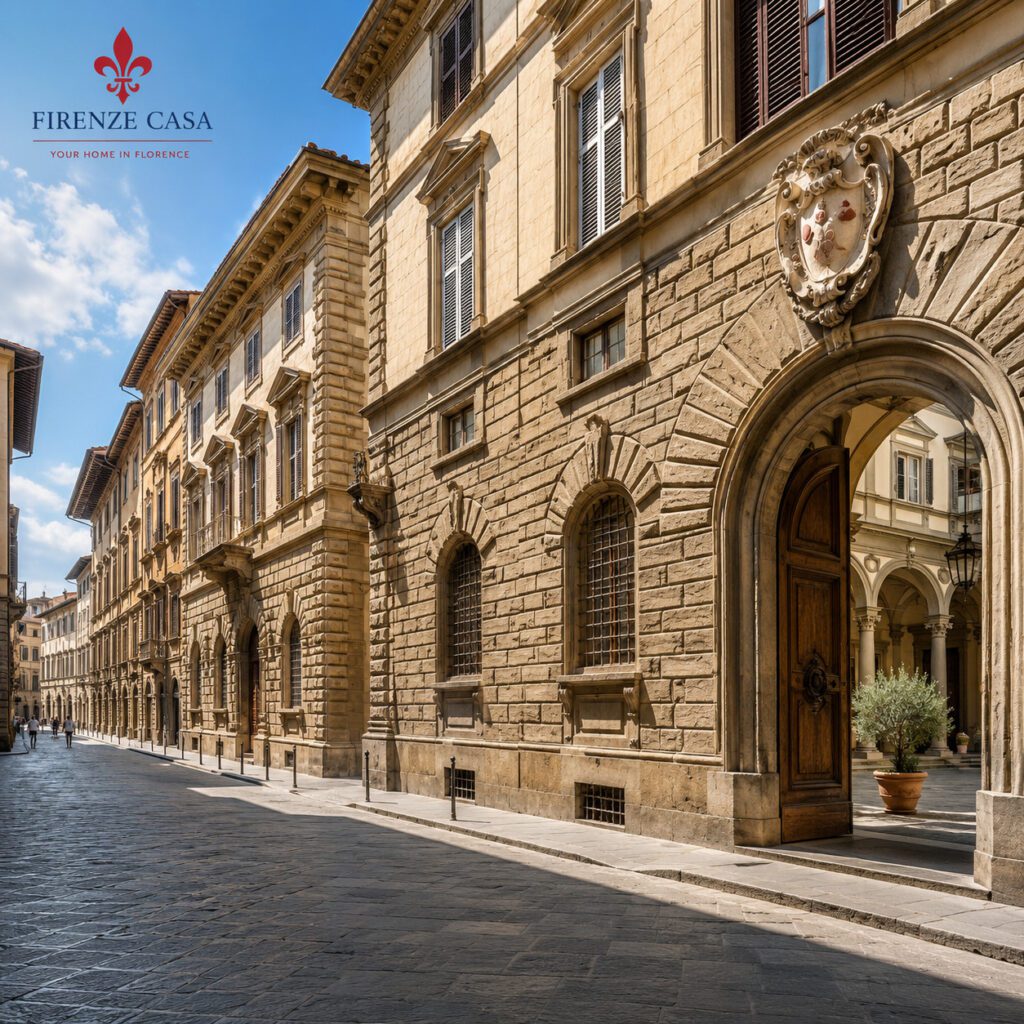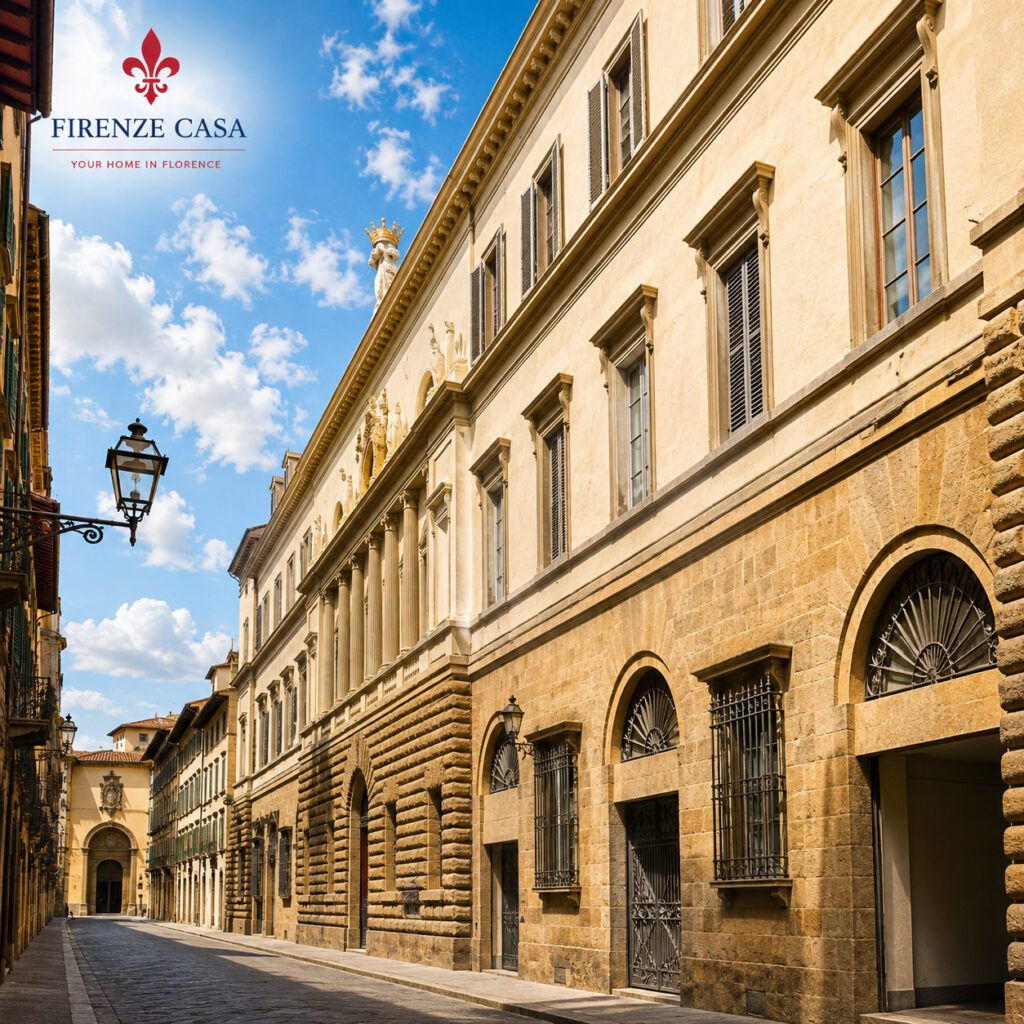
Palazzo Borghese in Florence is one of the city’s most impressive Neoclassical noble residences. The palace stands at Via Ghibellina 110, close to Piazza Santa Croce, and attracts particular attention for its richly decorated ceremonial interiors and its connection with the powerful Borghese family.
Unlike Florence’s famous Renaissance palaces, Palazzo Borghese largely reflects the aristocratic culture of the early nineteenth century. Private events and receptions now bring life to its historic rooms, although the building does not operate as a conventional public museum. Its architecture reveals an important and often overlooked chapter in the history of Florence after the Renaissance.
Address: Via Ghibellina 110, Florence
Area: Santa Croce / historic centre
Historic family: Borghese
Architectural character: Neoclassical
Known for: Monumental staircase and richly decorated ceremonial interiors
Current use: Private events and receptions
Public access: No regular museum-style access
Worth seeing for: Neoclassical architecture and later Florentine aristocratic culture
You can place Palazzo Borghese within the wider architectural story through our Historic Palaces of Florence – Complete Guide.
Where Is Palazzo Borghese?
You will find Palazzo Borghese at Via Ghibellina 110, in the eastern part of Florence’s historic centre and only a short walk from Piazza Santa Croce.
This neighbourhood brings together several layers of Florentine history within a relatively small area. Medieval streets, Renaissance residences, churches and later aristocratic buildings coexist around Santa Croce.
Visitors can therefore include the palace easily in a walk through the district. Even without interior access, its location provides useful context for understanding how Florence continued to develop beyond its Renaissance heyday.
Combine Palazzo Borghese with Piazza Santa Croce and the surrounding streets. This part of Florence is particularly rewarding for comparing buildings from different periods within a compact area.
Why Is It Called Palazzo Borghese?
The palace takes its modern name from the Borghese family, one of Italy’s most famous aristocratic dynasties. The family originated in Siena before establishing itself in Rome, where it achieved enormous political and social influence.
Camillo Borghese greatly increased the family’s prestige when he became Pope Paul V in 1605. During the following centuries, the Borghese accumulated titles and estates while building one of Italy’s celebrated art collections.
However, the Florentine palace did not begin as a Borghese residence. Marriages and inheritances between Italian aristocratic families eventually created the connection with the famous dynasty.
The names of Florentine palaces do not always identify their original builders. Marriage, inheritance and changing ownership frequently connected residences with new families, whose names eventually became attached to the buildings.
The Earlier History of the Palace
The site of Palazzo Borghese has a history extending well beyond its present Neoclassical appearance. Earlier structures already occupied the property before successive owners enlarged and transformed the complex.
Such gradual development was typical of Florence. Wealthy families frequently acquired neighbouring houses and combined them into increasingly substantial residences instead of constructing entirely new palaces.
A major transformation eventually gave the building its present character. During the early nineteenth century, new architectural ideas reshaped the residence according to contemporary aristocratic tastes.
The Neoclassical Transformation
The character that distinguishes Palazzo Borghese today largely emerged during the early nineteenth century. Across Europe, Neoclassical architecture and decoration drew inspiration from the art and architecture of ancient Greece and Rome.
Florence participated in this movement without abandoning its powerful Renaissance identity. Aristocratic patrons commissioned new interiors and modernised older residences as ideas of elegance, ceremony and social prestige changed.
As a result, Palazzo Borghese became one of the city’s most striking examples of this later aristocratic culture. Its ceremonial spaces served not merely as rooms for everyday life but as impressive settings for receiving guests.
Palazzo Borghese is particularly valuable because it shifts attention away from the Renaissance. Its architecture shows that Florence continued to absorb new European styles and social fashions centuries after the Medici era.
The Spectacular Interiors
The historic interiors provide the strongest contrast with the palace’s relatively restrained exterior. Monumental staircases lead towards richly decorated reception rooms that once provided an elegant setting for aristocratic society.
Columns, stucco ornament, painted ceilings, mirrors and gilded details create an atmosphere very different from the austere stone architecture usually associated with Renaissance Florence.
Formal gatherings and celebrations filled these rooms with guests. Architecture and decoration worked together to transform arrival, movement and reception into part of the social ritual of palace life.
If you have an opportunity to enter Palazzo Borghese during an event, pay particular attention to the contrast between the relatively discreet exterior and the elaborate ceremonial world inside.
The Monumental Staircase
In an aristocratic residence, a grand staircase did much more than connect different floors. It formed an important part of the ceremonial experience of entering the palace.
At Palazzo Borghese, the staircase prepares visitors for the richly decorated reception rooms beyond. Its scale, architectural details and carefully organised layout all contribute to a sense of arrival.
This theatrical approach distinguishes later aristocratic residences from many earlier Florentine palaces. Renaissance architects often expressed monumentality more strongly through exterior stonework and enclosed courtyards.
Life in a Neoclassical Florentine Palace
Palazzo Borghese belonged to a social world of receptions, formal dinners, celebrations and carefully organised encounters. The residence functioned simultaneously as a private home and as a setting for public representation.
Large reception rooms gave the owners space to entertain important guests. At the same time, elaborate decorative programmes communicated wealth, education and cultural refinement.
This social function explains much of the splendour inside Palazzo Borghese. Its owners did not simply live within these rooms; they also used them to stage aristocratic life.
In nineteenth-century aristocratic society, architecture formed part of social ceremony. Staircases, reception rooms and ballrooms influenced how guests arrived, moved through the residence and encountered their hosts.
Florence Beyond the Renaissance
Visitors often associate Florence almost exclusively with Brunelleschi, Michelangelo and the Medici. Yet the city continued to change dramatically after the Renaissance.
New architectural styles appeared, aristocratic families modernised their residences and changing social customs required different kinds of interior spaces. Baroque, Neoclassical and nineteenth-century architecture therefore form important layers of the historic city.
Palazzo Borghese represents this later Florence particularly well. A comparison with Palazzo Corsini al Parione demonstrates how dramatically aristocratic architecture evolved after the Renaissance.
Palazzo Borghese and Other Historic Palaces
A comparison with other Florentine residences makes the architectural character of Palazzo Borghese much easier to understand.
Palazzo Medici Riccardi represents the disciplined architecture of the early Renaissance. By contrast, Palazzo Corsini introduces the more theatrical language of Baroque Florence.
Meanwhile, Palazzo delle Cento Finestre preserves important later decorative layers. Palazzo Rinuccini, in turn, illustrates how noble residences could evolve gradually over several centuries.
Finally, Palazzo Borghese adds the Neoclassical period to this sequence. Together, these buildings create a much broader picture of Florentine palace architecture.
Compare the different ways Florentine palaces express prestige. Renaissance residences often rely on mass and stonework, whereas later palaces increasingly use ceremonial interiors, decorative richness and theatrical movement.
From Private Residence to Event Venue
Like many historic buildings in Florence, Palazzo Borghese has adapted to modern life. Receptions, weddings, conferences and other organised events now bring visitors into its ceremonial spaces.
This contemporary function keeps the historic interiors active without transforming the entire building into a conventional museum. In some ways, modern events even continue the palace’s long tradition as a setting for social gatherings.
Access consequently depends on scheduled occasions and current arrangements rather than fixed museum opening hours.
New functions often help historic buildings survive. Palazzo Borghese continues to host gatherings in its grand reception rooms, preserving something of their original ceremonial character.
Can You Visit Palazzo Borghese?
Palazzo Borghese does not operate as a conventional public museum. Therefore, visitors should not expect to arrive during normal sightseeing hours and tour the historic rooms independently.
Private functions and organised occasions provide the main opportunities to enter the interiors. Anyone particularly interested in seeing the ceremonial rooms should check current possibilities before planning a visit.
Fortunately, you can easily see the exterior from Via Ghibellina. Reaching the palace requires almost no detour while exploring the Santa Croce district.
Address: Via Ghibellina 110, Florence
Area: Santa Croce / historic centre
Public museum: No
Interior access: Mainly during events and organised occasions
Best combined with: Piazza Santa Croce and the surrounding historic streets
Best advice: Check current access before planning a visit specifically for the interiors
What to See Near Palazzo Borghese
Piazza Santa Croce and the Basilica of Santa Croce lie only a short walk from Palazzo Borghese. Throughout the surrounding district, historic streets, noble residences and monuments represent several periods of Florentine history.
From here, visitors can continue west towards Piazza della Signoria or explore the quieter streets east of Santa Croce. For this reason, the palace works particularly well as one stop within a wider architectural walk.
Its location also makes comparisons easy. Medieval and Renaissance Florence survives only minutes away from this very different expression of nineteenth-century aristocratic taste.
Do not make Palazzo Borghese a separate destination unless you have confirmed interior access. Instead, include it naturally in a walk through Santa Croce and use it to compare different periods of Florentine architecture.
Why Palazzo Borghese Is Worth Seeing
Palazzo Borghese is worth seeing because it reveals a Florence that developed long after the Renaissance. Its Neoclassical interiors show how nineteenth-century aristocratic society embraced new architectural fashions while continuing the city’s long tradition of palace culture.
Especially striking is the contrast between the restrained exterior and the spectacular ceremonial rooms. This difference also demonstrates why visitors should never judge Florentine palaces solely from the street.
Within our historic-palace cluster, Palazzo Borghese therefore fills an important gap. Together, Renaissance, Baroque and Neoclassical residences tell a much richer story of Florence than the Renaissance alone.
Palazzo Borghese reminds us that Florence did not become an architectural museum after the Renaissance. Every century added new tastes, new interiors and new ways of expressing wealth and social status.
Frequently Asked Questions
Where is Palazzo Borghese in Florence?
You will find Palazzo Borghese at Via Ghibellina 110 in Florence’s historic centre, only a short walk from Piazza Santa Croce.
Why is it called Palazzo Borghese?
The palace takes its modern name from the Borghese family, the powerful Italian aristocratic dynasty that became particularly prominent in Rome. Later family relationships and inheritance created its connection with the Florentine residence.
Is Palazzo Borghese a Renaissance palace?
No. Although earlier structures occupied the site, Palazzo Borghese owes much of its present character to the Neoclassical transformation of the early nineteenth century.
What is special about Palazzo Borghese?
Its richly decorated Neoclassical interiors, monumental staircase and ceremonial reception rooms distinguish Palazzo Borghese from many better-known Florentine residences.
Can you visit Palazzo Borghese?
The palace does not operate as a conventional public museum. Organised events and private functions provide the main opportunities to experience the historic interiors.
What is Palazzo Borghese used for today?
Today, the historic ceremonial spaces host receptions, weddings, conferences and other organised events.
Is Palazzo Borghese worth seeing from outside?
Yes, particularly when exploring the Santa Croce district. However, the palace reveals its greatest architectural splendour in the interiors.
What should I see near Palazzo Borghese?
Piazza Santa Croce, the Basilica of Santa Croce and the surrounding historic streets combine easily with Palazzo Borghese during the same walk.
Further Reading on Firenze Casa
Continue exploring Florence’s historic residences and the evolution of aristocratic architecture beyond the Renaissance:
- Historic Palaces of Florence – Complete Guide
- Palazzo Rinuccini in Florence
- Palazzo Corsini al Parione in Florence
- Palazzo delle Cento Finestre in Florence
- Palazzo Pitti – Grand Ducal Palace of Florence
References
- Comune di Firenze – Historical and Architectural Documentation on Florentine Buildings
- Regione Toscana – Architectural Heritage Resources
- Touring Club Italiano – Guida d’Italia: Firenze e provincia
- Walther Limburger – Die Gebäude von Florenz
- Historical Studies of Florentine Palaces and Noble Families