
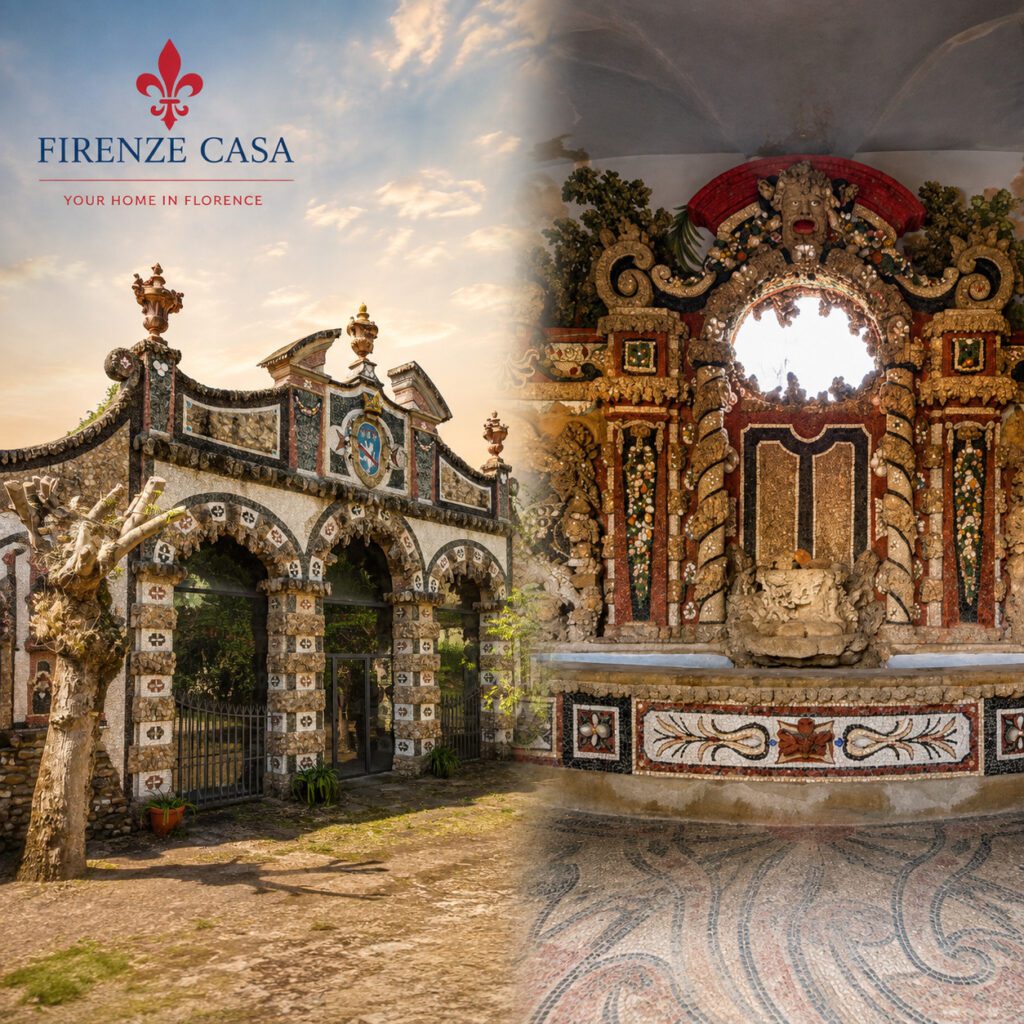
Ninfeo Bandini is one of those unusual places that reveal a quieter and more private side of Renaissance Florence. Away from monumental churches, famous palaces and crowded museums, this little-known nymphaeum belongs to a tradition in which architecture, water and nature were brought together to create spaces of retreat.
For travellers interested in Florence beyond its famous landmarks, the site opens a window onto Renaissance garden culture and the private world of Florentine villas and residences. It is precisely this lesser-known side of the city that we explore in our Florence Secrets and Traditions – Complete Guide.
Site: Ninfeo Bandini
Type: historic nymphaeum
Cultural context: Renaissance garden architecture
Inspiration: ancient Greek and Roman nymphaea
Main elements: architecture, water and garden design
Character: intimate and little known
Main interest: the relationship between Renaissance architecture and landscape
What Is the Ninfeo Bandini?
The word ninfeo, or nymphaeum, has its origins in antiquity. Greek and Roman nymphaea were originally associated with springs and water nymphs. Over time, the term came to describe elaborate architectural settings built around fountains, pools and flowing water.
During the Renaissance, architects and patrons rediscovered this ancient tradition. Nymphaea became fashionable elements of villas and gardens, particularly among wealthy families eager to demonstrate their familiarity with classical culture.
The Ninfeo Bandini belongs to this broader tradition. Rather than functioning as a major public monument, it formed part of the more intimate architectural world associated with gardens, leisure and private life.
A Renaissance nymphaeum was more than an ornamental fountain. Inspired by ancient models, it combined architecture and water to create a cool, atmospheric retreat within a garden.
A Renaissance Fascination with Antiquity
Florence is usually associated with Renaissance painting, sculpture and monumental architecture, but the rediscovery of antiquity also transformed gardens and landscapes.
Humanist scholars and wealthy patrons studied ancient texts and the remains of Roman villas. Gardens increasingly became carefully designed environments in which terraces, fountains, grottoes, sculptures and architectural features created a dialogue between art and nature.
Nymphaea fitted perfectly into this vision. Water provided movement and sound, while shaded architectural spaces offered relief from the Tuscan summer heat.
This fascination with antiquity extended across Florentine culture. Our Medici Family guide shows how classical learning, architecture and artistic patronage became central to the cultural identity of Renaissance Florence.
The Bandini Name and Florentine Society
The name of the nymphaeum connects the site with the Bandini name and the complex social world of Renaissance Florence. Wealthy Florentines shaped not only the streets of the city but also the villas, gardens and estates of the surrounding countryside.
Private architectural projects could express education and social standing as effectively as an urban palace or family chapel. Classical references were therefore more than decoration: they demonstrated familiarity with the cultural language of antiquity that became so important during the fifteenth and sixteenth centuries.
This wider culture of private patronage can be seen throughout Florence. Families created palaces, chapels, courtyards and gardens that together transformed the physical appearance of the Renaissance city.
Architecture, Water and Nature
The fascination of a Renaissance nymphaeum lies in the relationship between built architecture and the natural environment. Unlike a conventional interior, it was designed to interact with light, vegetation and water.
Stone surfaces, niches and architectural details created a theatrical setting. Water introduced movement, reflections and sound, while plants softened the boundary between architecture and garden.
Together, these elements produced an environment deliberately different from the streets and formal interiors of the city. The garden itself became a sequence of carefully composed spaces.
When exploring historic gardens around Florence, notice how niches, arches, fountains and terraces frame views. Renaissance designers often treated gardens almost like a sequence of architectural rooms.
A Different Side of Renaissance Florence
Places such as the Ninfeo Bandini broaden our understanding of the Renaissance. Florence’s cultural transformation did not take place only inside artists’ workshops, churches and palaces.
It also influenced the landscapes surrounding private residences. Gardens became places where sculpture, architecture, engineering and botany could meet.
This is particularly evident in the villas scattered across the hills of Florence, where wealthy families combined country residences, cultivated landscapes and designed gardens while remaining closely connected with the city below.
Historic nymphaea belong to this world. They represent the Renaissance desire to recreate an idealised vision of classical antiquity while adapting it to contemporary Florentine life.
Florence and the Culture of the Renaissance Garden
The idea behind a nymphaeum becomes especially clear when compared with Florence’s great Renaissance gardens. The most famous example is the Boboli Gardens behind Palazzo Pitti, where the Medici transformed the landscape into an elaborate extension of their grand-ducal residence.
Architecture and nature were carefully combined. Fountains, grottoes, sculptures, terraces and long perspectives turned the garden into an artistic environment rather than simply an area planted with trees and flowers.
Smaller private gardens followed similar principles on a more intimate scale. A nymphaeum could become a focal point and provide a secluded setting for conversation, contemplation or relief from the summer heat.
The wider variety of designed landscapes can be explored in our guide to Most Beautiful Gardens in Florence, which shows how Renaissance families and later owners created secluded green spaces behind walls, villas and religious institutions.
Water as an Architectural Element
Water played a particularly important role in Italian Renaissance gardens. It could animate a static architectural composition, introduce sound and reflections, cool the surrounding air and guide movement through the landscape.
Fountains and channels also demonstrated technical skill. Bringing water into a garden and controlling its movement required engineering knowledge as well as artistic imagination.
The combination of practical engineering and visual theatre explains why water became so important in the gardens of villas and princely residences. In a nymphaeum, architecture and water were conceived as parts of the same experience.
Renaissance garden designers used water not only as decoration. Fountains, channels and pools could guide visitors through the landscape, cool shaded spaces and create constantly changing views and sounds.
From Private Gardens to the Medici Landscape
The Medici developed the relationship between villa, garden and landscape on an extraordinary scale. Their residences eventually formed a network extending from Florence into the surrounding countryside.
At Palazzo Pitti and Boboli, the garden became part of the architecture of power. Elsewhere, Medici villas combined formal gardens, agricultural estates and carefully designed views across the Tuscan landscape.
Sites such as the Ninfeo Bandini belong to the same broader cultural tradition even when their scale and historical circumstances were very different. They help explain why water features, grottoes and architectural garden spaces became such distinctive elements of Tuscan villa culture.
Gardens Designed Like Rooms
One of the most interesting principles of Italian garden design is the idea that outdoor spaces can function almost like rooms. Hedges, walls, terraces and rows of trees define boundaries, while steps and pathways connect one space with another.
Water features and nymphaea could serve as destinations within this sequence. Rather than revealing the entire garden at once, designers created changing perspectives as visitors moved through the landscape.
This approach survives particularly clearly in the historic gardens around Florence. At Villa Gamberaia near Settignano, for example, terraces, hedges, water and carefully framed views demonstrate how architecture and landscape can become almost inseparable.
Why the Ninfeo Bandini Is Easily Overlooked
Most visitors naturally concentrate on celebrated monuments such as the Duomo, Palazzo Vecchio, Santa Croce and the Uffizi. Smaller historic sites therefore remain outside the standard itinerary.
The Ninfeo Bandini belongs to another Florence: one of private gardens, hidden architectural details and places whose importance becomes clear only when their historical context is understood.
That relative obscurity is precisely what makes such sites valuable. They remind us that the Renaissance city extended far beyond the monuments appearing in conventional guidebooks.
The same principle lies behind our guide to the Secret Courtyards of Florence, where smaller architectural spaces reveal how Florentines shaped light, shade, privacy and everyday life within their palaces and institutions.
Why Visit Lesser-Known Historic Sites in Florence?
Florence contains such an extraordinary concentration of famous art that smaller monuments can easily disappear in their shadow. Yet these places often provide valuable context for understanding the city.
A chapel may reveal the ambitions of a particular family. A forgotten cloister can preserve an important fresco cycle. An ancient tomb can show that the history of the Florentine area began centuries before the Roman city. A Renaissance nymphaeum, meanwhile, reveals how classical ideas influenced gardens and private leisure.
Exploring these places creates a more layered picture of Florence. Instead of seeing the city only as a collection of masterpieces, visitors begin to understand it as an environment shaped by generations of families, artists, architects and patrons.
Experiencing Florence Through Its Gardens
Historic gardens offer a useful counterpoint to Florence’s stone streets, churches and museums. They reveal another aspect of the city’s architectural culture and often provide a more relaxed way to understand Renaissance ideas about proportion, perspective and landscape.
The contrast between formal and informal green spaces is explored in our guide to the most beautiful parks in Florence. Boboli represents the monumental tradition of courtly garden design, while other spaces reveal quieter and more everyday relationships between Florence and nature.
For travellers interested specifically in historic design, however, gardens connected with villas and Renaissance residences are particularly rewarding because architecture and landscape were conceived together.
Some of Florence’s most rewarding discoveries are not individual masterpieces but places that reveal how Florentines used architecture, gardens and private spaces during the Renaissance.
Visiting the Ninfeo Bandini
The Ninfeo Bandini is not a conventional museum or major tourist attraction with predictable daily opening hours. Anyone wishing to see the site should therefore verify current access arrangements before making a special journey.
Historic sites associated with private properties, gardens or smaller cultural institutions may have limited access, special openings or visits organised only on particular occasions.
Even when a site cannot be entered freely, understanding its history adds another dimension to exploring Florence and the surrounding landscape. Nymphaea belong to a broader architectural culture that can still be appreciated in historic gardens and villas throughout the Florentine area.
Check current access information before planning a visit specifically around the Ninfeo Bandini. Lesser-known historic properties may not follow regular museum opening schedules.
Frequently Asked Questions
What is a nymphaeum?
A nymphaeum is an architectural setting traditionally associated with water, fountains and springs. Renaissance designers revived the idea from ancient Greek and Roman examples for villas and gardens.
What is the Ninfeo Bandini?
The Ninfeo Bandini is a little-known historic nymphaeum associated with Florentine garden culture and the Renaissance fascination with classical antiquity.
Why were nymphaea popular during the Renaissance?
They combined classical references with architecture, water and garden design. They also created cool and atmospheric retreats within villas and private gardens.
Why was water important in Renaissance gardens?
Water added movement, sound, reflections and cooling effects while also demonstrating sophisticated engineering. Fountains and channels could become structural elements of the garden design.
Where can I see famous Renaissance gardens in Florence?
The Boboli Gardens behind Palazzo Pitti are the best-known example. Historic villas and gardens in the hills around Florence provide further examples of the Florentine garden tradition.
Can you visit the Ninfeo Bandini?
Access may be limited and should be checked before making a special journey. It should not be assumed to operate like a conventional museum.
Why the Ninfeo Bandini Is Worth Discovering
The Ninfeo Bandini reveals a refined and easily overlooked aspect of Renaissance Florence. Its significance lies not in monumental scale but in the idea of the garden as a carefully designed world in which architecture, water and nature interact.
It also reflects the Renaissance fascination with classical antiquity. Ancient architectural forms were not simply copied; they were reinterpreted for the villas, gardens and lifestyles of contemporary Florentine society.
Seen alongside Boboli, the Medici villas and the historic gardens of the Florentine hills, the nymphaeum becomes part of a much larger story about how Renaissance culture transformed landscapes as well as buildings.
For anyone interested in Florence beyond its familiar monuments, the Ninfeo Bandini adds another intriguing layer to the city’s remarkable architectural heritage.
Further Reading on Firenze Casa
- Florence Secrets and Traditions – Complete Guide
- The Most Beautiful Gardens in Florence
- Palazzo Pitti – History, Architecture & Museums
- The Medici Family – The Dynasty That Shaped Florence
- The Hills of Florence – Exploring the Arno Valley
- Settignano – A Historic Village in the Hills of Florence
- Secret Courtyards of Florence – Hidden Gems & Tranquil Spaces
- The Most Beautiful Parks in Florence
References
- Comune di Firenze – historical and cultural heritage resources.
- Regione Toscana – cultural heritage and historic architecture resources.
- Touring Club Italiano – Firenze e provincia.
- Acton, Harold – Tuscan Villas.
- Lazzaro, Claudia – The Italian Renaissance Garden.
- Coffin, David R. – Gardens and Gardening in Papal Rome.

