
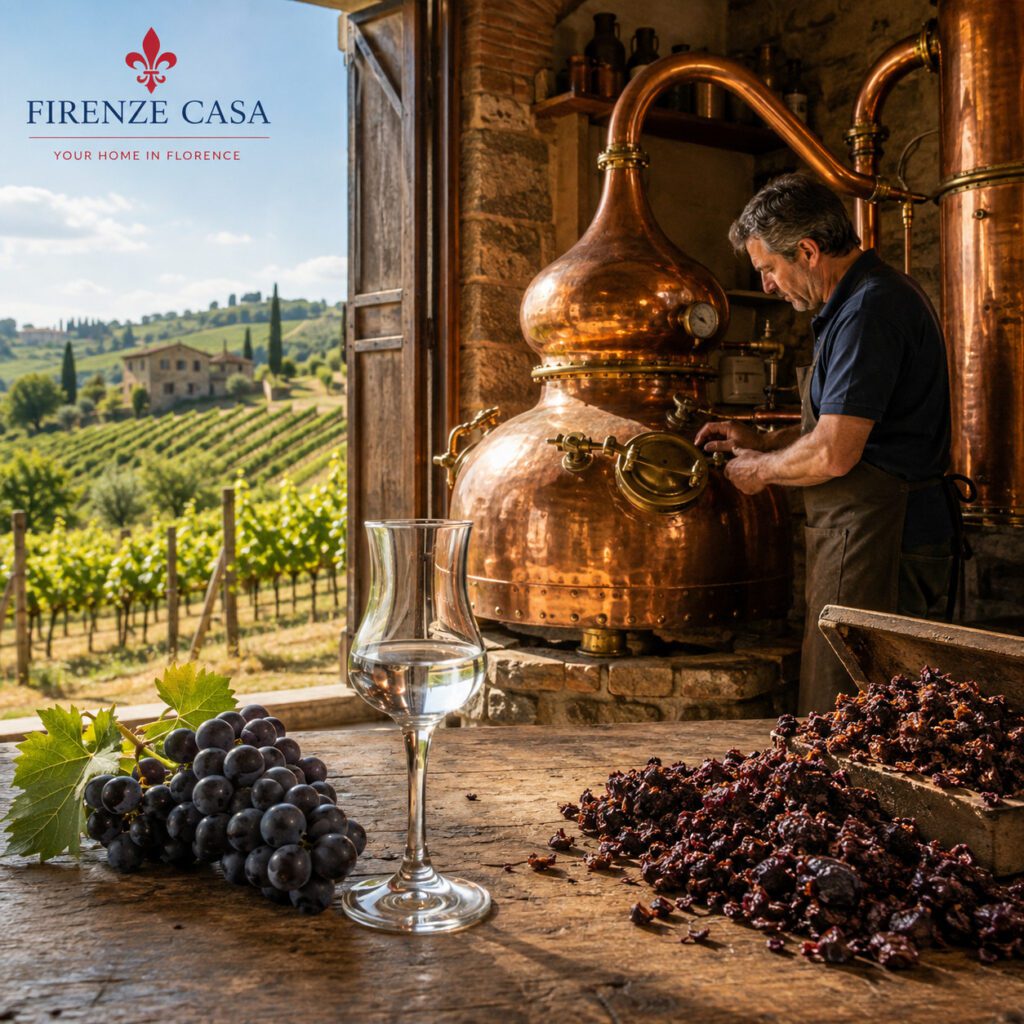
Tuscan grappa begins where winemaking leaves something behind. Instead of using grape juice, distillers work with vinaccia – the skins, seeds and other solid grape material remaining after the winemaking process.
Grappa is not specifically Tuscan; it belongs to a much broader Italian distilling tradition. Tuscany is nevertheless an especially interesting place to explore it because vineyards dominate so much of the region, from Chianti to Montalcino and Montepulciano. Grappa therefore offers another way to understand the relationship between grapes, wine and agricultural tradition.
For the wider drinking culture of the city and region, see our Drinks of Florence – Wine, Cocktails and Tuscan Traditions.
Spirit: Grappa
Raw material: Grape pomace (vinaccia)
Production: Distillation rather than fermentation alone
Tuscan connection: The region’s extensive wine production
Important grape: Sangiovese
Main styles: Young and wood-aged grappa
Traditional occasion: Digestivo after a meal
Also encountered in: Caffè corretto
What Is Grappa?
Grappa is an Italian spirit distilled from grape pomace. This material consists mainly of skins and seeds remaining after grapes have entered the winemaking process.
The spirit is produced in several Italian wine regions, with particularly strong historical traditions in northern Italy. Tuscany nevertheless contributes its own expressions because of the enormous importance of viticulture to the region.
Young grappa may be colourless, fresh and aromatic, while wood ageing can introduce golden tones and additional notes of spice, vanilla or dried fruit.
Grappa is not distilled from finished wine. Its defining raw material is the grape pomace left from winemaking.
From Vineyard to Vinaccia
The story begins during winemaking. Once the juice or fermenting wine separates from the solid grape material, the remaining pomace becomes vinaccia.
That material still contains aromatic compounds and, depending on the type of pomace and stage of vinification, alcohol or fermentable sugars. Distillers can therefore transform it into a spirit rather than treating it simply as waste.
Freshness matters because pomace changes quickly after separation from the wine. Careful handling and appropriate storage help preserve the qualities needed for good distillation.
How Grappa Is Distilled
Distillation separates and concentrates volatile compounds through controlled heating and condensation. The distiller places the pomace in a still, heats it and collects the vapours that contain alcohol and aroma.
Careful separation of the different fractions is essential. The desirable central portion, traditionally known as the cuore or heart, forms the basis of the finished spirit.
Distilleries use different equipment and methods, from small batch systems to highly controlled modern installations. In every case, the objective is more than producing alcohol: good distillation preserves desirable aromas while avoiding harsh or unwanted components.
The quality of grappa depends on both the pomace and the distiller. Excellent grapes alone do not guarantee an excellent spirit if the raw material is poorly handled or the distillation is imprecise.
Grappa and the Tuscan Wine Harvest
Historically, distilling pomace extended the usefulness of the grape harvest. Wine production generated valuable juice but also left substantial solid material behind.
Transforming some of that residue into grappa fits naturally within a rural culture that sought to use agricultural resources efficiently. Similar traditions developed throughout Italian wine regions rather than in Tuscany alone.
In Tuscany, however, the relationship is particularly visible because wine shapes so much of the landscape. Our Wines of Tuscany – The Complete Guide explores the vineyards and denominations from which this broader culture developed.
Sangiovese and Tuscan Grappa
Sangiovese dominates many of Tuscany’s most famous red wines and therefore also provides pomace for some Tuscan grappas.
Distillers may work with a single grape variety or with pomace from several varieties. A varietal grappa can be particularly interesting for wine enthusiasts because it allows them to encounter the aromatic character of a familiar grape in a completely different form.
The result should not be expected to taste like wine. Distillation creates an entirely different drink, even when wine and grappa originate from the same grape variety.
For the most famous Sangiovese-based territory close to Florence, see our guide to Chianti Wine.
Young Grappa – Grappa Giovane
Grappa giovane does not gain its principal character from prolonged wood ageing. It is generally clear and places greater emphasis on the original pomace and the distillation itself.
Depending on grape variety and production method, good young grappa may show floral, fruity, herbal or distinctly vinous aromas.
Its colourless appearance does not mean that it is necessarily simple or harsh. Raw-material quality and distillation matter far more than colour alone.
Aged Grappa – Grappa Invecchiata
Wood ageing creates a different style. As grappa matures in barrels, the spirit gradually changes in colour, aroma and texture.
Oak and other permitted woods can contribute notes such as vanilla, spice, toast, nuts or dried fruit. Barrel size, length of maturation and previous use also influence the result.
Aged grappa may feel rounder and softer than a young spirit, although ageing by itself does not guarantee quality.
Riserva and Longer-Aged Styles
Labels may also indicate longer periods of maturation through terms governed by the applicable grappa regulations. These spirits often develop greater complexity and suit slower tasting.
They demonstrate why premium grappa should not automatically be treated as something to swallow quickly after dinner.
Why Grappa Became a Digestivo
Grappa traditionally belongs to the world of the digestivo: drinks enjoyed after a meal rather than before it.
The name reflects an old cultural idea about digestion, but it is better to understand the custom socially rather than medically. A small final drink marks the end of lunch or dinner and allows conversation to continue.
This places grappa at the opposite end of the meal from aperitivo. A Negroni or vermouth-based drink may come before dinner; grappa traditionally follows it.
Aperitivo and digestivo describe different moments around the meal. Grappa traditionally belongs after dinner, while Negroni, vermouth and similar drinks belong before it.
How to Drink Grappa
High-quality grappa is best served in a modest quantity and tasted slowly. Drinking it as a shot makes it much harder to notice the aromas beneath the alcohol.
Younger aromatic styles often work well slightly cooler, while aged examples generally reveal more complexity when served less chilled.
A tulip-shaped glass can help concentrate aromas without directing too much alcohol immediately towards the nose.
Do not put your nose deeply into a glass of strong grappa. Approach it gradually, then take a small sip and allow the aroma to develop after the alcohol’s first impression fades.
Caffè Corretto – Grappa and Coffee
A caffè corretto combines espresso with a small amount of spirit. Grappa is one traditional choice, although other spirits are also used.
The custom exists throughout Italy and is not specifically Tuscan. Nevertheless, visitors may encounter it in bars and restaurants in Florence.
Sometimes the bartender adds the spirit directly to the espresso; elsewhere, coffee and grappa may arrive separately.
For the wider culture of espresso and the Italian bar, see Italian Coffee Culture – How Florence Enjoys Coffee.
Grappa and Florence
Florence is not the birthplace of grappa. Its connection with the spirit comes through the vineyards and wine estates of Tuscany.
For centuries, Florentine families invested in rural land, while wine travelled from the countryside into the city. Grappa extends that same agricultural story because its raw material comes from the residues of winemaking.
This distinction matters. Grappa is part of a wider Italian distilling tradition, while Tuscany gives it a particular regional context through its grapes and vineyards.
Florentine Wine Families and the Vineyard Cycle
Several historic Florentine families illustrate the connection between the city and the wine-producing countryside.
The Antinori family has been associated with Florentine wine for centuries, while the Frescobaldi family combined banking, commerce, landownership and viticulture across generations.
When wine estates produce grappa from their pomace, the spirit becomes a second expression of the same harvest: juice becomes wine, while the remaining vinaccia enters the distillery.
Wine, Vin Santo and grappa are very different drinks, but each reflects Tuscany’s long relationship with vineyards. Together, they show how many traditions can emerge from the same agricultural landscape.
From Rustic Spirit to Premium Grappa
Grappa once carried an international reputation as a powerful rustic spirit. That image still influences some visitors’ expectations.
Modern production offers a much broader range. Careful selection of fresh pomace, precise distillation, varietal bottlings and sophisticated ageing have helped producers create highly refined spirits.
The agricultural origin has not disappeared. Instead, modern techniques can express the qualities of the raw material more clearly.
What Does Tuscan Grappa Taste Like?
There is no single flavour profile. Young grappa may show grape, floral, fruit or herbal aromas, while wood-aged versions can add spice, vanilla, toasted notes and dried fruit.
Grape variety contributes another layer of variation. Pomace from Sangiovese can produce a different aromatic profile from that of white or more aromatic varieties.
Alcohol should remain noticeable, but it should not completely dominate a well-made spirit. Balance, aromatic character and persistence matter more than sheer strength.
Buying Grappa in Florence
Specialist wine shops and well-stocked enoteche in Florence often carry Tuscan grappas alongside examples from other Italian regions.
Rather than choosing by packaging or age alone, ask about the grape variety, origin of the pomace and type of maturation. These details tell you much more about the style inside the bottle.
Smaller bottles can also be useful if you want to compare a young grappa with an aged version without buying several full-sized bottles.
Grappa at a Tuscan Winery
A winery can provide useful context because visitors first see the vineyards and cellar from which the pomace originates.
However, not every winery distils its own grappa. Estates may send their vinaccia to specialist distilleries with the equipment and expertise required for production.
If an estate offers grappa after a wine tasting, compare it with the wines you have just sampled. The products are fundamentally different, yet recognising the shared grape origin can make the tasting especially interesting.
Grappa and Vin Santo – Two Ways to End a Meal
Tuscany offers more than one traditional drink for the final part of dinner. Vin Santo provides a wine-based option, often served with cantucci, while grappa offers a stronger distilled finish.
The two should not be confused. Vin Santo comes from grapes that usually dry before fermentation and ageing; grappa comes from grape pomace remaining after winemaking.
Yet both demonstrate that the end of a Tuscan meal can remain part of the social occasion rather than signalling an immediate departure from the table.
Frequently Asked Questions About Tuscan Grappa
What is grappa made from?
Grappa is distilled from grape pomace, known in Italian as vinaccia. This consists mainly of skins and seeds remaining from winemaking.
Is grappa originally from Tuscany?
No. Grappa belongs to a broader Italian tradition and has particularly strong historical associations with northern wine regions. Tuscany nevertheless produces its own grappas because of its extensive viticulture.
Can Tuscan grappa be made from Sangiovese?
Yes. Pomace from Sangiovese can be used for grappa, although producers also work with other grape varieties or blends.
What is the difference between grappa and Vin Santo?
Vin Santo is wine, usually made from grapes dried after harvest. Grappa is a distilled spirit made from pomace remaining after winemaking.
Is grappa an aperitivo or digestivo?
Grappa is traditionally a digestivo enjoyed after a meal. Aperitivo drinks belong before dinner.
Should grappa be drunk as a shot?
Good grappa is better enjoyed slowly in small quantities. This allows its fruit, floral, herbal or barrel-derived aromas to become easier to appreciate.
Can I buy Tuscan grappa in Florence?
Yes. Specialist wine shops and enoteche commonly sell Tuscan grappa alongside spirits from other Italian regions.
Why Tuscan Grappa Is Worth Discovering
Tuscan grappa shows how the story of a vineyard can continue after the wine has already been made. Pomace that might appear to be merely a residue becomes the raw material for a completely different drink.
The spirit also connects rural practicality with modern craftsmanship. Distillation once provided a useful way to extend the value of the harvest; today, careful producers can create complex spirits worthy of slow tasting.
For visitors to Florence, grappa therefore offers another perspective on Tuscany’s wine landscape. Chianti tells the story through Sangiovese wine, Vin Santo through dried grapes and long ageing, while grappa reveals what can happen to the vineyard’s remaining vinaccia.
Further Reading on Firenze Casa
- The Drinks of Florence – Wine, Cocktails and Tuscan Traditions
- Italian Spirits: What to Drink in Florence and Tuscany
- The Wines of Tuscany – The Complete Guide
- Chianti Wine – The Wine That Shaped Tuscany
- Vin Santo – Tuscany’s Traditional Dessert Wine
- The Art of the Italian Aperitivo
- The Antinori Family: Wine, Tradition and Renaissance Influence
- The Frescobaldi Family: Florence’s Banking and Wine Dynasty
References
- European Union – Regulations and geographical indication specifications governing Grappa.
- Italian Ministry of Agriculture – Technical and regulatory information on Italian grappa production.
- Regione Toscana – Tuscan viticulture, wine production and regional agricultural traditions.
- Consorzio Vino Chianti Classico – Sangiovese and the Tuscan wine territory.
- Robinson, Jancis, ed. – The Oxford Companion to Wine.
- Italian specialist literature on distillation, grape pomace and traditional grappa production.

