The Specola Florence: A Different Side of the Renaissance City
Most visitors come to Florence for Renaissance art. They think of Botticelli, Michelangelo, Brunelleschi and the great churches and palaces of the city. But Florence has another, quieter story to tell: the story of science, medicine, curiosity and the desire to understand the natural world.
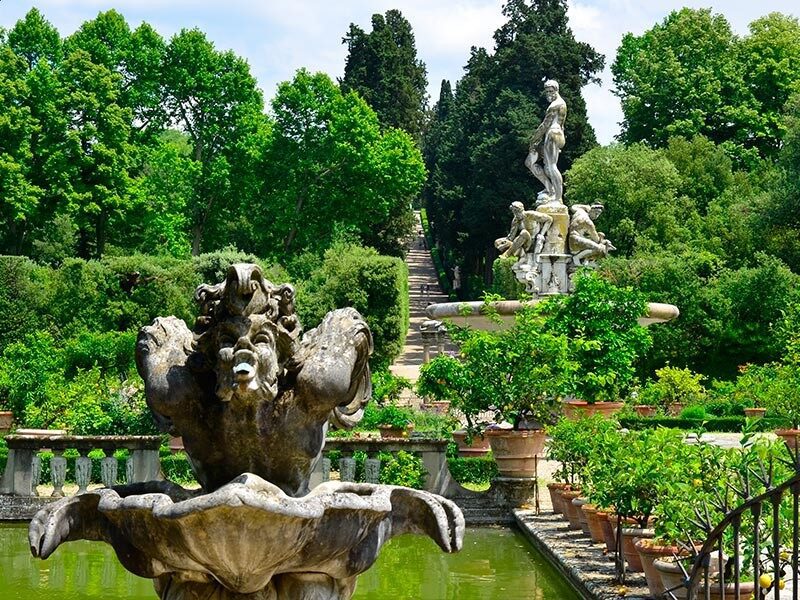
One of the best places to discover this lesser-known side of Florence is La Specola, the historic Natural History Museum on Via Romana, only a short walk from Palazzo Pitti and the Boboli Gardens.
It is not simply a museum of animals and skeletons. La Specola is a rare place where eighteenth-century science, Medici collecting, anatomical study and Enlightenment thinking come together in a fascinating and sometimes surprising way.
A scientific museum born in the Age of Enlightenment
La Specola was opened in 1775 as the Imperial and Royal Museum of Physics and Natural History, under Grand Duke Peter Leopold of Lorraine. It is widely regarded as one of the earliest scientific museums in Europe open to the public.
Its collections grew from the earlier Medici tradition of collecting rare, exotic and remarkable objects. The Medici were famous for art, but their collections also included fossils, minerals, animals, plants and scientific curiosities.
In the eighteenth century, under the Lorraine grand dukes, these collections were reorganised with a more modern, encyclopaedic spirit. Science, art, anatomy, philosophy and nature were not seen as separate worlds, but as different parts of one wider vision of knowledge.
This is one of the reasons why La Specola feels so different from many other museums in Florence. It does not only show beauty. It shows the human attempt to observe, classify, preserve and understand life itself.
The anatomical waxes: why they were created
The most famous and perhaps most unforgettable part of La Specola is its collection of anatomical wax models.
These extraordinary figures were created mainly in the eighteenth century for the study and teaching of anatomy. At that time, learning anatomy directly from human bodies was legally, religiously and socially restricted in many places. Access to cadavers was limited, difficult and often surrounded by strict rules.
Wax models offered a remarkable solution. They allowed students, physicians and educated visitors to study the structure of the human body without depending entirely on dissections. Muscles, organs, vessels, nerves and internal structures could be shown in great detail, repeatedly and permanently.
For today’s visitor, the anatomical waxes can feel unusual at first. Some are beautiful, some are unsettling, and many are both at the same time. But this is exactly what makes them so powerful. They are not simply medical objects. They are also works of craftsmanship, created with scientific accuracy and artistic sensitivity.
The models remind us that Florence was not only a city of painters and sculptors. It was also a city where the body itself became a subject of observation, study and representation.
Normal anatomy in La Specola, pathology in Careggi
For visitors with a medical or scientific background, Florence offers an especially interesting distinction.
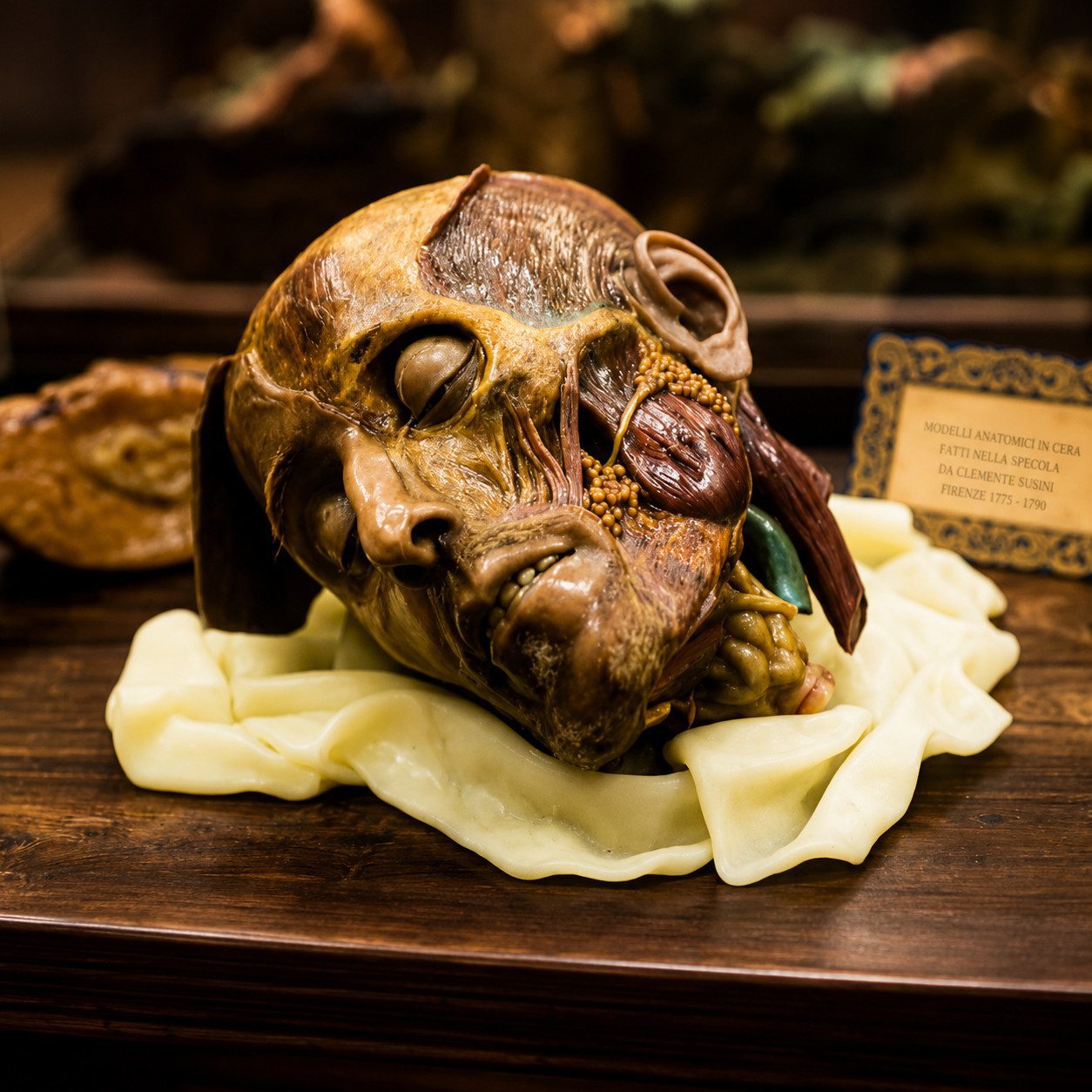
At La Specola, the anatomical waxes mainly present the human body as a structure of normal anatomy. They were created to explain how the body is built and how its organs and systems are arranged.
In contrast, the collections connected with the Museo di Anatomia Patologica in Careggi focus on pathological anatomy. There, anatomical and dermatological wax models document disease, deformity and unusual pathological findings. This creates a fascinating historical complement to La Specola: one collection explains the normal body, the other shows how disease changes it.
These pathological wax models are not only medical curiosities. They also show how far certain diseases could progress in an age when diagnostic and therapeutic options were extremely limited. Some of the conditions represented in wax would rarely be seen today in this advanced stage, at least in countries with modern access to medical care.
For this reason, the models are also quiet historical documents of medical helplessness. They remind us that physicians of the past could often observe, describe and classify disease with great precision, but had very few effective ways to stop its progression. The wax figures therefore preserve not only the appearance of disease, but also the limits of medicine before modern surgery, pathology, imaging and oncology.
The Careggi collections are of particular interest to physicians, medical historians and visitors with a deeper curiosity about the history of medicine in Florence. Public access may be limited and should be checked in advance. More information can be found through the biomedical museum collections of the University of Florence:
Museo di Anatomia Patologica – University of Florence Biomedical Museums

Access to the Careggi collections may be limited and should be checked separately. For physicians, medical historians and scientifically interested visitors, this could become a separate and highly specialised Florence article in the future.
A Florentine tradition with a European connection
Florence was not alone in this tradition. A comparable and very famous collection of anatomical wax models can be seen at the Josephinum in Vienna, the historic medical museum founded under Emperor Joseph II.
The connection is not accidental. The eighteenth century was an age in which enlightened rulers supported scientific education, public museums and medical teaching collections. Anatomical wax models belonged to this world: they were scientific tools, educational objects and works of art at the same time.
Seen in this wider European context, La Specola is not merely a local curiosity. It is part of a larger history of medicine, education and Enlightenment culture.
The Hall of Skeletons
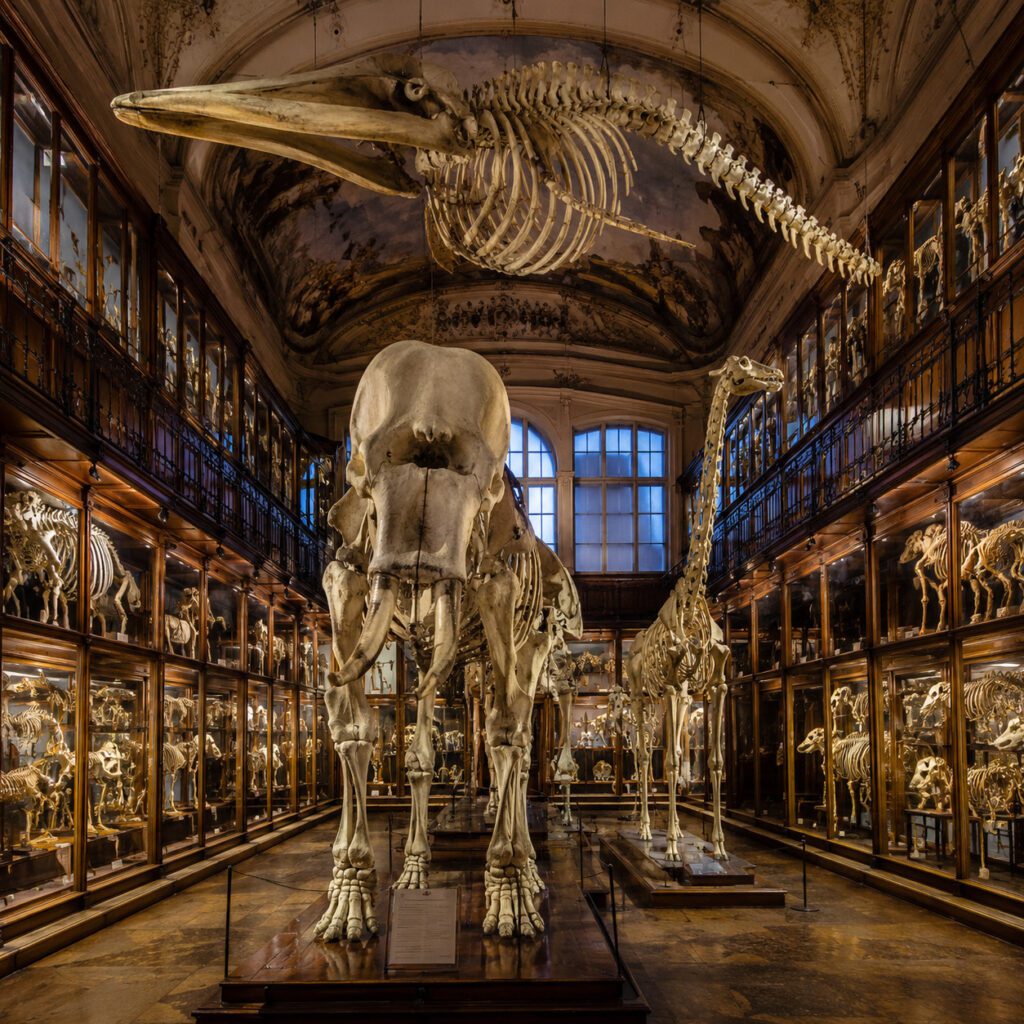
Another remarkable part of La Specola is the Hall of Skeletons, a collection that is not always part of the standard museum experience and may require special access or reservation.
The hall contains thousands of osteological specimens from many animal species. Among its most memorable displays are large reconstructed skeletons, including an eighteenth-century elephant, a camel, a giraffe and an impressive whale skeleton suspended above the room.
The effect is completely different from the polished grandeur of Florence’s Renaissance galleries. Here, the visitor is invited to look at nature structurally: bones, forms, proportions and the hidden architecture of living beings.
Why La Specola feels different
La Specola is not a museum to rush through. Its atmosphere is quieter and more reflective than many of Florence’s famous attractions.
It belongs to a different Florence: the Florence of laboratories, collections, observation and patient study. It shows how the city’s intellectual life extended far beyond painting and architecture.
For travellers who have already seen the Uffizi, the Accademia and the Duomo, La Specola offers something rare: a sense of discovery. It is close to the historic centre, yet feels removed from the usual tourist route.
A quiet detour from Palazzo Pitti
Because La Specola is located on Via Romana, it can be easily combined with a visit to Palazzo Pitti, the Boboli Gardens or a walk through the Oltrarno district.
It is especially suitable for visitors who enjoy unusual museums, scientific history, hidden collections or places where Florence reveals a more private and intellectual side.
In a city often associated with beauty, La Specola reminds us that curiosity was also one of Florence’s great traditions.
Practical information
La Specola – Natural History Museum of the University of Florence
Via Romana 17
Florence, Italy
Current opening hours according to the official museum website: Tuesday to Sunday, 9:00 am to 5:00 pm. Last entry is at 4:00 pm. The museum is closed on Mondays and on selected public holidays.
Opening hours, tickets and access to special sections may change. Please check the official website before visiting:
Official website of La Specola – Natural History Museum, Florence