
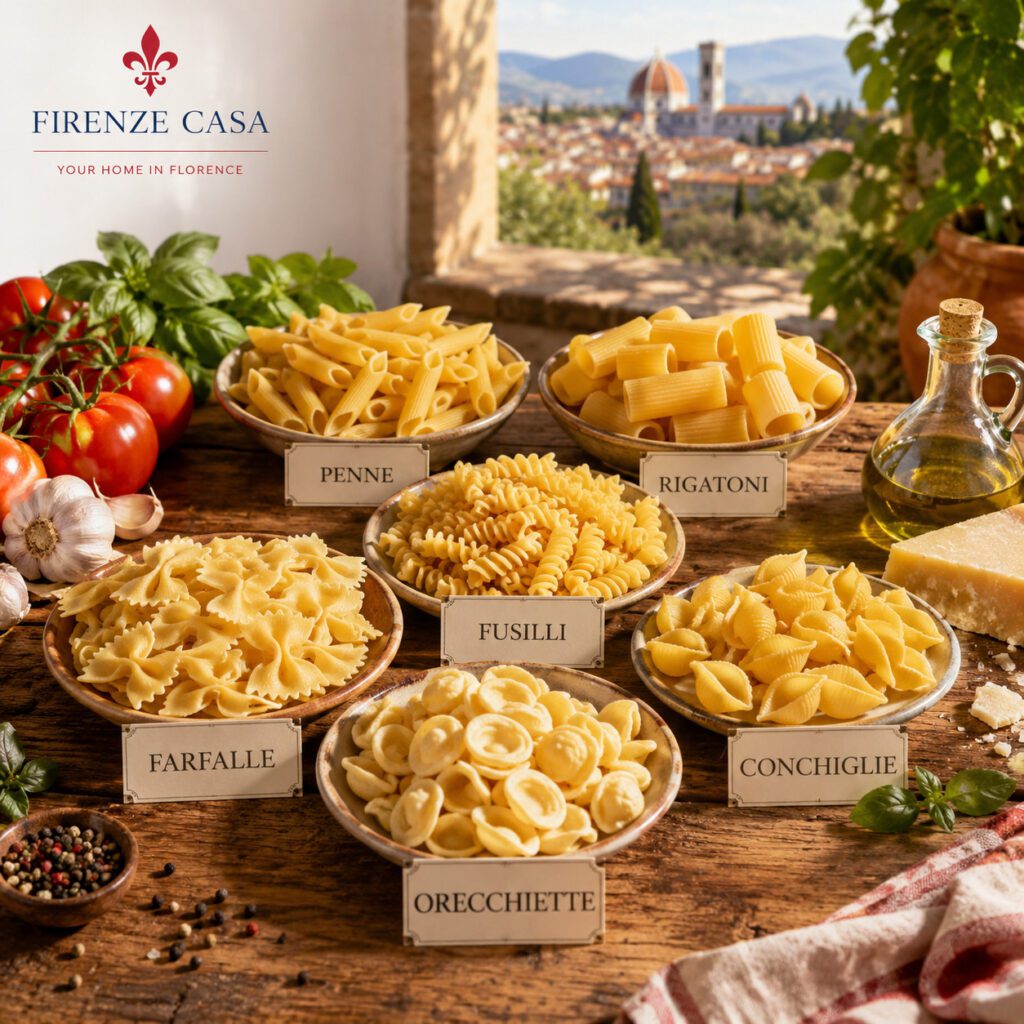
Short pasta explained simply: shape matters just as much as sauce. While spaghetti and linguine are famous around the world, Italy offers an extraordinary variety of shorter shapes designed to capture sauces, vegetables, cheese and other ingredients in different ways.
Tubes, spirals, shells and folds are not merely decorative. Their structures reflect generations of culinary experience and help explain why particular pasta-and-sauce combinations have become classics. For the broader story of Italian pasta, see our Italian Pasta: History, Types & Traditions.
Tubes: Penne and rigatoni
Spirals: Fusilli
Shells: Conchiglie
Bow ties: Farfalle
Cup-shaped pasta: Orecchiette
Key principle: Shape and surface influence how pasta carries sauce
What Is Short Pasta?
Short pasta includes compact shapes rather than long strands such as spaghetti or linguine. Many varieties are designed to capture sauce inside tubes, between ridges or within folds, curves and spirals.
Most traditional dried varieties are made from durum wheat semolina and water. This combination produces the firm structure associated with high-quality dried pasta, a subject explored further in Durum Wheat – The Secret Behind Italian Pasta.
The compact format makes many shapes particularly suitable for substantial sauces, vegetables, legumes and baked dishes. From hollow penne to twisted fusilli and shell-shaped conchiglie, form plays a practical role in the finished dish.
Why Pasta Shape Matters
Every ridge, groove, spiral and hollow section changes the way sauce interacts with pasta. Ridged varieties such as rigatoni provide plenty of surface for substantial sauces, while spirals such as fusilli trap pesto, cheese and finely chopped vegetables between their twists.
Shell-shaped pasta can collect creamy sauces and small ingredients inside each piece. Orecchiette performs a similar function with leafy vegetables and other ingredients that settle naturally into its characteristic cup-like shape.
These relationships are not absolute rules, but they help explain why particular combinations have survived for generations. Our guide to Classic Italian Pasta Sauces Explained looks at the same principle from the perspective of the sauce.
Italian pasta pairings are strongly regional. A shape may have several traditional uses, so the goal is not to memorise rigid rules but to understand how texture, sauce and local tradition work together.
The Main Categories of Short Pasta
- Tubes – such as penne, rigatoni and tortiglioni.
- Spirals and twists – including fusilli and gemelli.
- Shells – represented by conchiglie in several sizes.
- Bow ties – the distinctive butterfly-shaped farfalle.
- Cup-shaped pasta – particularly orecchiette.
These categories contain numerous regional variations. Even apparently similar shapes may differ in size, thickness, surface and traditional use.
The Most Popular Types of Short Pasta
Penne
Penne is one of Italy’s most recognisable shapes. Its name refers to quills or pens, reflecting the characteristic diagonal cut at each end.
Penne rigate has a ridged surface, while penne lisce is smooth. Both have established culinary uses, although the ridged version provides additional texture for sauces. Penne all’Arrabbiata is among the shape’s best-known traditional preparations.
Rigatoni
Rigatoni consists of relatively large tubes with pronounced ridges. Its name derives from rigato, meaning “ridged”.
The generous diameter works particularly well with substantial sauces containing meat, sausage, tomato or cheese. Rigatoni is strongly associated with central and southern Italian cooking and appears in several classic Roman preparations.
Fusilli
Fusilli is immediately recognisable by its spiral form. Traditional handmade versions were created by winding dough around a thin rod, while modern dried fusilli is commonly produced mechanically.
The twists provide numerous surfaces and spaces for pesto, vegetable sauces and other preparations containing finely chopped ingredients. Fusilli also works well in cold pasta dishes because dressings and small ingredients settle between the spirals.
Farfalle
Farfalle means “butterflies”, although the shape is commonly known as bow-tie pasta in English. Its pinched centre is thicker than the outer wings, creating contrasting textures within a single piece.
Farfalle is frequently paired with relatively light sauces, vegetables, peas, mushrooms and creamy preparations. Its distinctive appearance also makes it popular in spring and summer dishes.
Orecchiette
Orecchiette, or “little ears”, is one of the signature pasta shapes of Puglia. The small concave pieces are traditionally handmade and have a texture particularly suited to vegetable-based preparations.
The classic dish orecchiette con cime di rapa combines the pasta with turnip greens, garlic, olive oil and often anchovies. The concave shape naturally gathers pieces of vegetables and sauce.
Conchiglie
Conchiglie, meaning “shells”, is produced in several sizes. Its curved form creates a natural pocket capable of holding sauce, vegetables, cheese or other small ingredients.
Smaller shells work well with numerous sauces and soups, while larger versions can be filled and baked. The shape is an excellent example of the relationship between visual design and culinary function.
Short Pasta and Traditional Sauce Pairings
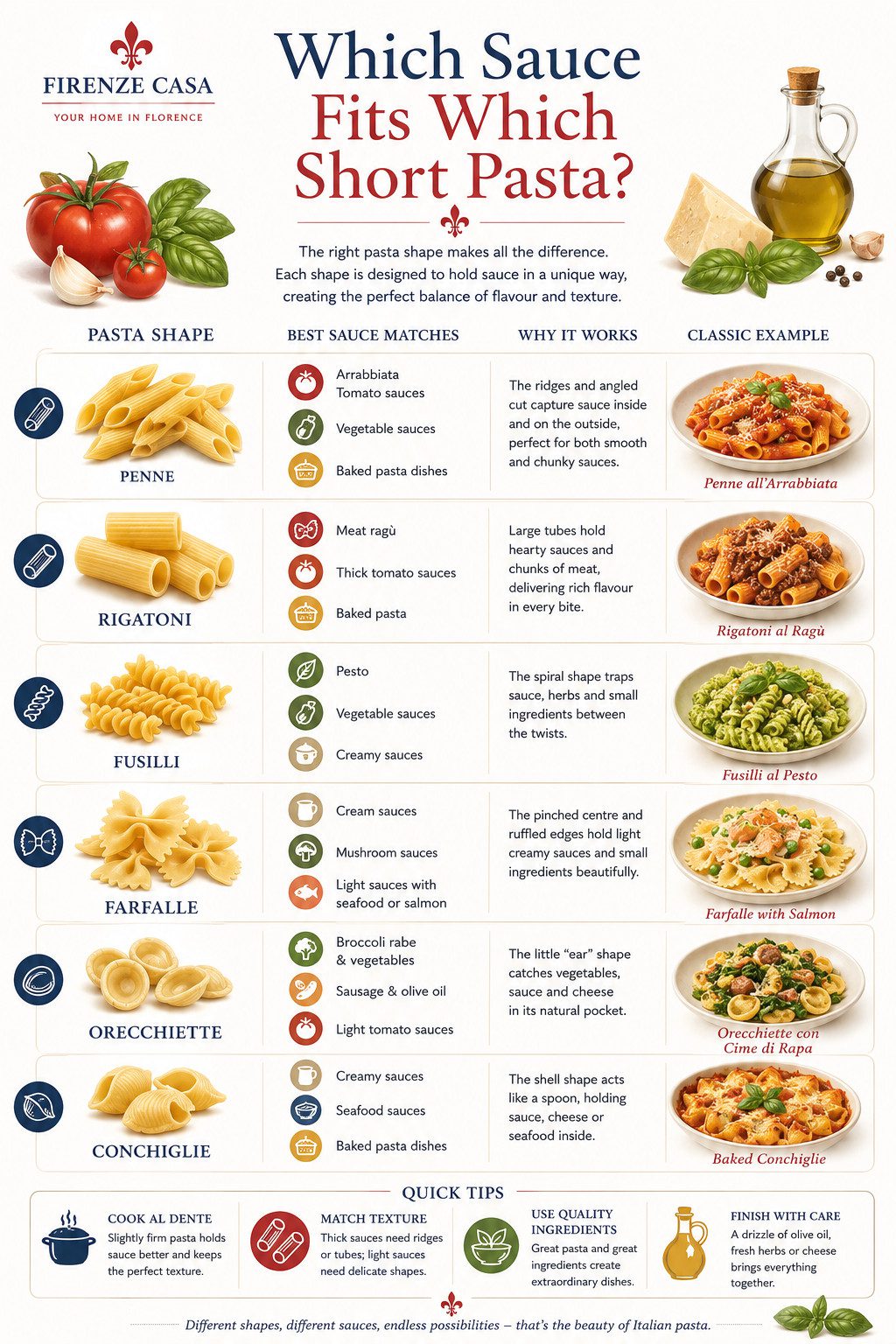
| Pasta | Traditional or Popular Pairings | Why It Works |
|---|---|---|
| Penne | Arrabbiata, tomato and vegetable sauces | The tube carries sauce inside, while ridged versions provide additional surface. |
| Rigatoni | Meat ragù, sausage, rich tomato sauces | Large tubes and pronounced ridges suit substantial ingredients. |
| Fusilli | Pesto and vegetable sauces | The spirals trap herbs, cheese and finely chopped ingredients. |
| Farfalle | Vegetables, peas, mushrooms and creamy sauces | The folded shape combines delicate edges with a firmer centre. |
| Orecchiette | Cime di rapa, vegetables, sausage | The concave shape naturally collects small ingredients. |
| Conchiglie | Cheese, vegetables and baked preparations | The shell creates a pocket that holds sauce and ingredients. |
How to Choose the Right Shape
Rather than thinking in terms of strict rules, consider the texture and ingredients of the sauce. Substantial sauces containing pieces of meat or vegetables often benefit from tubes, shells or pronounced ridges that can hold those ingredients.
Smoother or finely textured preparations can work particularly well with spirals and smaller shapes that provide plenty of surface area. Baked pasta often benefits from sturdy forms such as rigatoni, penne or larger shells that maintain their structure during further cooking.
The same principle applies to long pasta, although the shapes interact differently with sauce. Our companion guide Long Pasta Explained: Types, Uses & Best Sauces compares spaghetti, linguine, bucatini, tagliatelle and other long forms.
Avoiding Common Pasta Mistakes
There is no reason visitors should feel intimidated by Italian pasta traditions. A few simple principles, however, make it easier to understand why established combinations work so well.
- Don’t choose only by appearance. Consider how the shape will interact with the sauce and its ingredients.
- Don’t assume every pairing is a strict rule. Regional traditions often provide several legitimate combinations.
- Keep texture in mind. Overcooking reduces the structural qualities that make different shapes distinctive.
- Consider solid ingredients. Tubes, shells and spirals are especially useful when a sauce contains vegetables, meat, cheese or legumes.
- Respect regional classics. Traditional combinations often reveal why a particular shape developed or became popular.
For a broader look at Italian habits at the table, see Italian Pasta Etiquette: Common Mistakes to Avoid. The importance of texture is explored separately in Why Italians Eat Pasta al Dente.
Short Pasta in Tuscan Cooking
Tuscany is better known internationally for broad pappardelle and rustic handmade pasta than for one iconic short dried shape. Nevertheless, compact pasta forms appear throughout everyday Tuscan cooking, particularly with vegetables, legumes, tomato sauces and hearty preparations.
This reflects a broader characteristic of regional cuisine: ingredients and practicality traditionally mattered more than elaborate presentation. The same philosophy can be seen in the bread soups, beans, olive oil and simple seasonal dishes explored in our Florentine and Tuscan Food – Complete Guide.
Interesting Facts About Italian Pasta Shapes
- Italy has hundreds of documented pasta shapes and numerous local variations.
- Orecchiette remains strongly associated with the culinary traditions of Puglia.
- Penne developed in its recognisable machine-cut form during the nineteenth century.
- Traditional fusilli could be shaped by winding dough around a thin rod.
- Ridges, hollows and spirals influence how sauce and solid ingredients interact with pasta.
- The same shape may be used differently from one Italian region to another.
Frequently Asked Questions
What is the most versatile short pasta?
Penne is particularly versatile because it works with tomato, vegetable and many substantial sauces as well as baked dishes.
Which short pasta is best for meat ragù?
Rigatoni is an excellent option because its broad tubes and ridged surface work particularly well with substantial meat sauces.
Why does fusilli work well with pesto?
The spiral form provides plenty of surface and traps pesto, herbs and cheese between the twists.
Can I substitute one pasta shape for another?
Yes. The dish may change in texture and in the way sauce is distributed, but traditional pairings are useful guides rather than absolute rules.
What is the difference between penne and rigatoni?
Penne is generally narrower and characteristically cut on the diagonal. Rigatoni is larger and normally straight-cut, with pronounced ridges.
Is short pasta better for thick sauces?
Many compact shapes work particularly well with substantial sauces because tubes, ridges and hollows capture solid ingredients effectively. The best choice still depends on the individual recipe.
Why Short Pasta Is Worth Understanding
Short pasta demonstrates that Italian pasta shapes are not simply decorative variations. Tubes, spirals, shells and folds change how sauce reaches the palate and how individual ingredients are distributed through a dish.
Understanding these differences makes it easier to appreciate classic combinations such as penne all’Arrabbiata or orecchiette con cime di rapa, while also providing useful principles for choosing pasta at home.
The essential idea is simple: shape, texture and sauce should work together. That relationship is one of the reasons Italy developed such an extraordinary variety of pasta.
Further Reading on Firenze Casa
- Italian Pasta: History, Types & Traditions
- Long Pasta Explained: Types, Uses & Best Sauces
- Classic Italian Pasta Sauces Explained
- Durum Wheat – The Secret Behind Italian Pasta
- Why Italians Eat Pasta al Dente
- Italian Pasta Etiquette: Common Mistakes to Avoid
- Florentine and Tuscan Food – Complete Guide
References
- Oretta Zanini De Vita – Encyclopedia of Pasta.
- Anna Del Conte – Gastronomy of Italy.
- Marcella Hazan – Essentials of Classic Italian Cooking.
- Alberto Capatti & Massimo Montanari – Italian Cuisine: A Cultural History.
- Accademia Italiana della Cucina – Publications on Italian regional food traditions.
- Treccani – Reference material on Italian food, language and cultural history.

