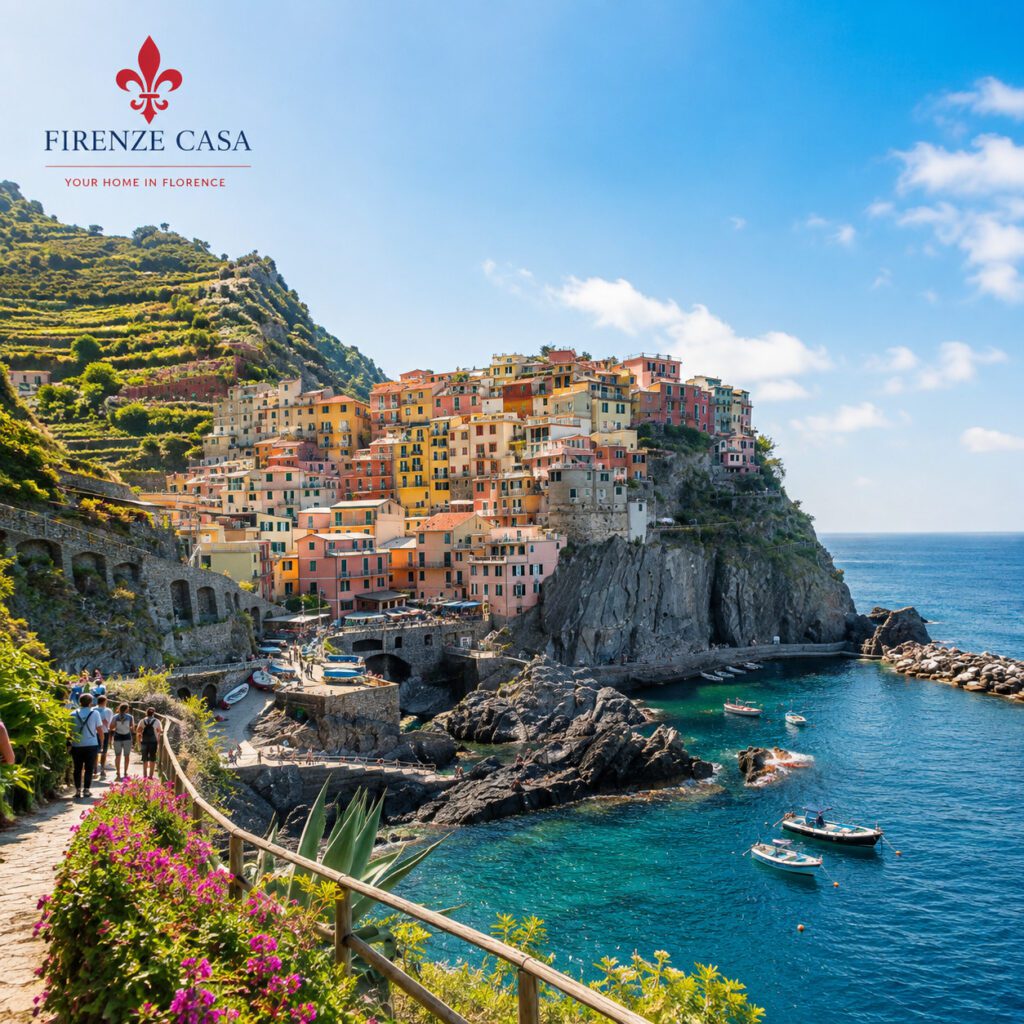
A Cinque Terre day trip from Florence offers one of the most dramatic changes of scenery available from the city. Within a few hours, Renaissance architecture and Tuscan hills give way to colourful fishing villages, terraced vineyards, rocky cliffs and the blue waters of the Ligurian Sea.
The name Cinque Terre means “Five Lands” and refers to Monterosso al Mare, Vernazza, Corniglia, Manarola and Riomaggiore. Each village has its own geography and atmosphere, yet together they form one of Italy’s most distinctive coastal cultural landscapes.
Destination: Cinque Terre, Liguria
Journey from Florence: Approximately 2½–3 hours depending on connection and first village
Best transport: Train
Five villages: Monterosso, Vernazza, Corniglia, Manarola and Riomaggiore
UNESCO status: Part of the Portovenere, Cinque Terre and Islands World Heritage Site
Best for a first day trip: Three carefully chosen villages
Other highlights: Coastal walks, terraced vineyards, local boats and Ligurian food
Recommended time: Full day
Ideal for: Coastal scenery, photography, walking, seafood, swimming and a complete contrast to Florence
This excursion is part of our Tuscany Day Trips from Florence – Complete Guide. Cinque Terre lies in Liguria rather than Tuscany, but Florence’s rail connections make it a popular longer day trip from the city.
Why Visit Cinque Terre from Florence?
Few excursions from Florence provide such a complete change of atmosphere. Museums, palaces and inland hills are replaced by cliffs, tiny harbours, vineyards and Mediterranean views.
The villages are small, but their setting is extraordinary. Houses rise in colourful layers from narrow valleys, while agricultural terraces climb steeply behind them.
Another advantage is that a car is unnecessary. Once you reach the Ligurian coast, trains connect all five villages in only a few minutes, making rail the most practical way to explore.
Because the journey from Florence is relatively long, however, careful planning matters. Three villages, a panoramic walk or boat journey and enough time for Ligurian food usually create a better experience than trying to see everything.
Do not treat the five villages as a checklist. For a day trip from Florence, three well-chosen stops usually provide more time for views, food and the coast itself.
What Exactly Is Cinque Terre?
Cinque Terre lies on the rugged Ligurian coast northwest of Tuscany, where mountains descend steeply towards the Mediterranean.
From north to south, the villages are Monterosso al Mare, Vernazza, Corniglia, Manarola and Riomaggiore. Geography historically made overland travel difficult, so communities developed in relative isolation and adapted closely to the steep terrain.
Generations of residents constructed dry-stone terraces that allowed vines, olive trees and other crops to grow on slopes that would otherwise have been extremely difficult to cultivate.
Today, the villages and surrounding landscape form part of the Cinque Terre National Park. Their identity therefore comes from the relationship between settlements, agriculture, paths and the sea rather than from the villages alone.
Much of the scenery visitors admire today is partly the result of centuries of human labour. Dry-stone walls transformed steep coastal slopes into narrow agricultural terraces.
The History of Cinque Terre
The villages developed gradually during the medieval period, although human settlement along this stretch of Ligurian coast is much older.
Life was always shaped by geography. Mountains made communication difficult, while the sea provided fishing, trade and contact with other Mediterranean communities.
During the Middle Ages, coastal raids remained a recurring threat, so defensive structures and lookout points became important features of several settlements.
Meanwhile, agriculture expanded wherever the slopes permitted it. Wine became particularly important, and generations of farmers created the terraced vineyards that still define the landscape today.
A Landscape Built by Hand
One of the most remarkable aspects of Cinque Terre is that its famous scenery is not simply natural.
For centuries, farmers built stone walls across steep hillsides without mortar. Behind them, they created terraces suitable for vines, olives and small agricultural plots.
The resulting landscape makes human settlement and nature appear almost inseparable. Villages occupy narrow valleys, while cultivated slopes rise hundreds of metres above the sea.
Maintaining this terrain remains demanding. Because conventional machinery is difficult to use on many slopes, viticulture and landscape conservation continue to require substantial manual work.
Cinque Terre and UNESCO World Heritage
In 1997, UNESCO inscribed Portovenere, Cinque Terre and the Islands of Palmaria, Tino and Tinetto on the World Heritage List.
The designation recognises an exceptional cultural landscape shaped by communities adapting to steep coastal terrain over many centuries.
This distinction matters because Cinque Terre is often presented simply as five colourful villages. In reality, terraces, paths, vineyards, stone walls and settlements all contribute to its international importance.
Cinque Terre forms part of a larger World Heritage landscape that also includes Portovenere and nearby islands. UNESCO recognition therefore extends beyond the five villages themselves.
The Five Villages of Cinque Terre
Although photographs can make the villages appear similar, each offers a different experience.
Monterosso has the largest beach and the strongest seaside-resort character. Vernazza centres on a picturesque harbour, while Corniglia occupies a dramatic position high above the water.
Farther south, Manarola combines colourful houses with terraced vineyards and classic viewpoints. Riomaggiore, meanwhile, rises steeply above a narrow rocky harbour.
Understanding these differences makes it easier to choose which villages deserve your limited time.
Monterosso al Mare – Beaches and the Sea
Monterosso al Mare is the northernmost and largest of the five villages. It differs from its neighbours because it has the most extensive accessible beach and a more open seaside character.
The settlement consists broadly of an older historic centre and a newer area around Fegina beach, connected by a pedestrian tunnel.
For travellers visiting during warmer months, Monterosso is the obvious choice if swimming or beach time matters.
Highlights of Monterosso
- The largest beach in Cinque Terre.
- A compact historic centre.
- A lively waterfront.
- A good choice for lunch or a longer break.
- Convenient rail connections.
If you want to include a swim, give Monterosso more time than the other villages. It is the easiest place to combine sightseeing with genuine beach time.
Vernazza – The Classic Harbour View
Vernazza is perhaps the village that most closely matches the classic image of Cinque Terre.
Colourful houses surround a small natural harbour, while the settlement rises steeply into a narrow valley framed by terraced slopes.
The harbour is beautiful, but Vernazza becomes even more impressive from above. Short climbs on the surrounding paths provide famous views back towards the village and sea.
Highlights of Vernazza
- Picturesque harbour.
- Colourful waterfront buildings.
- Excellent viewpoints above the village.
- Historic lanes and small piazzas.
- One of the most recognisable Cinque Terre panoramas.
Corniglia – The Village Above the Sea
Corniglia is unique because its historic centre does not sit directly at sea level. Instead, it occupies a rocky promontory high above the Mediterranean.
This elevated position gives the village a quieter and more rural character. Narrow streets lead towards terraces with broad coastal views.
Reaching Corniglia from the railway station involves a long staircase or local transport when available, which means some day visitors skip it.
That can also be an advantage: Corniglia often feels calmer than the harbour villages.
Manarola – Colourful Houses and Vineyards
Manarola is one of the smallest and most photographed villages in Cinque Terre.
Colourful houses descend through a narrow valley towards a rocky harbour, while terraced vineyards rise immediately behind the settlement.
A short walk away from the centre provides the celebrated view back towards the village. From here, houses appear stacked above the coastline with vineyards climbing the slopes behind them.
For many first-time visitors, Manarola becomes one of the visual highlights of the day.
Riomaggiore – A Dramatic Southern Gateway
Riomaggiore is the southernmost village and another striking example of settlement on extremely steep terrain.
Colourful houses rise sharply from a narrow valley, while the lower village descends towards a small rocky harbour enclosed by cliffs.
The main street climbs through the centre, and side passages lead between buildings constructed at dramatically different levels.
Looking back from the harbour reveals one of the strongest compositions in Cinque Terre: the village appears to rise almost vertically from the coast.
Which Cinque Terre Villages Should You Visit in One Day?
Technically, local trains make it possible to stop in all five villages. In practice, doing so often produces a day dominated by platforms and hurried photographs.
For most travellers, three villages create the best balance. Riomaggiore, Manarola and Vernazza combine dramatic harbours, colourful architecture and several classic viewpoints.
Choose Monterosso instead if swimming or a relaxed seaside lunch matters more. Corniglia is particularly attractive for travellers who prefer elevated views and a quieter atmosphere.
For a first visit, plan around three villages and treat a fourth as optional. This leaves enough flexibility for crowds, trains and spontaneous stops.
Cinque Terre’s Five Villages at a Glance
| Village | Best For |
|---|---|
| Monterosso | Beach time, swimming and a relaxed seaside break. |
| Vernazza | Classic harbour scenery and elevated viewpoints. |
| Corniglia | Quiet streets and panoramic views from above the sea. |
| Manarola | Iconic village panoramas and terraced vineyards. |
| Riomaggiore | Steep streets, rocky harbour and dramatic architecture. |
Getting Around Cinque Terre
Once you reach the coast, trains provide the backbone of transport between the villages.
Walking offers a completely different experience, but hiking trails should not be treated simply as shortcuts. Some sections involve steep climbs, uneven surfaces and substantial elevation changes.
Boat services add another perspective when weather and seasonal schedules permit. From the sea, the small scale of the villages beneath the mountains becomes much clearer.
For most visitors, the best combination is therefore train plus selected walking, with a boat journey added if conditions are suitable.
Walking and Hiking in Cinque Terre
Walking paths connected the communities and agricultural terraces long before modern transport transformed the area.
Today, hiking remains one of the best ways to experience the cultural landscape. Trails climb through vineyards and Mediterranean vegetation before opening onto views across the Ligurian Sea.
However, visitors should distinguish between a short scenic walk and a genuine hike. Some routes are physically demanding, and access can change because of weather, landslides or maintenance.
Always check current trail conditions and wear appropriate footwear.
For a single day from Florence, choose a shorter panoramic section unless hiking is the main purpose of your excursion.
The Sentiero Azzurro – The Blue Trail
The best-known walking route is the Sentiero Azzurro, or Blue Trail, traditionally linking the five villages along the coast.
Different sections provide very different experiences. The route between Monterosso and Vernazza is famous for its views but involves substantial climbing and should be regarded as a proper hike.
Because sections may close temporarily, official trail information should always be checked shortly before travelling.
Via dell’Amore between Riomaggiore and Manarola
The most famous individual path is the Via dell’Amore, or “Path of Love”, between Riomaggiore and Manarola.
Carved into the cliffs above the sea, the route became famous for combining spectacular coastal scenery with an unusually easy connection between two neighbouring villages.
Rockfalls forced the path to remain closed for many years, and access has subsequently been carefully managed. Therefore, current opening conditions, reservation rules and access arrangements should always be checked before relying on it.
Seeing Cinque Terre by Boat
When weather and seasonal schedules allow, travelling by boat provides one of the best ways to understand the geography of the coast.
From the water, colourful settlements appear tiny beneath enormous terraced slopes. A boat journey also provides a pleasant alternative to another train ride through tunnels.
Corniglia is the exception because its elevated location means it does not have the same direct boat connection as the harbour villages.
If conditions are good, travel one section by boat and another by train. The change in perspective is more valuable than adding another rushed village.
The Terraced Vineyards of Cinque Terre
Wine has been produced on the steep slopes for centuries, and viticulture helps explain why generations invested so much labour in constructing terraces above the sea.
Narrow plots, steep gradients and difficult access make mechanisation challenging, so vineyard work remains unusually demanding in many areas.
The principal local dry wine is Cinque Terre DOC, traditionally produced from regional grape varieties including Bosco, Albarola and Vermentino.
These wines belong to a food culture very different from the inland Tuscan traditions explored in our Florentine and Tuscan Food – Complete Guide. The contrast is one of the pleasures of leaving Florence for the Ligurian coast.
Sciacchetrà – Cinque Terre’s Historic Sweet Wine
Sciacchetrà is one of the region’s most distinctive products. Grapes are dried after harvest to concentrate sugar and flavour before the wine is produced.
Because production is labour-intensive and quantities are relatively small, Sciacchetrà has traditionally been regarded as a special wine rather than an everyday drink.
It also demonstrates that Cinque Terre’s vineyard culture existed long before tourism became the dominant economic force.
What to Eat in Cinque Terre
Ligurian cuisine provides a noticeable contrast with the food of Florence and inland Tuscany. Seafood, basil, olive oil and simple preparations play particularly important roles.
- Anchovies from Monterosso – One of the best-known products of the local coast.
- Pesto Genovese – Liguria’s famous basil-based sauce.
- Focaccia – Ideal for a quick lunch during a busy sightseeing day.
- Farinata – Thin savoury chickpea-flour preparation.
- Fresh seafood – Fish, mussels and squid appear widely on local menus.
- Trofie al pesto – Ligurian pasta traditionally served with pesto.
- Cinque Terre DOC – Local dry white wine.
- Sciacchetrà – Traditional sweet wine made from dried grapes.
A relaxed Ligurian lunch does not need to be elaborate. Focaccia, anchovies or trofie al pesto can provide a strong sense of place without consuming half the day.
Avoiding the Crowds
Cinque Terre’s popularity creates one obvious challenge: narrow streets, railway platforms and harbour areas can become extremely crowded during peak periods.
An early departure from Florence helps significantly. It also pays to avoid following exactly the same sequence as every organised group.
Short climbs above the villages, quieter side streets and longer stops in one location often provide a better experience than constantly moving between famous viewpoints.
Spring and early autumn generally offer a better balance between weather and visitor numbers than July and August.
How Much Time Do You Need?
Cinque Terre deserves more than one day if you want extensive hiking, beach time and all five villages. For a day trip from Florence, priorities are essential.
| Time on the Coast | Recommended Experience |
|---|---|
| 4–5 Hours | Two villages, viewpoints and time for lunch or a drink beside the sea. |
| 6–7 Hours | Three villages plus a short scenic walk or boat journey if conditions allow. |
| 8+ Hours | Three or four villages with lunch, beach time or selected hiking without constant rushing. |
Visiting all five is technically possible, but it is rarely necessary. Three villages provide enough variety for most first-time visitors.
A One-Day Cinque Terre Itinerary from Florence
Leave Florence early and travel towards the southern end of Cinque Terre.
Begin in Riomaggiore and explore the harbour and steep historic streets. If current access conditions allow and the route suits your itinerary, continue towards Manarola using the Via dell’Amore; otherwise take the train.
Spend time in Manarola and walk to the classic viewpoint overlooking the village before continuing north.
Next, travel to Vernazza. Explore the harbour, have lunch and climb slightly above the centre for the famous coastal panorama.
If sufficient time remains, continue to Monterosso for a waterfront walk or swim. Otherwise, enjoy Vernazza more slowly before beginning the return journey.
Riomaggiore, Manarola and Vernazza make an excellent first itinerary. Add Monterosso only when beach time or swimming is genuinely important.
How to Get from Florence to Cinque Terre
By Train
Train travel is generally the best option for a Cinque Terre day trip from Florence.
There is no single station called Cinque Terre. Each village has its own railway station, and journeys from Florence usually require one or more changes.
La Spezia is a common gateway for the southern villages, although the exact route depends on the timetable and your chosen first stop.
Once on the coast, regional trains connect Riomaggiore, Manarola, Corniglia, Vernazza and Monterosso within minutes.
Because schedules vary, check both outward and return connections before leaving Florence.
By Car
Driving generally offers little advantage for a simple day trip. Roads are steep, parking is limited and local trains are far more efficient for travelling between villages.
A car becomes more useful only when Cinque Terre forms part of a broader Ligurian road trip.
Your return connection to Florence determines the realistic end of the day. Check it before you begin exploring rather than waiting until late afternoon.
Best Time for a Cinque Terre Day Trip from Florence
Cinque Terre can be visited throughout much of the year, although conditions change considerably with the seasons.
| Season | What to Expect |
|---|---|
| Spring | Green landscapes, comfortable temperatures and good walking conditions. |
| Summer | Warm sea and long daylight hours, but the largest crowds. |
| Autumn | Milder weather, vineyard colours and a calmer atmosphere after peak season. |
| Winter | Very quiet villages, but reduced boat, restaurant and visitor services. |
Late spring and early autumn generally offer the best balance. Summer remains attractive for swimming, although trains and narrow streets can become considerably busier.
Practical Tips for Visiting Cinque Terre from Florence
- Leave Florence early.
- Use trains as your main transport between villages.
- Prioritise three villages rather than automatically visiting all five.
- Wear comfortable shoes for viewpoints and trails.
- Check current hiking conditions before travelling.
- Verify boat schedules if you want a journey by sea.
- Carry water during warmer months.
- Check the final useful return train to Florence in advance.
- Respect private homes, vineyards and agricultural terraces.
- Allow time for Ligurian food rather than spending the entire day in transit.
Is Cinque Terre Worth Visiting from Florence?
Cinque Terre is worth visiting from Florence if you want a dramatic coastal contrast to Tuscany. The railway makes the excursion realistic, although the longer journey means the day requires more planning than Pisa, Lucca or Arezzo.
The reward is a completely different environment: Ligurian fishing villages, Mediterranean water, terraced vineyards and food traditions far removed from inland Tuscany.
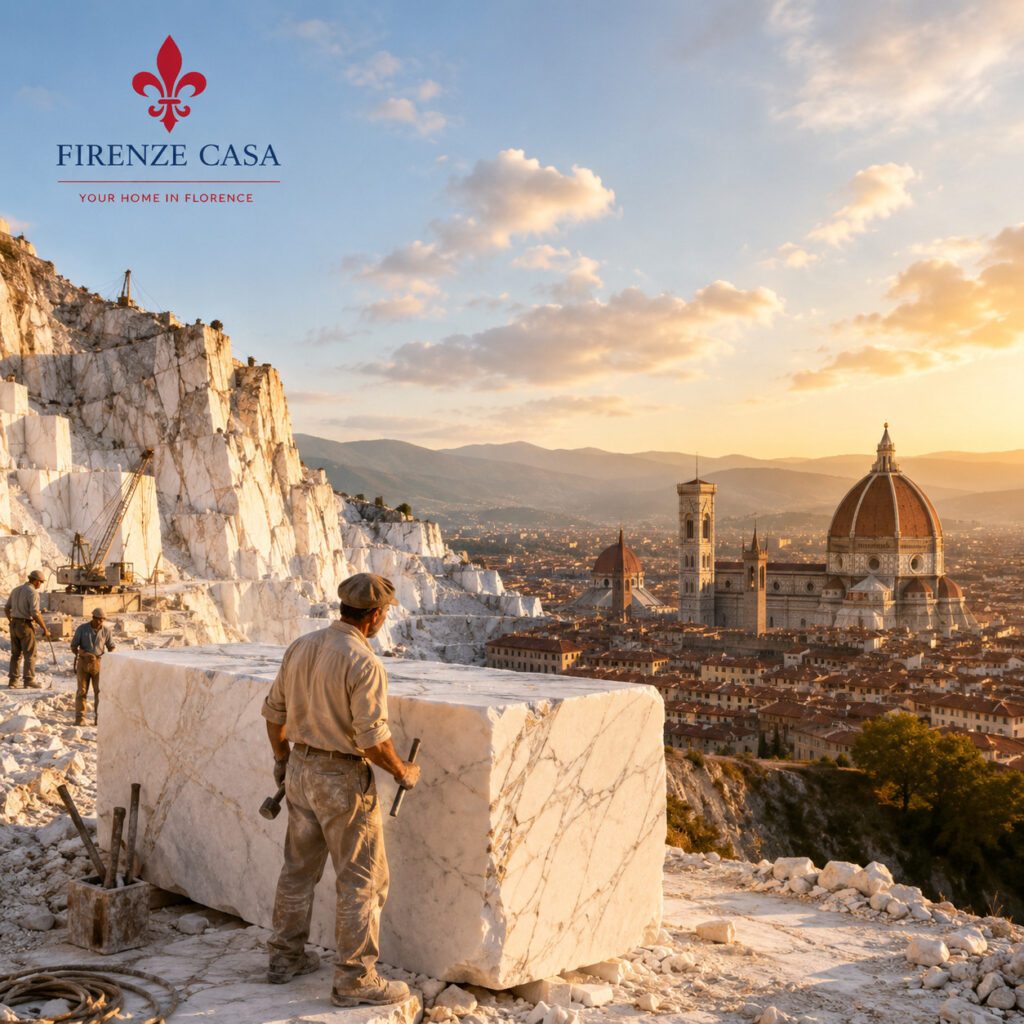
Much like the Carrara Marble Quarries from Florence, Cinque Terre also demonstrates how strongly geography can shape local life. In one case, mountains were transformed through quarrying; here, generations reshaped steep coastal slopes through terraces and vineyards.
The key is not trying to see everything. Cinque Terre rewards time spent looking at the sea, climbing to a viewpoint or sitting beside a harbour more than racing between stations.
Frequently Asked Questions About a Cinque Terre Day Trip from Florence
Can you visit Cinque Terre as a day trip from Florence?
Yes. It is entirely possible by train, although an early departure is important because the journey is considerably longer than most Tuscan day trips.
How long does it take to travel from Florence to Cinque Terre?
Travel time depends on the connection and your first village, but roughly 2½–3 hours is a useful planning estimate.
How many villages should you visit in one day?
Three villages usually provide the best balance between sightseeing and actually enjoying the coast.
Which three villages are best for a first visit?
Riomaggiore, Manarola and Vernazza offer a strong combination of colourful architecture, harbours and classic viewpoints.
Do you need a car?
No. The train is generally far more convenient because all five villages have railway stations and parking is difficult.
Can you swim in Cinque Terre?
Yes. Monterosso offers the easiest beach experience, while swimming may also be possible elsewhere when sea conditions are suitable.
Can you hike between the villages?
Yes, but trail conditions vary and closures occur. Always check current information before relying on a particular route.
Is the Via dell’Amore always open?
No. Access rules and availability can change, so check current official information before planning around it.
Is Cinque Terre in Tuscany?
No. Cinque Terre lies in Liguria, which helps explain why its landscape, architecture and cuisine feel so different from Florence.
Was Twilight filmed in Cinque Terre?
No. The famous New Moon scenes were filmed in Montepulciano and represented Volterra in the story.
Why Cinque Terre Is Worth a Day Trip from Florence
A Cinque Terre day trip from Florence provides one of the strongest contrasts possible during a stay in the city. Renaissance streets and inland landscapes give way to fishing villages, Mediterranean water and vineyards cultivated on extraordinarily steep slopes.
Monterosso, Vernazza, Corniglia, Manarola and Riomaggiore each reveal a different aspect of the region. However, the terraces and paths connecting them are just as important as the settlements themselves.
The UNESCO-listed landscape demonstrates how agriculture, fishing and settlement developed in response to difficult geography. In this respect, Cinque Terre is far more than a collection of photogenic coastal villages.
For travellers using Florence as a base, the excursion also expands the geographical range of a Tuscany-focused holiday. In one day, you can experience another region, another cuisine and a completely different relationship between people and landscape.
Cinque Terre works best when the coast itself becomes the destination. Three villages, one memorable viewpoint and enough time to enjoy Liguria create a better day than simply collecting all five names.
Further Reading on Firenze Casa
- Tuscany Day Trips from Florence – Complete Guide
- Carrara Marble Quarries from Florence
- Pisa from Florence – A Perfect Day Trip
- Lucca from Florence – A Perfect Day Trip
- Volterra from Florence – Tuscany Before the Romans
- History of Florence – Complete Guide
- Florentine and Tuscan Food – Complete Guide
References
- UNESCO World Heritage Centre – Portovenere, Cinque Terre and the Islands
- Parco Nazionale delle Cinque Terre – Landscape, Trails and Visitor Information
- Regione Liguria – Cultural and Environmental Heritage of Cinque Terre
- Historical Studies on Ligurian Coastal Settlement and Terrace Agriculture
- Studies on Cinque Terre Viticulture and Dry-Stone Wall Traditions