
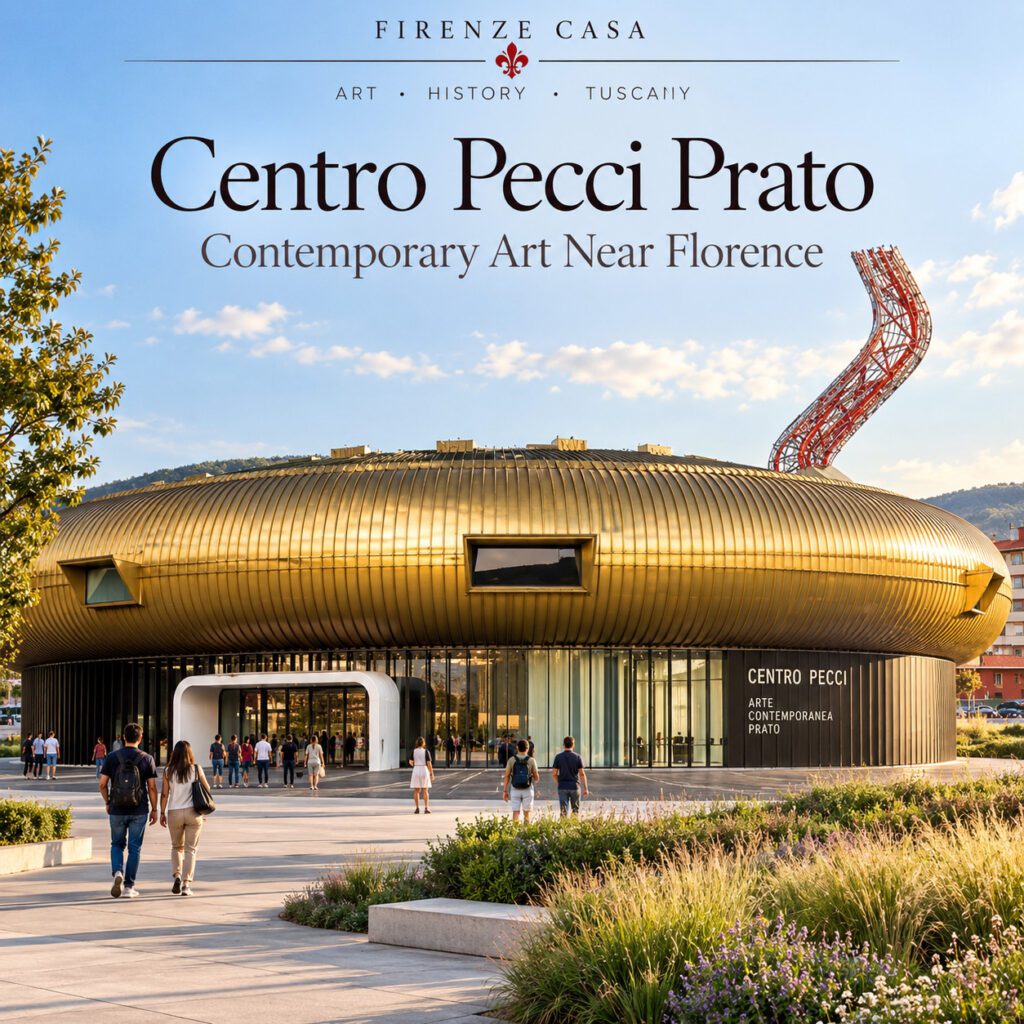
Contemporary art beyond Renaissance Florence: Centro Pecci Prato is one of Tuscany’s most important destinations for modern and contemporary art. Located in nearby Prato, the museum offers an intriguing alternative for visitors who want to look beyond Florence’s famous Renaissance collections.
Centro Pecci combines an extensive collection with changing exhibitions and striking contemporary architecture. It is particularly rewarding for art lovers spending several days in Florence. The museum also makes a natural companion to the Museo Novecento in Florence.
Full name: Centro per l’Arte Contemporanea Luigi Pecci
Location: Prato, Tuscany
Opened: 1988
Collection: More than 1,000 works by over 300 artists
Main focus: Modern and contemporary art from the 1950s to today
Architecture: Italo Gamberini and Maurice Nio
Best for: Contemporary art, photography, installations and architecture
Suggested visit: 1.5–2.5 hours
Why Visit Centro Pecci Prato?
Florence is one of the world’s great museum cities, but Renaissance art inevitably dominates its reputation. Botticelli, Michelangelo, Donatello and Leonardo shape the experience of many visitors. Our complete guide to Florence museums provides an overview of the city’s remarkable collections.
Centro Pecci Prato offers a completely different perspective. Its collection focuses mainly on art from the second half of the twentieth century to the present. Visitors encounter painting, sculpture, photography, video, installations and experimental forms of art.
This makes the museum particularly interesting after several days among Florence’s Renaissance masterpieces. It does not compete with the Uffizi or Accademia. Instead, Centro Pecci extends the artistic journey into periods and movements that are far less visible in Florence’s historic centre.
If Renaissance art already fills most of your Florence itinerary, Centro Pecci offers a refreshing change of period, architecture and atmosphere. It is especially worthwhile for repeat visitors and lovers of twentieth-century and contemporary art.
Italy’s First Purpose-Built Centre for Contemporary Art
Centro Pecci opened in 1988 and occupies an unusual place in Italian museum history. Its original building was the first in Italy specifically designed for contemporary art exhibitions and related cultural activities.
The project grew from Prato’s dynamic cultural and economic environment. The city had become internationally known for its textile industry. At the same time, private collecting and interest in contemporary art developed strongly in the surrounding area.
Architect Italo Gamberini designed the original complex during the 1980s. He created a multifunctional cultural centre rather than a conventional museum. Exhibition areas stood alongside spaces for education, research and events.
Centro Pecci opened on 25 June 1988. Its collection gradually grew through exhibitions, acquisitions and donations over the following decades.
The Centro Pecci Collection
Today, the collection contains more than 1,000 works by over 300 artists. It spans the period from the 1950s to the present. Sculpture, painting, installations, photography and video all form part of this diverse collection.
Important sections explore Arte Povera and the Italian Transavanguardia. Both movements played major roles in post-war Italian art. Other areas include artistic photography, radical architecture, artists’ cinema in Tuscany and artists’ books.
The collection also reaches well beyond Tuscany and Italy. It includes works connected with international artistic movements and artists from different cultural backgrounds. This broader perspective distinguishes Centro Pecci from many museums in Florence.
Centro Pecci did not build its collection solely through conventional museum acquisitions. Exhibitions held at the centre helped shape the collection, while donations from artists and private collectors expanded it over the decades.
Eccentrica – The Permanent Collection
Eccentrica. The Centro Pecci Collections offers an excellent introduction to the museum. It presents selected works from the collection through different themes and artistic approaches. Rather than following a simple chronological route, the exhibition encourages connections between artists and ideas.
Formafantasma designed the exhibition setting. The presentation brings together important figures from Italian and international contemporary art.
Temporary exhibitions remain equally important at Centro Pecci Prato. As a result, the museum experience can change considerably from one visit to another. Check the current programme before travelling from Florence if a particular exhibition interests you.
The Architecture Is Part of the Experience
Centro Pecci is interesting even before you enter the galleries. Italo Gamberini drew inspiration from Prato’s industrial architecture and textile factories for the original structure. Its U-shaped plan surrounds an open area with an outdoor theatre.
Several decades later, the museum underwent a dramatic transformation. Dutch architect Maurice Nio designed an extension called Sensing the Waves. Its striking ring-like form wraps around the earlier structure and gives the complex its unmistakable appearance.
The extension greatly enlarged the exhibition route. Today, the complex contains more than 3,000 square metres of multifunctional space.
A cinema, library and archive complement the galleries. Visitors also find educational areas, a bookshop and other cultural facilities. Centro Pecci therefore remains a cultural centre rather than functioning solely as a conventional museum.
Take a moment to look at the building from outside before entering. The contrast between Gamberini’s original structure and Maurice Nio’s later extension forms an important part of the Centro Pecci experience.
Centro Pecci or Museo Novecento?
Visitors interested in modern art may wonder whether to travel to Centro Pecci or explore Museo Novecento in Florence. The two institutions complement each other rather than offering the same experience.
Museo Novecento stands on Piazza Santa Maria Novella in the heart of Florence. It provides an excellent introduction to twentieth-century Italian art and also presents contemporary projects. Its central location makes it easy to include in a day of sightseeing.
Centro Pecci requires a separate journey to Prato. In return, it offers larger exhibition spaces, a broader contemporary focus and architecture created specifically for modern culture.
If you have only a short stay in Florence, Museo Novecento is the easier choice. Centro Pecci becomes especially attractive during a longer visit. It is also the stronger option for travellers with a particular interest in contemporary art.
Choose Museo Novecento for an easily accessible modern-art experience in central Florence. Choose Centro Pecci for a broader contemporary collection, ambitious temporary exhibitions and distinctive modern architecture.
Centro Pecci and Museo Marino Marini
Another interesting comparison is the Museo Marino Marini in Florence. The two museums create almost opposite experiences.
Marino Marini’s modern sculptures stand within the historic former church of San Pancrazio. This creates a dialogue between medieval architecture and twentieth-century art. Centro Pecci takes a different approach by placing contemporary works within a purpose-built modern environment.
Visiting these museums together with Museo Novecento reveals a side of Florence and its surroundings that many travellers overlook. Tuscany’s artistic story continued long after the Renaissance.
How to Reach Centro Pecci from Florence
Centro Pecci lies on Viale della Repubblica in Prato, northwest of Florence. The city is close enough to make the museum a practical half-day excursion.
Visitors can take a train from Florence to Prato Centrale and continue by local bus towards the museum. Local public transport connects the railway station with the Centro Pecci area.
Travelling by car is another convenient option. The Prato Est exit of the A11 motorway provides easy access to the area, and parking is available near the museum.
Transport routes and timetables can change. Check current museum and local transport information shortly before travelling rather than relying on an older timetable.
Opening Hours and Tickets
Opening hours, admission prices and exhibition schedules can change throughout the year. We therefore recommend checking the official Centro Pecci information before travelling from Florence.
This is particularly important if a temporary exhibition is the main reason for your visit. Special events can also affect normal access to individual galleries.
How Much Time Should You Allow?
For most visitors, around one and a half to two and a half hours is a reasonable amount of time for Centro Pecci. Major temporary exhibitions can easily extend a visit.
The museum also offers more than galleries. Visitors interested in architecture, books, cinema or the specialist library may want to stay longer.
If you travel specifically from Florence, consider spending some additional time in Prato. This turns the journey into a broader excursion and introduces another Tuscan city that international visitors often overlook.
Who Will Enjoy Centro Pecci Most?
Centro Pecci Prato particularly suits visitors who already know Florence’s major museums and want to discover another side of Tuscan art. It is also an obvious destination for lovers of contemporary art, experimental installations, photography and modern architecture.
First-time visitors spending only two or three days in Florence will probably prefer the city’s essential Renaissance collections. For a longer stay, however, Centro Pecci becomes much easier to recommend.
The museum also appeals to travellers who enjoy less conventional cultural experiences. Our guide to small museums in Florence worth discovering offers further ideas for exploring beyond the most famous galleries.
Do not think of Centro Pecci as a substitute for Florence’s great Renaissance museums. Instead, see it as their contemporary counterpart and a chance to explore what happened to Italian art centuries after Botticelli and Michelangelo.
Why Centro Pecci Prato Is Worth Visiting
Centro Pecci Prato demonstrates that Tuscany’s artistic importance did not end with the Renaissance. Its collection moves from post-war experiments to contemporary installations, photography, video and conceptual work.
The architecture adds another dimension. Italo Gamberini’s original cultural centre and Maurice Nio’s futuristic extension create an unusual setting. Here, the building itself becomes part of the contemporary-art experience.
Travellers primarily interested in Renaissance Florence may regard Centro Pecci as an optional excursion. Lovers of modern and contemporary art should give it serious consideration. This is especially true if they also plan to visit Museo Novecento and Museo Marino Marini.
Perhaps that is the museum’s greatest value for a visitor based in Florence. Centro Pecci broadens the familiar image of Tuscany beyond medieval towns and Renaissance masterpieces. It presents a region that continues to engage with new artistic ideas.
Further Reading on Firenze Casa
- Florence Museums: The Complete Guide
- Museo Novecento – Modern Art in Florence
- Museo Marino Marini – Modern Sculpture in Florence
- Small Museums in Florence Worth Discovering
References
- Centro per l’Arte Contemporanea Luigi Pecci – Official museum information, history and collection.
- Centro Pecci – Architecture and development of the museum.
- Centro Pecci – Eccentrica. The Centro Pecci Collections.
- Centro Pecci – Visitor information and current exhibition programme.
- Regione Toscana – Cultural information on contemporary art and museums in Tuscany.

